Learn free · topic 87
Zero Trust Architecture
In today’s rapidly evolving digital landscape, security threats are more sophisticated and pervasive than ever. Traditional perimeter-based security is no longer sufficient to protect your organization’s most valuable asset – its data. This is where Zero Trust Architecture (ZTA) comes into play.
Data breaches can have catastrophic consequences, both financially and reputationally. Zero Trust Architecture ensures that no entity – human or machine – is trusted by default, minimizing the risk of unauthorized access. With millions of IoT devices and diverse infrastructures spanning on-premises and cloud environments, ZTA offers a robust security framework that addresses these complexities through stringent authentication, authorization, and entitlement mechanisms.
Starting with a zero-trust baseline where no one has access, the architecture gradually opens doors through verified credentials and continuous monitoring. This adaptive approach, combined with data encryption, masking, and anonymization, ensures that your defenses are resilient against emerging threats. Implementing Zero Trust Architecture significantly reduces the risk of data breaches, ensures regulatory compliance, streamlines security operations, and future-proofs your security strategy.
Now is the time to revolutionize your organization’s security posture. By adopting Zero Trust Architecture, you are not just protecting your data but also securing the future of your business.
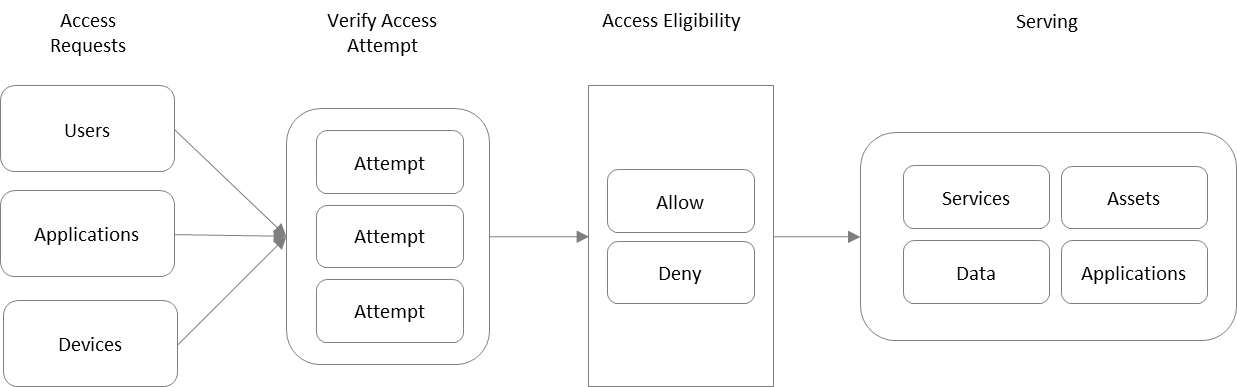
As data has become THE MOST valuable-asset or critical element in every organization i.e., compromising data can take you to the jail 😊, so now whenever an architecture is designed, it starts as Zero Trust Architecture concept i.e., no one should be able to access anything. Then slow and carefully doors are opened using Authentication, Authorization, Entitlement etc., approaches. Even after that, data or disk encryption, masking, anonymization, and many approaches are adopted to make sure no hacker and malware can get into the system.
Finished reading? Test yourself with 10 questions on this topic.
Go to the questions →From I Am Datapedia! by Mustafa Qizilbash, published here free by the author. Nothing about your reading is stored.