Learn free · topic 322
MRKL
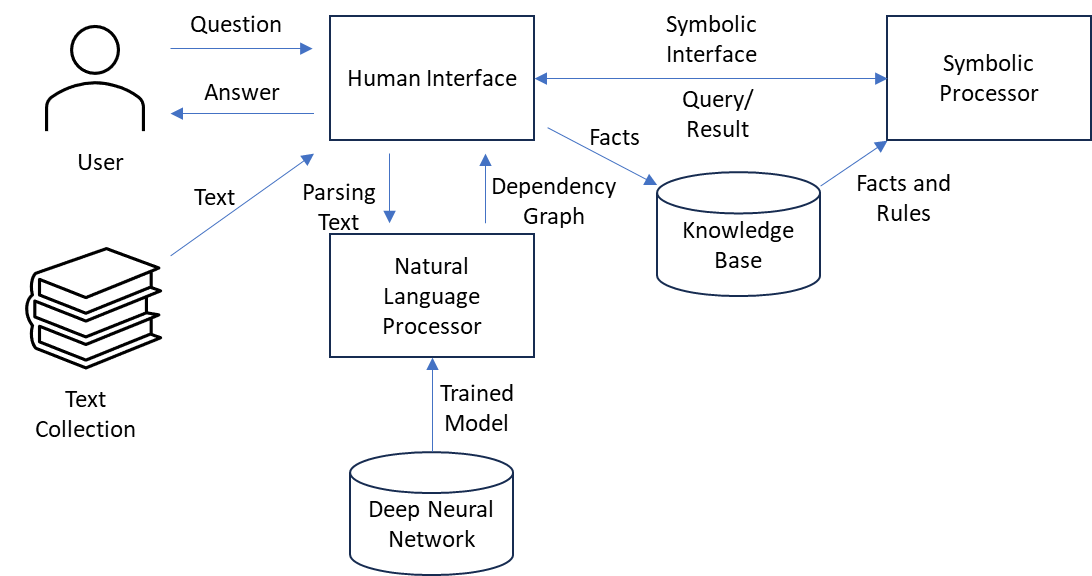
MRKL stands for Modular Reasoning, Knowledge, and Language. This neuro-symbolic architecture is designed to address complex problems by combining elements of neural computation (specifically Large Language Models, or LLMs) with symbolic computation tools such as calculators. (ref: LLM is separate topic)
Neuro-Symbolic Architecture implies that the system combines aspects of neural computation (associated with LLMs) and symbolic computation. Neural computation involves processing information in a way inspired by the human brain, while symbolic computation involves manipulating symbols to perform operations.
LLMs (Large Language Models) are sophisticated artificial intelligence models trained on extensive text data. They surpass in recognizing and producing human-like dialect.
External Tools Like Calculators in addition to neural computation, the system incorporates external symbolic computation tools, specifically mentioning calculators. This suggests a hybrid approach where both neural and symbolic methods are employed.
Problem Solving is the ultimate goal of MRKL System, to solve complex problems. The combination of neural computation (LLMs) and symbolic computation tools is likely leveraged to tackle a wide range of challenges, benefiting from the strengths of both approaches.
In summary, MRKL System represents a neuro-symbolic architecture that harnesses the capabilities of Large Language Models (LLMs) for neural computation and integrates external symbolic computation tools like calculators. This combination is employed to address complex problems, leveraging the strengths of both neural and symbolic approaches within the system.
Finished reading? Test yourself with 10 questions on this topic.
Go to the questions →From I Am Datapedia! by Mustafa Qizilbash, published here free by the author. Nothing about your reading is stored.