Learn free · topic 84
Lambda Architecture
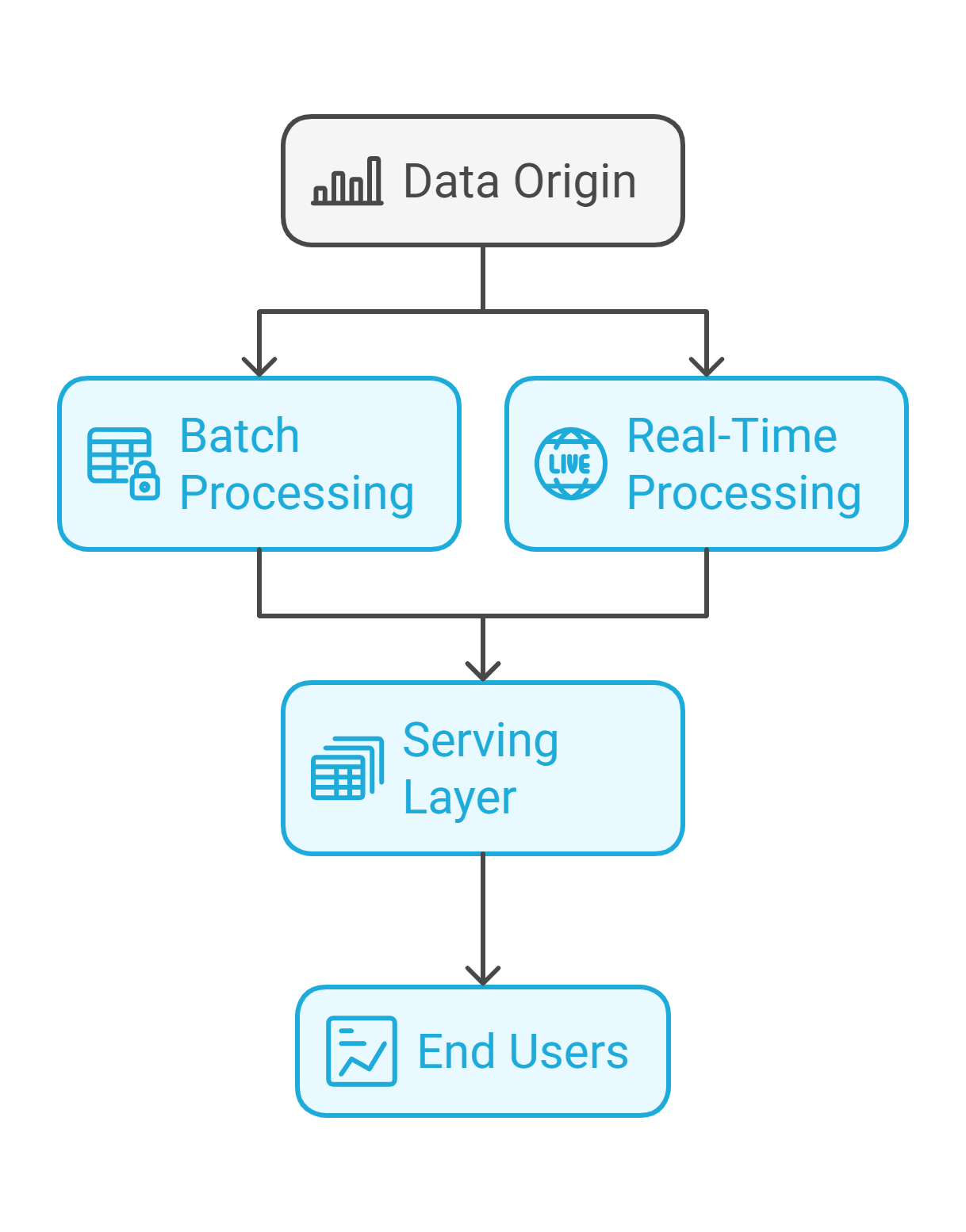
Lambda Architecture is an essential concept in the world of Big Data, gaining attention as technology for handling massive data volumes has advanced. It forms the backbone of many decision-support systems by providing a structured approach to data processing, integrating both batch and real-time data workflows. The Lambda Architecture model offers a comprehensive system for handling data from generation to end-user access, balancing speed and accuracy through batch and real-time layers.
The Foundations of Lambda Architecture
Lambda Architecture is grounded in lambda calculus, a formal system in mathematical logic that supports computation using function abstraction, application, and variable substitution. Lambda calculus is a universal model that can theoretically simulate any Turing machine, making it foundational to computer science and software engineering. In data processing, Lambda Architecture uses this mathematical basis to create a dual-layered system that can handle data asynchronously and in real time.
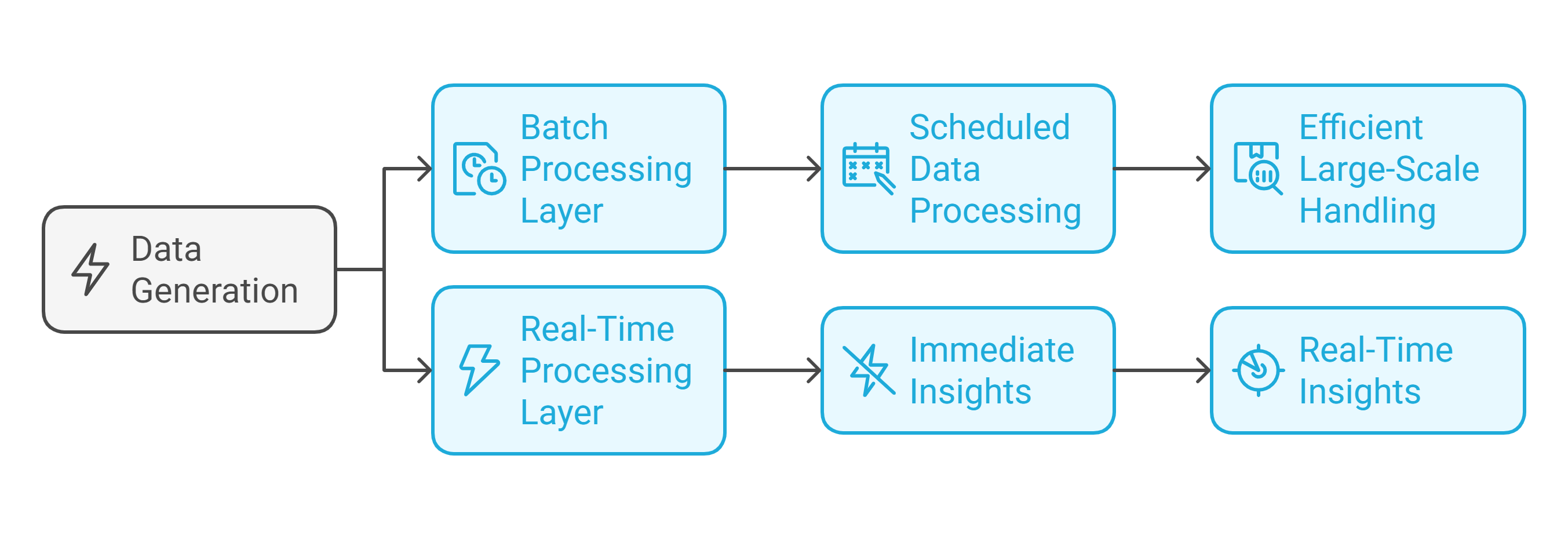
Data Processing Layers in Lambda Architecture
Lambda Architecture divides data processing into two primary layers:
- Batch Processing Layer: This layer processes data at scheduled intervals, which may vary from once a day to every few minutes, depending on requirements and available resources. Batch processing is not triggered by the instant data is generated; instead, data is processed according to a set schedule or when data volume and system resources allow. Batch processing was historically the standard approach due to constraints in technology, particularly for handling large volumes of data efficiently in a structured format.
Real-Time Processing Layer: Also called event-based processing, this layer processes data the moment it’s generated, allowing for real-time insights and responses. Real-time processing has become increasingly feasible due to advancements in big data tools and technologies. However, it is more resource-intensive and can be complex to implement on a large scale.
Lambda Architecture in Practice: A Historical Perspective
The concept behind Lambda Architecture is not new; it has been in use for decades, primarily in systems reliant on structured data from OLTP (Online Transaction Processing) systems. Historically, due to limited processing tools, technology, and the high cost of real-time capabilities, data transfer from source systems to target data stores occurred in batch. A common configuration was the “daily batch” process, where data transfer happened once every 24 hours, typically after business hours to avoid system load during operational hours. As a result, reporting was based on the previous day’s data.
Real-time processing was possible but limited in scope and reserved for high-priority applications due to the prohibitive cost of real-time technology. Only essential or critical data points were processed in real time.
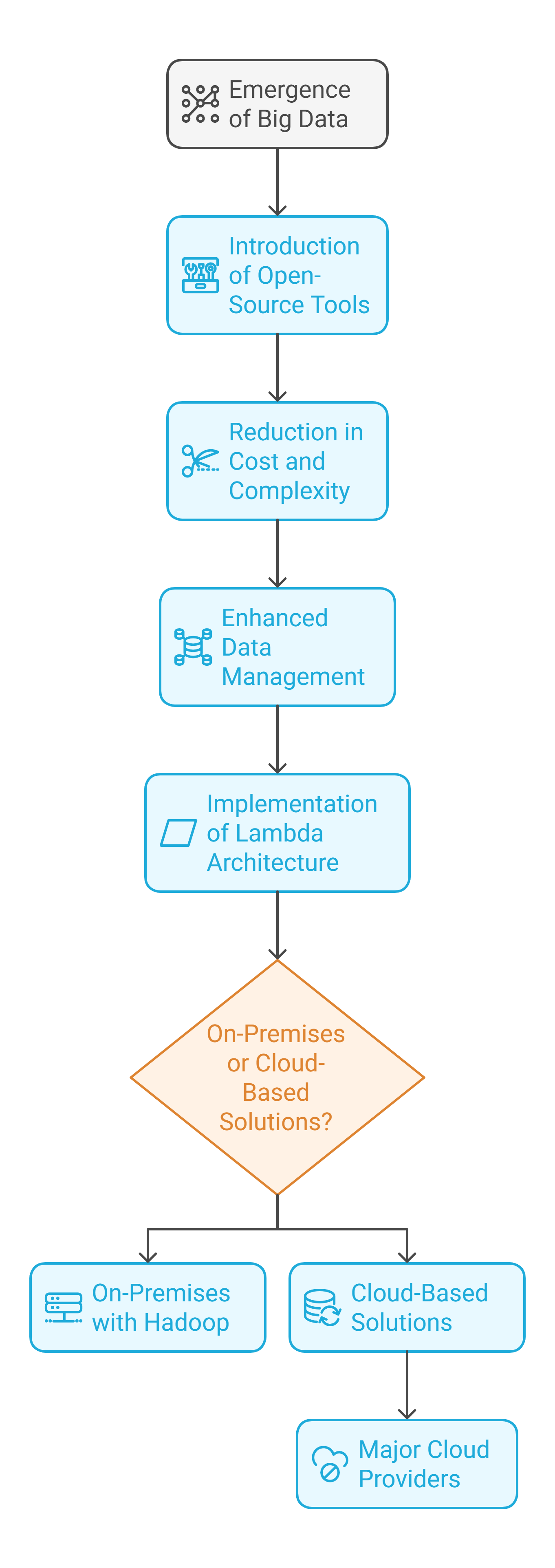
The emergence of Big Data fundamentally changed the landscape of data processing, making Lambda Architecture more feasible and attractive. The introduction of open-source tools like Hadoop, along with the development of object storage systems and NoSQL databases, drastically reduced the cost and complexity of managing vast data volumes. Additionally, the rise of affordable storage and advanced processing tools has enabled organizations to implement both batch and real-time processing on a larger scale than was previously possible.
Today, Lambda Architecture is becoming standard across various industries as organizations move towards adopting hybrid data processing models. Many organizations, especially those facing regulatory challenges, choose to use Hadoop in on-premises environments, while cloud-based solutions have become the go-to option for many others. Major cloud providers such as AWS, Azure, and Google Cloud have emerged as key players, offering robust infrastructures that support Lambda Architecture at scale.
Challenges of Cloud Adoption: Data Sovereignty and Cloud Provider Expansion
One key factor influencing an organization’s decision to adopt cloud-based Lambda Architecture is data sovereignty. Many industries operate under stringent regulatory requirements mandating that data remains within a particular country or region. To meet these needs, cloud providers need to establish data centres in the regions they serve, providing assurance to customers that their data will not leave their jurisdiction.
AWS, Azure, and Google Cloud have responded to this requirement by expanding their global data centre footprint. These providers now maintain data centres in many regions, allowing organizations with data sovereignty requirements to use cloud resources that meet legal and regulatory standards. Other cloud providers, such as Oracle and IBM, are also investing in regional data centre expansion to stay competitive.
Cloud-Based Lambda Architecture: Common Architectures Across Major Cloud Platforms
Lambda Architecture has become the basis for many cloud-based solutions offered by the major providers. Here is a summary of how Lambda Architecture is generally implemented across AWS, Azure, and Google Cloud:
- AWS (Amazon Web Services): AWS provides tools like Amazon Kinesis for real-time processing and Amazon S3 for scalable storage. In AWS, a typical Lambda Architecture pipeline might involve data ingestion through Kinesis, batch processing with Amazon EMR or Glue, and storage in S3 or Redshift. The AWS Lambda service also facilitates serverless event-driven computing, which aligns well with real-time processing requirements.
- Azure: Azure supports Lambda Architecture through tools such as Azure Stream Analytics for real-time data processing and Azure Data Lake for large-scale storage. Batch processing can be handled by Azure Synapse Analytics or Azure Data Factory, allowing data to be ingested and transformed before being stored in Azure SQL Database or Cosmos DB. Azure Functions also enables real-time event-based processing, enabling organizations to deploy scalable real-time applications.
- Google Cloud Platform (GCP): Google Cloud offers similar support for Lambda Architecture, with tools like Google Cloud Dataflow for real-time data streaming and BigQuery for batch processing and storage. Dataflow integrates well with other GCP services like Pub/Sub for message queuing, enabling efficient real-time data processing. Google BigQuery is designed to handle large-scale batch processing, making it a popular choice for organizations looking to implement Lambda Architecture on GCP.
Lambda Architecture as the Foundation for Modern Data Systems
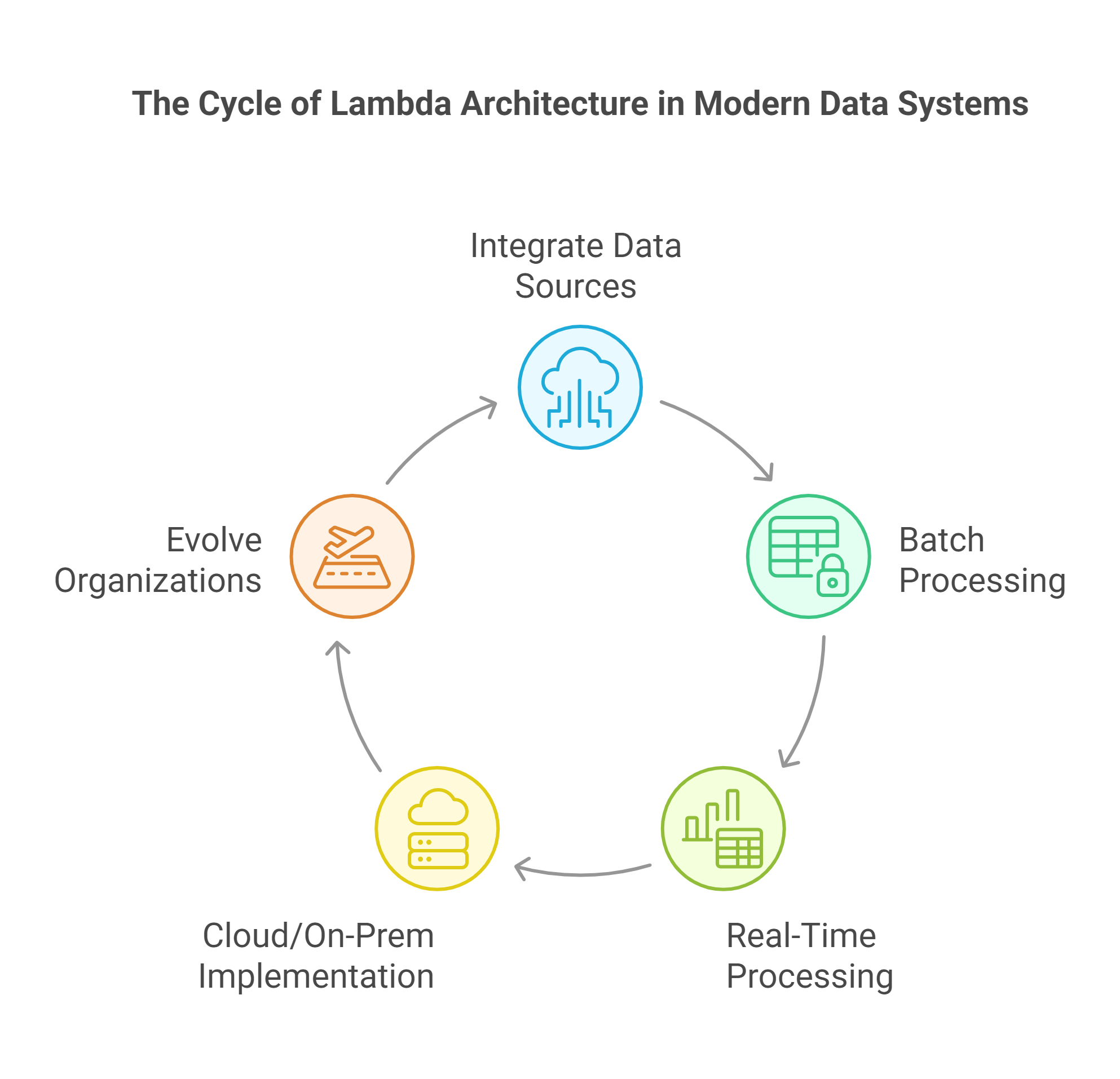
In today’s data-driven world, Lambda Architecture has become a foundational framework for organizations aiming to derive insights from vast and varied data sources. By combining the reliability of batch processing with the immediacy of real-time processing, Lambda Architecture enables organizations to meet both operational and analytical needs. With the rise of cloud-based infrastructure and advanced data processing tools, implementing Lambda Architecture has become more accessible and cost-effective than ever before. Whether on-premises or in the cloud, Lambda Architecture is poised to remain a critical framework for handling the diverse demands of modern data systems.
Finished reading? Test yourself with 10 questions on this topic.
Go to the questions →From I Am Datapedia! by Mustafa Qizilbash, published here free by the author. Nothing about your reading is stored.