Learn free · topic 97
Granularity
I am sure most of us know this term but not sure how accurate you are in terms of its importance.
‘The granularity of data means, the levels of data breakdown.’
Generally, people think having all relevant details about an entity is Granularity, but the question is what level of details?
For example, details can be name, email, and contact number, date of birth, color, blood group, home address, company, role, salary, father name, mother name and so. Is this the lower level of granularity? NO, when we say the lowest level of granularity, we can break down.
- Name into First Name, Middle Name and Last Name
- Address into Apartment Number, Building Name, Street, Area, City, District, Region, Country, Postal Code etc.
In OLTP systems, granularity must go as low as possible and in OLAP systems, it can depend on the business use case.
Now, when we have established what the Granularity is, let's discuss when it's needed. Data Wrangling, Data Mining, Data Science etc., all use raw data for analysis and analytics. And when we say RAW, the lower the level of granularity can be, the better the model result will be for DSS.
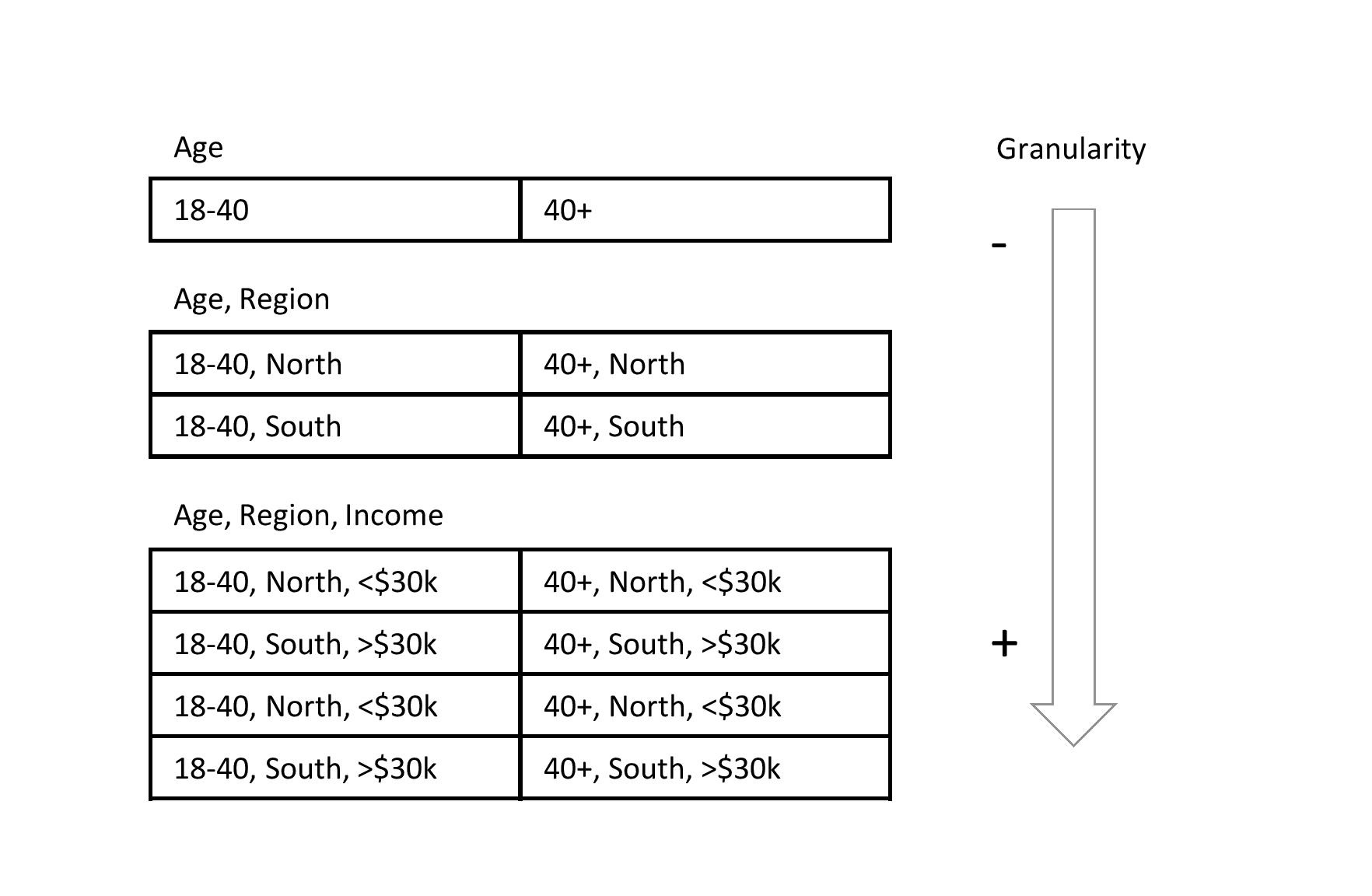
The first step towards creating a data model should be to understand the level of granularity the systems or business use case is expecting like date vs DateTime data type can change the level of granularity. The lower the granularity level is, the more the number of rows will be, and the more drilling and slicing/ dicing can be planned.
Don’t miss to go through topic i.e., Cardinality.
Finished reading? Test yourself with 10 questions on this topic.
Go to the questions →From I Am Datapedia! by Mustafa Qizilbash, published here free by the author. Nothing about your reading is stored.