Testing vs QA
From the book I Am Datapedia!, published here free by the author.
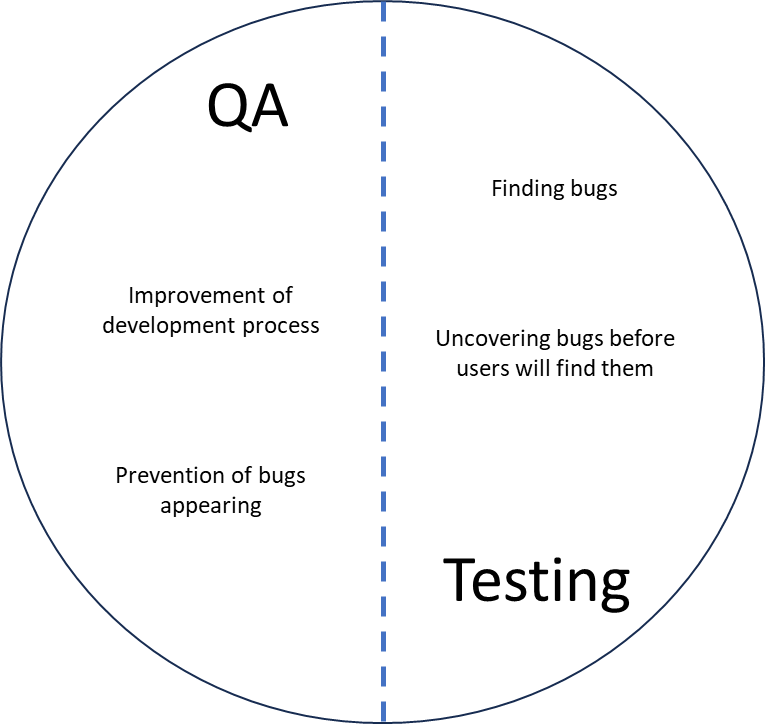
Testing and Quality Assurance (QA) are commonly mixed up, but let's break down the differences.
Testing:
QA (Quality Assurance):
QA, on the other hand, is all about making sure that the standards and output of processes or solutions meet customer satisfaction. Even if testing doesn't find bugs, QA checks if the output aligns with the expected quality. For example, if we create a table with a million rows, testing may show all rows are there, but QA might reveal differences in country name spellings or data formats.
For example, imagine you're building a database with country names. Testing might confirm that all million rows are there, but QA would catch if the spellings were inconsistent or if data formats are not uniform.
Many project failures result from poor QA processes rather than bad testing. It emphasizes the importance of ensuring the solution not only works but also meets the required quality standards.
In the era of unstructured data, it becomes crucial to perform numerous checks and fixes to maintain high-quality data. If end-users can't trust the quality of the data, having the data in the first place becomes pointless. Business satisfaction is the ultimate factor for a successful implementation.
The moral of the story is that for any system, Quality Assurance is as crucial as Testing. While testing finds bugs, QA ensures that the solution not only functions correctly but also meet the desired standards and quality expected by the users.
Express your reaction
Your Take on This Insight?
Share how this content resonates with you.
0 reactionsSign in to react or comment
Comments (0)
No comments yet.
Free account
You can read every topic without one. A free account lets you react to this topic, comment under it and search the Knowledge Hub. Reacting and commenting need a confirmed e-mail address.