Learn free · topic 31
Ontology / Knowledge Modelling
Ontology or Knowledge Modelling is the practice of defining a formal and structured representation of knowledge within a domain. It identifies the important concepts, shows how they are related, and defines rules that govern those relationships. The purpose is to create a shared understanding that can be interpreted consistently by both humans and machines.
The main goal of Ontology Modelling is to build a framework that supports semantic clarity, interoperability, and reasoning. Unlike traditional data models that primarily focus on structure and storage, ontologies are designed so that systems can understand meaning and draw logical conclusions from it. This makes them especially valuable in environments where information must be integrated across different systems and interpreted intelligently.
Ontologies go beyond simple definitions of concepts. They define categories, hierarchies, constraints, and rules within a domain. For example, in a healthcare context, an ontology may define that a Patient undergoes a Treatment, and that Treatment can be classified as either a Procedure or a Medication. It may further define that a Medication is a type of Therapeutic Intervention. By establishing such hierarchies and relationships, the ontology provides a structured knowledge framework rather than just isolated definitions.
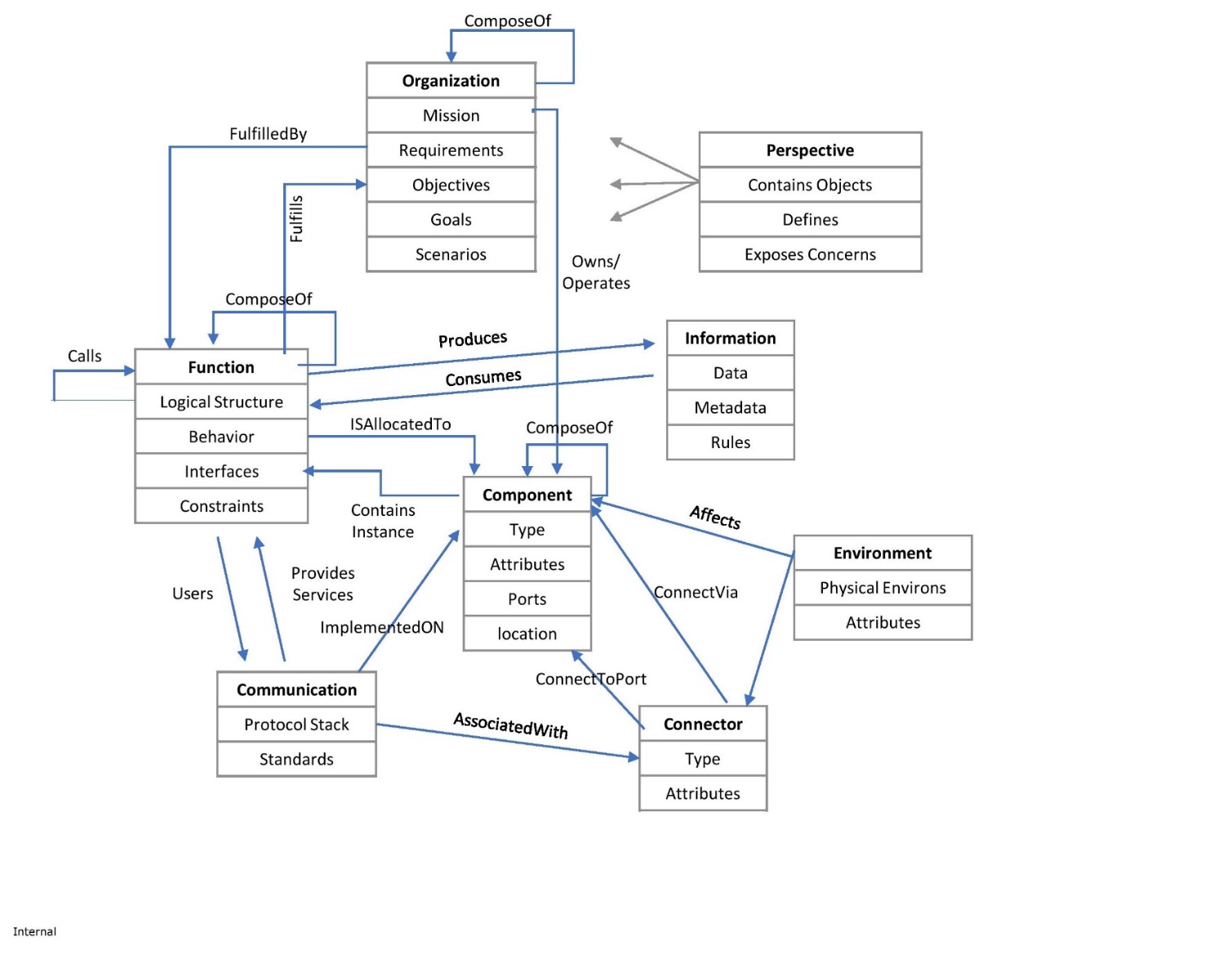
In a loan-based business, Ontology Modelling defines core classes such as Customer, Loan, Application, Approval Decision, and Repayment. It specifies relationships such as Customer applies for Loan Application, or Loan has Repayment Schedule. It may also define that Customer is a type of Person, or that Consumer Loan is a type of Loan. By placing concepts into hierarchies and defining relationships formally, the model becomes a structured knowledge network rather than a simple diagram.
One of the most powerful aspects of ontology modelling is its support for reasoning. For example, a Delinquent Loan can be defined as a Loan with a missed Repayment. Once this rule is formalized, a system can automatically classify loans as delinquent whenever the condition is met. Similarly, a High-Risk Portfolio may be defined as a group of loans where delinquency exceeds a specific threshold. The system can infer this classification without manual tagging.
Ontology Modelling also supports semantic queries. Instead of writing queries based purely on tables, users can ask meaningful questions such as which customers have both an approved loan and a delinquency, or which loan products fall under the category of consumer credit. Because the ontology understands classifications and relationships, it can answer such queries more intelligently.
In practice, ontologies are often expressed using formal standards designed for machine readability and interoperability. These standards allow knowledge to be shared across different platforms and systems. As a result, Ontology Modelling plays a critical role in knowledge graphs, semantic web technologies, and artificial intelligence systems where consistent interpretation of data is essential.
The nature of Ontology Modelling is semantic and formal. It is designed not only for human understanding but also for automated reasoning. While conceptual models define core business concepts and information models formalize facts, ontologies organize these concepts into a structured knowledge framework that supports inference and integration.
In summary, Ontology and Knowledge Modelling represent a shift from modelling facts to modelling shared knowledge structures. It creates a machine-readable semantic layer that enables reasoning, classification, and interoperability across enterprise systems. This step makes semantics operational, allowing organizations to integrate data intelligently and support advanced analytics and AI-driven applications.
Data Taxonomies & Ontologies
To put it simply, taxonomies and ontologies in unstructured data are like data modelling in structured data. This comparison should make it easier to follow along with this topic.
- In Data Modelling: One table can connect to another using specific relationships: one-to-one, one-to-many, or many-to-one, thanks to primary and foreign keys in relational databases. Remember, though, that many-to-many relationships aren’t allowed due to normalization standards.
- In Data Taxonomies: Each element can only form a one-to-one relationship with another element.
- In Data Ontologies: Each element can have all types of relationships, one-to-one, one-to-many, many-to-one, or even many-to-many, with other elements.
We’re all familiar with tables, but what exactly is an element?
- In Data Taxonomy: Elements refer to tags or labels used to classify or group data into categories and subcategories. These elements help organize data with a clear one-parent-to-many-children structure. For example, one main category may have multiple subcategories branching from it. Different types of taxonomies include Hierarchical (structured layers), Ecological (based on ecosystems or environments), Compound (complex layers), Flat (simple, single level), and Hybrid (a mix of types).
Elements | Examples |
Topics | Science, History, Technology etc. |
Themes | Innovation, Leadership, Sustainability etc. |
Roles and Responsibilities | Executives, Managers, Staff etc. |
Departments | Human Resources, Finance, Marketing etc. |
Regions | North America, Europe, Asia etc. |
Countries | England, France, America etc. |
Cities | New York, Paris etc. |
Product Lines | Electronic, Clothing, Home Goods etc. |
Service Offerings | Consulting, Support, Training etc. |
Demographics | Adults, Teenagers, Seniors etc. |
Customer Types | B2B, B2C, Government etc. |
Document Types | Reports, Articles, Tutorials etc. |
Media Formats | Videos, Podcasts, PDFs etc. |
Historical Periods | Modern Era, Current Era, Past Decade etc. |
Calendar-Based | Fiscal Year, Quarter, Month etc. |
Project Phases | Planning, Execution, Closure etc. |
Sales Pipeline | Lead Generations, Qualification, Conversion etc. |
Taxonomic Ranks | Kingdom, Family, Genus etc. |
Organizational Hierarchy | CEO, CFO, Director etc. |
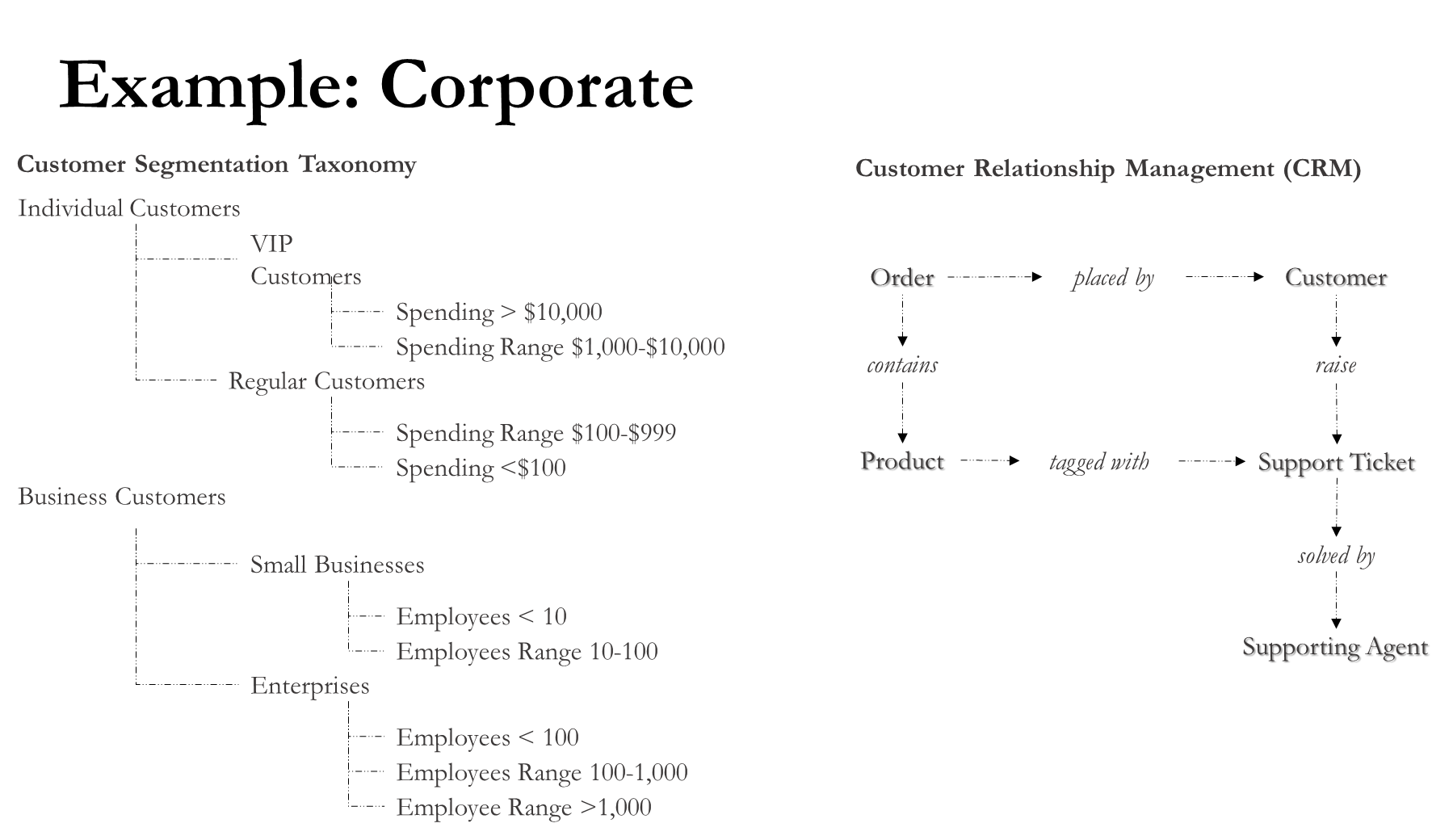
Customer Segmentation | Individual Customers, Business Customers, VIP etc. |
- In Data Ontology: Elements go further by defining not just categories, but also concepts, relationships, rules, and properties. In ontologies, elements can connect in various ways, not limited to strict hierarchies, allowing multiple types of relationships. Ontologies have three key components:
- Concepts: The main types or kinds of things in our data.
- Relationships: These link concepts and can include Hierarchical, Associative, Dependency, Role-based, Temporal, Causal, Spatial, Equivalence, and Disjoint types.
- Attributes: Details that describe each individual class or concept.
Elements | Examples |
Classes/ Concepts in medical ontology | Patients, Disease, Treatment, Doctor etc. |
Instances/ Individuals in Patients | Juan, Marek, Daniel etc. |
Attributes/ Properties to describe classes and instances | Patient AGE, Disease TYPE etc. |
Sayings | Treatment e.g., when a patient has a disease, there will be a TREATEMENT |
Restrictions | Special Care e.g., when a patient is in high alert condition then it should be in SPEICAL CARE section |
Annotation | Description about the classes, properties, instances |
Events | Appointment e.g., an APPOINTMENT is required for patient to meet Doctor |
Domains | Relationships | |
Domains E-commerce | Hierarchical | |
is a subclass of | Associative | |
E-commerce Healthcare | is a type of | contains |
related to | ||
is a subclass of | belongs to | |
Healthcare Finance | is a type of | has symptom |
treated by | ||
is a subclass of | diagnosed as | |
Finance Education | is a type of | has account |
linked to | ||
is a subclass of | related to | |
Education Manufacturing | is a type of | part of curriculum |
related to | ||
is a subclass of | has prerequisite | |
Manufacturing | is a type of | part of |
assembled from | ||
Domains | Relationships | |
Dependency | Role-based | |
E-commerce | requires | performed by |
depends on | created by | |
Healthcare | requires | performed by |
depends on | administered by | |
Finance | requires | managed by |
depends on | approved by | |
Education | requires | taught by |
depends on | attended by | |
Manufacturing | requires | operated by |
depends on | maintained by | |
Domains | Relationships | |
Equivalence | Disjoint | |
E-commerce | equivalent to | disjoint with |
also known as | mutually exclusive with | |
Healthcare | equivalent to | disjoint with |
also known as | mutually exclusive with | |
Finance | equivalent to | disjoint with |
also known as | mutually exclusive with | |
Education | equivalent to | disjoint with |
also known as | mutually exclusive with | |
Manufacturing | equivalent to | disjoint with |
also known as | mutually exclusive with | |
Domains | Relationships | |
Temporal | Causal | |
E-commerce | occurs before | causes |
occurs after | leads to | |
Healthcare | occurs before | causes |
occurs after | results in | |
Finance | occurs before | causes |
occurs after | results in | |
Education | occurs before | leads to |
occurs after | results in | |
Manufacturing | occurs before | causes |
occurs after | results in | |
Domains | Relationships |
Spatial | |
E-commerce | located in |
shipped to | |
Healthcare | located in |
affects region | |
Finance | located in |
transferred to | |
Education | located in |
offered at | |
Manufacturing | located in |
produced at |
The word "taxonomy" comes from Greek roots: taxis, meaning “order” or “arrangement,” and nomos, meaning “law” or “science.” Today, taxonomy is used to classify concepts and items based on specific organizing principles.
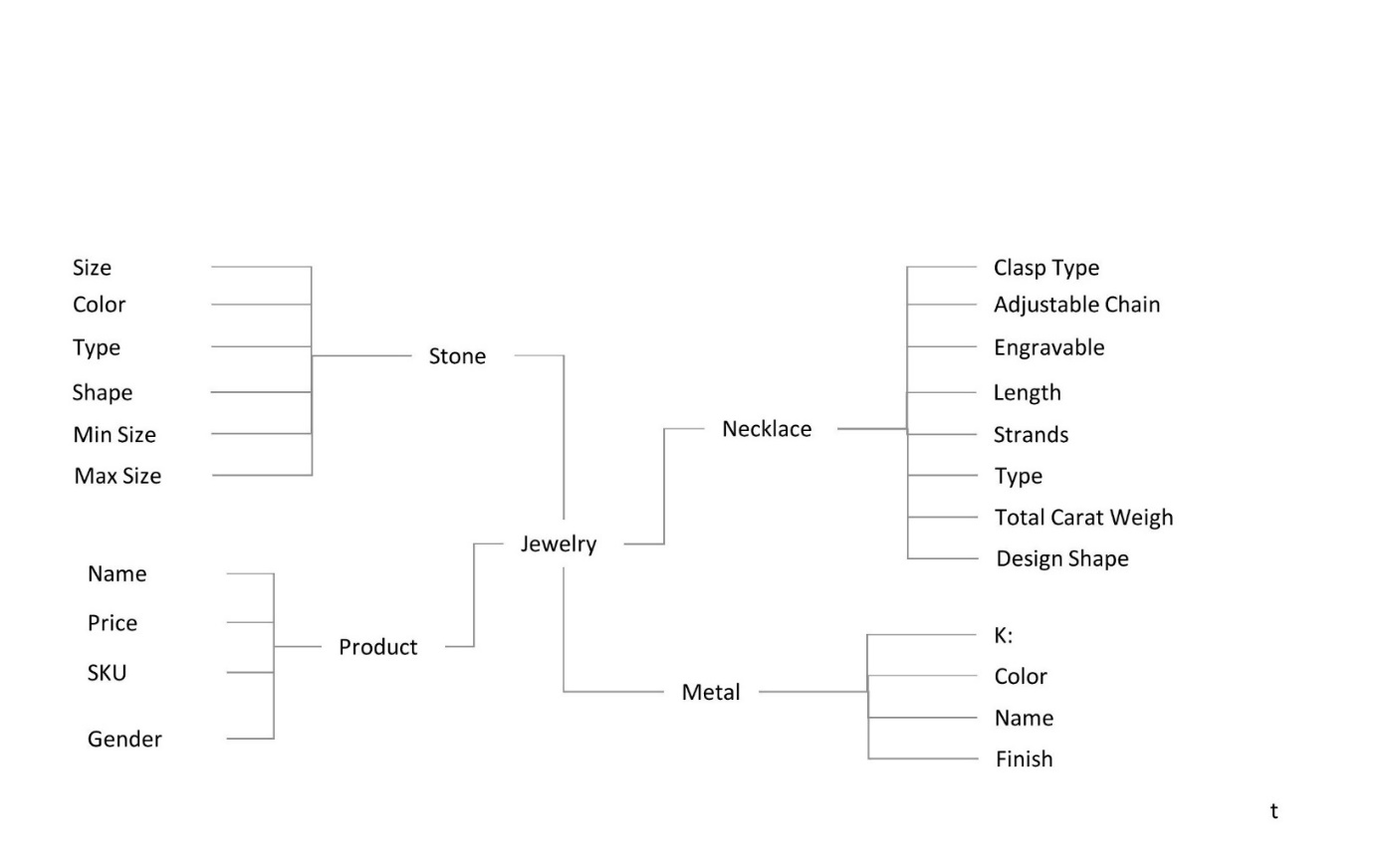
In the example image, we first have a main category, Jewellery, with subcategories like Stone, Necklace, Product, Metal, and more. With this data taxonomy, we can gather valuable insights. For example, a KPI might track overall jewellery sales, but imagine the detail you could get, like sales of engraved necklaces or a comparison of silver vs. gold sales, all without diving deeply into the data. Amazing, right? When a taxonomy is in place, reporting becomes easier, more accurate, and saves a lot of time.
In taxonomy:
- One category can have multiple subcategories.
- Each subcategory has one parent but can have multiple child subcategories.
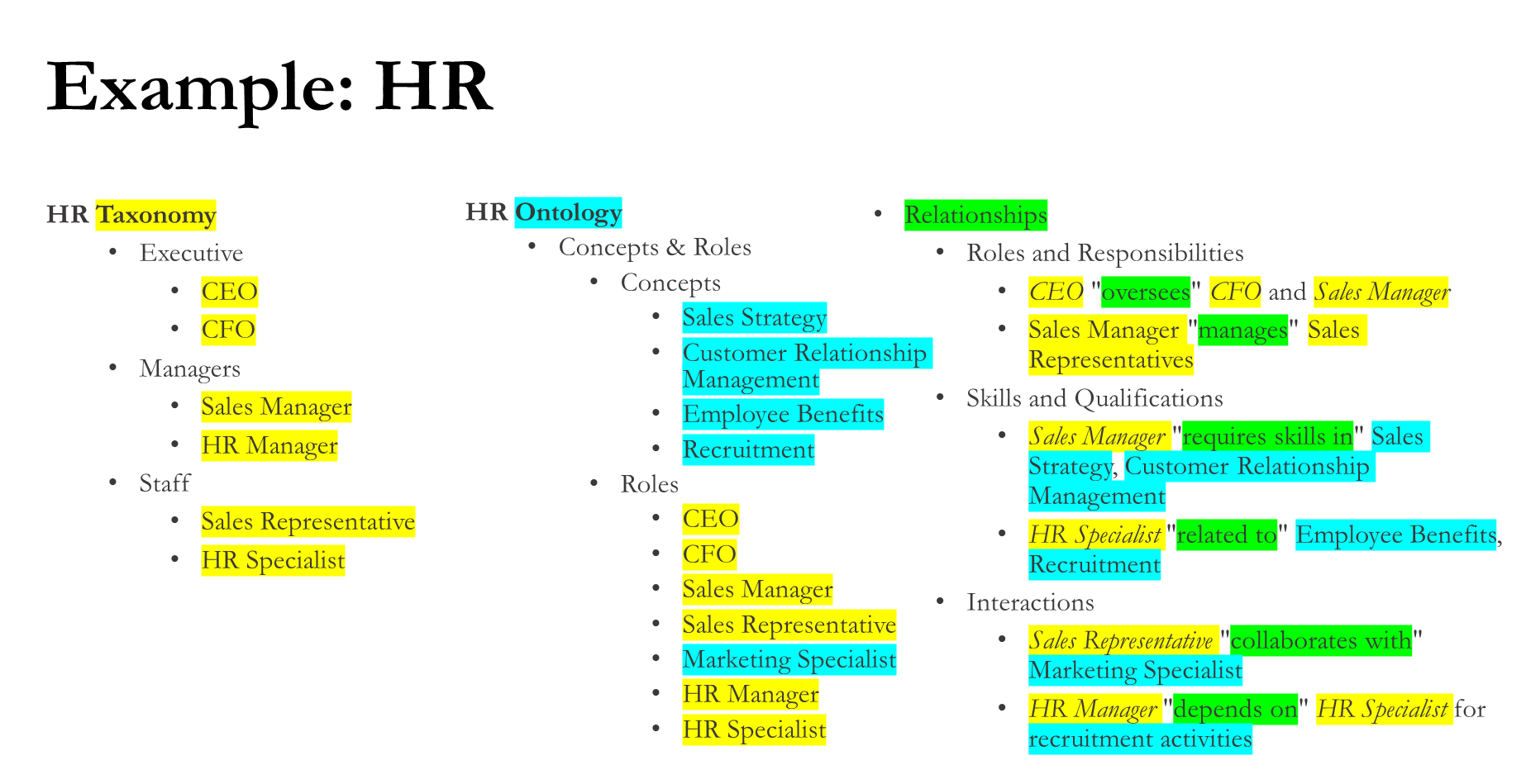
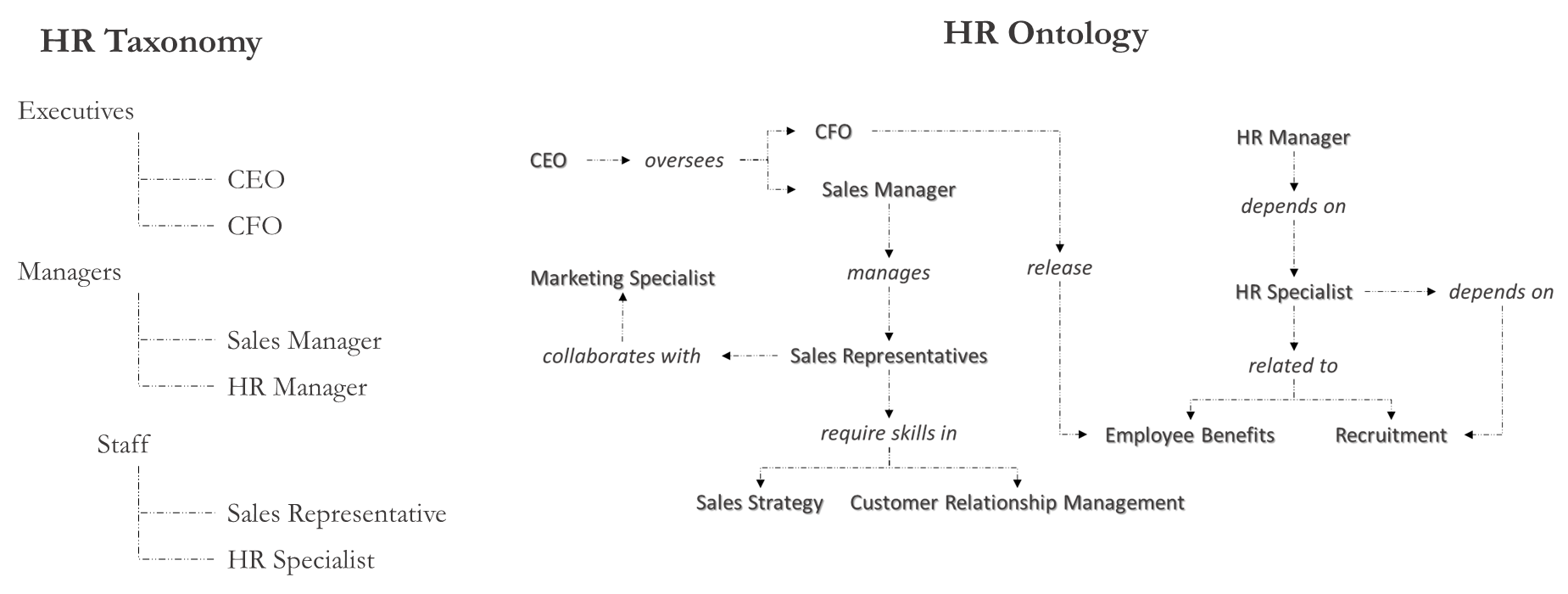
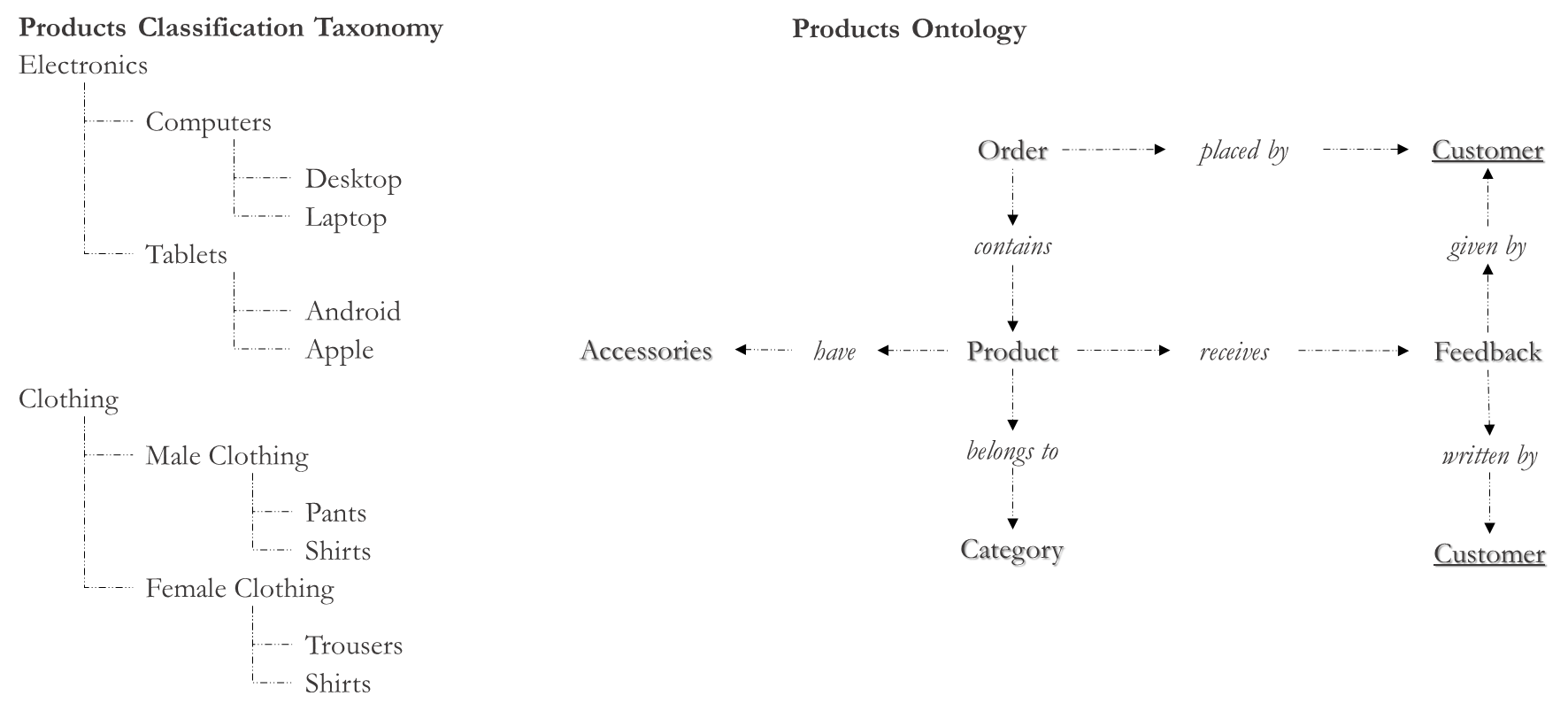
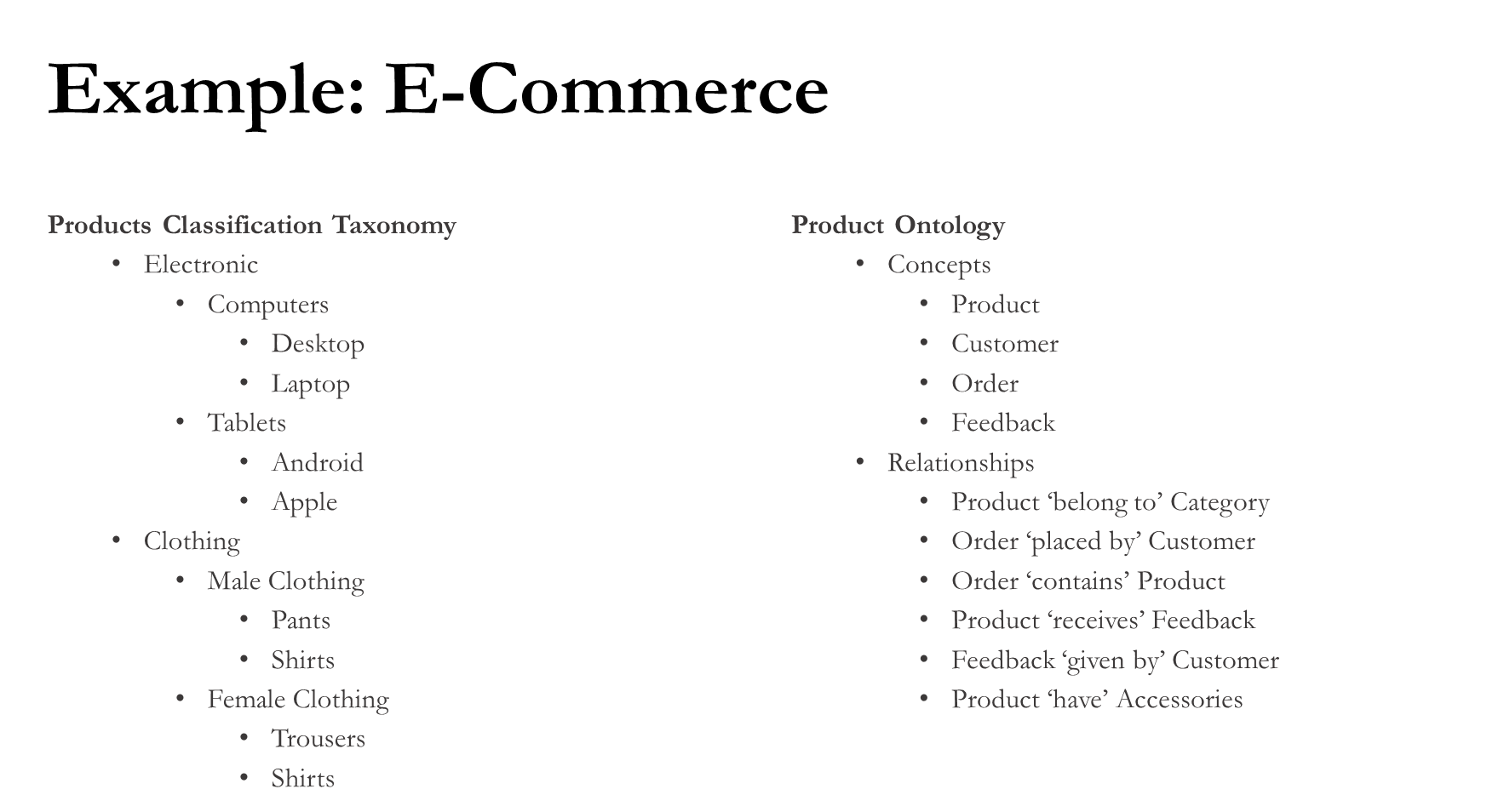
When data is organized with a single relationship structure like this, it’s known as taxonomy.
When data is organized with one or more types of relationships among elements, it’s called ontology.
Taxonomy is a foundational but essential component in any data architecture or solution. It plays a key role in organizing, extracting, integrating, managing, governing, analysing, and meeting regulatory requirements. By providing a systematic and controlled approach to classification, taxonomies help maximize data value and support decision-making systems, boosting overall operational productivity.
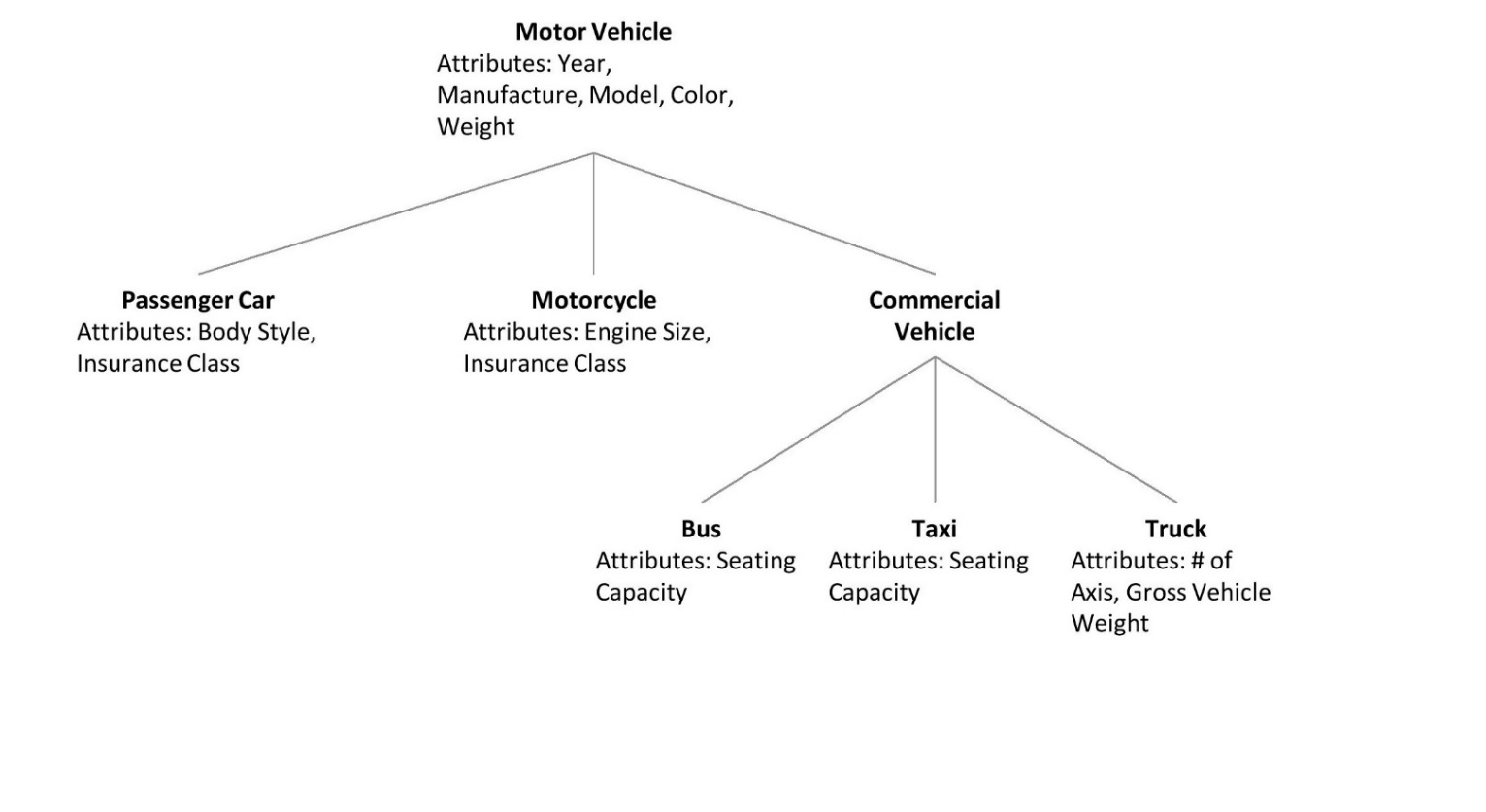
Ontology, on the other hand, is a more advanced and complex form of taxonomy. It is crucial for enhancing data integration and standardization, ensuring data consistency across systems, and providing a semantic understanding of data elements. Ontologies allow for more adaptable and interoperable data connections, promoting better decision-making and innovation.
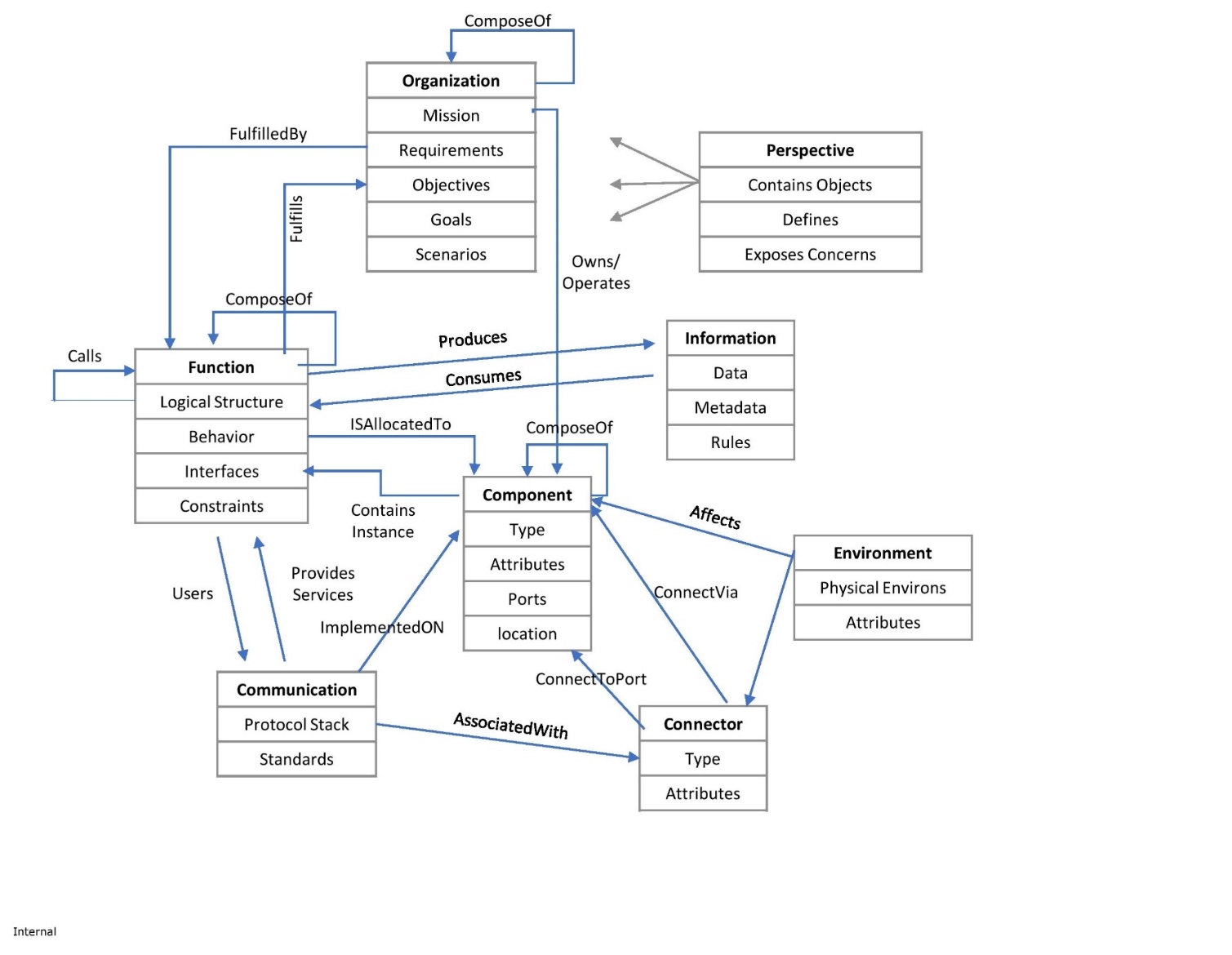
“Taxonomies can be part of ontologies, but not the other way around.”
Role of Taxonomy and Ontology in Metadata Management
Taxonomies and ontologies are integral to business metadata. They define data elements, concepts, and relationships, making it easier for users to explore and analyse unstructured content. In simple terms, the more robustly defined the taxonomies and ontologies, the more effective and comprehensive metadata management will be.
Conceptual Use of Taxonomy and Ontology in OLTP and OLAP Data Modelling
In data modelling, taxonomies are frequently applied in OLTP and OLAP structures to define clear parent-child relationships. This enables management to drill down into data details for informed decision-making.
For instance, financial assets might be categorized into classes like Equities, Bonds, and Real Estate, with each class having further subcategories like Common Stocks and Preferred Stocks under Equities. When users retrieve data, they can access specific asset classes or subcategories, such as querying all Preferred Stocks within Equities.
Ontologies improve data integration, provide semantic layers, and support metadata management, key for robust data analysis and reporting.
For example, a data model with entities like Patient, Doctor, Appointment, and Medication can describe relationships, such as Patient visits Doctor, who then prescribes Medication. An ontology clarifies these relationships, ensuring, for instance, that a patient cannot schedule an appointment with an unavailable doctor.
Use of Taxonomy and Ontology in Unstructured Datasets
Taxonomies and ontologies are especially important for unstructured datasets. Without structured relationships, unstructured data becomes “unusable,” making it nearly impossible to analyse or extract insights.
A Common Mistake: A frequent misconception is that converting structured data from a table into a text format turns it into unstructured data. However, structured data needs more than just a format change to be considered unstructured!

Finished reading? Test yourself with 10 questions on this topic.
Go to the questions →From I Am Datapedia! by Mustafa Qizilbash, published here free by the author. Nothing about your reading is stored.