Data Science vsData Mining
From the book I Am Datapedia!, published here free by the author.
These are one of the most confusing terms in the data domain. Both are mostly confused with each other.
The major difference between both is.
- Data Mining is done on ONLY structured data.
- Data Science is done on structured, semi and unstructured data.
Data Science is mostly tagged with Big Data and Data Mining is tagged with Data Warehousing. There are many definitions and comparisons for both in the market as both do machine learning, deep learning, data cleansing, statics, and math algorithms etc.
‘Data Science is the Superset of Data Mining.’
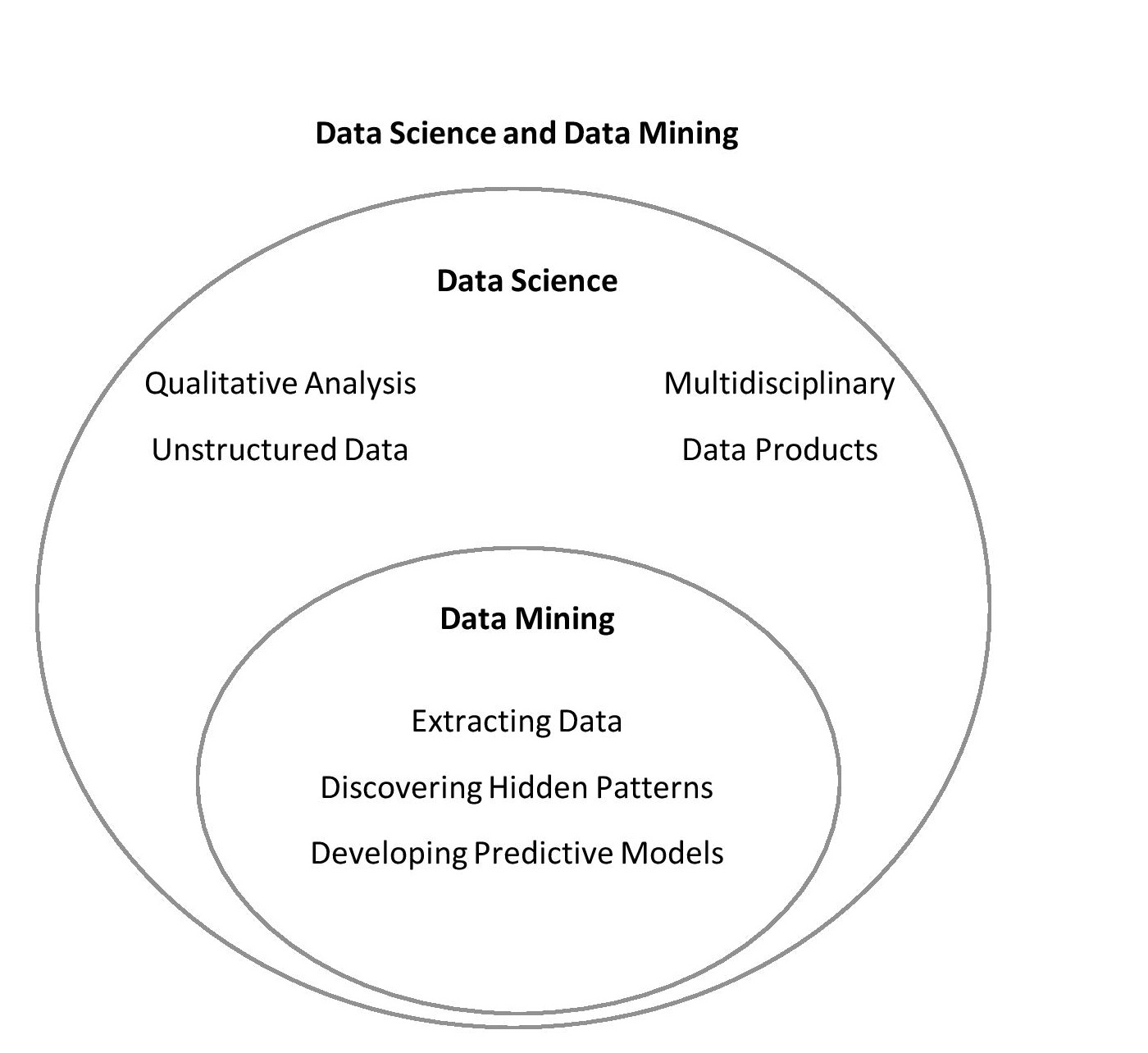
Now with the introduction of Big Data, Data Lake, NoSQL databases, semi and unstructured datasets, the magnitude of the data size has taken a huge step ahead and Data Science has come onto the surface.
"Data Science has been there, either manual or not, since the 1960s whereas Data Mining started in the 1990s for database folks."
Few genetic differences.
- Data Science involves machine learning, AI, Pattern Recognition, Statistics, Visualization, Databases and Data Processing, KDD, Data Mining, Neurocomputing etc.
- Data Mining involves KDD, Databases and Data Processing, Machine Learning etc.
- Data Mining is a subset of Data Science.
- Data Mining is a technique whereas Data Science is a Domain.
- Data Mining focuses on the process whereas Data Science focuses on the science of the data.
- Data Mining focuses on optimizing existing systems whereas Data Science focuses on new ideas, new products, and services
Express your reaction
Your Take on This Insight?
Share how this content resonates with you.
0 reactionsSign in to react or comment
Comments (0)
No comments yet.
Free account
You can read every topic without one. A free account lets you react to this topic, comment under it and search the Knowledge Hub. Reacting and commenting need a confirmed e-mail address.