Learn free · topic 312
ETLT
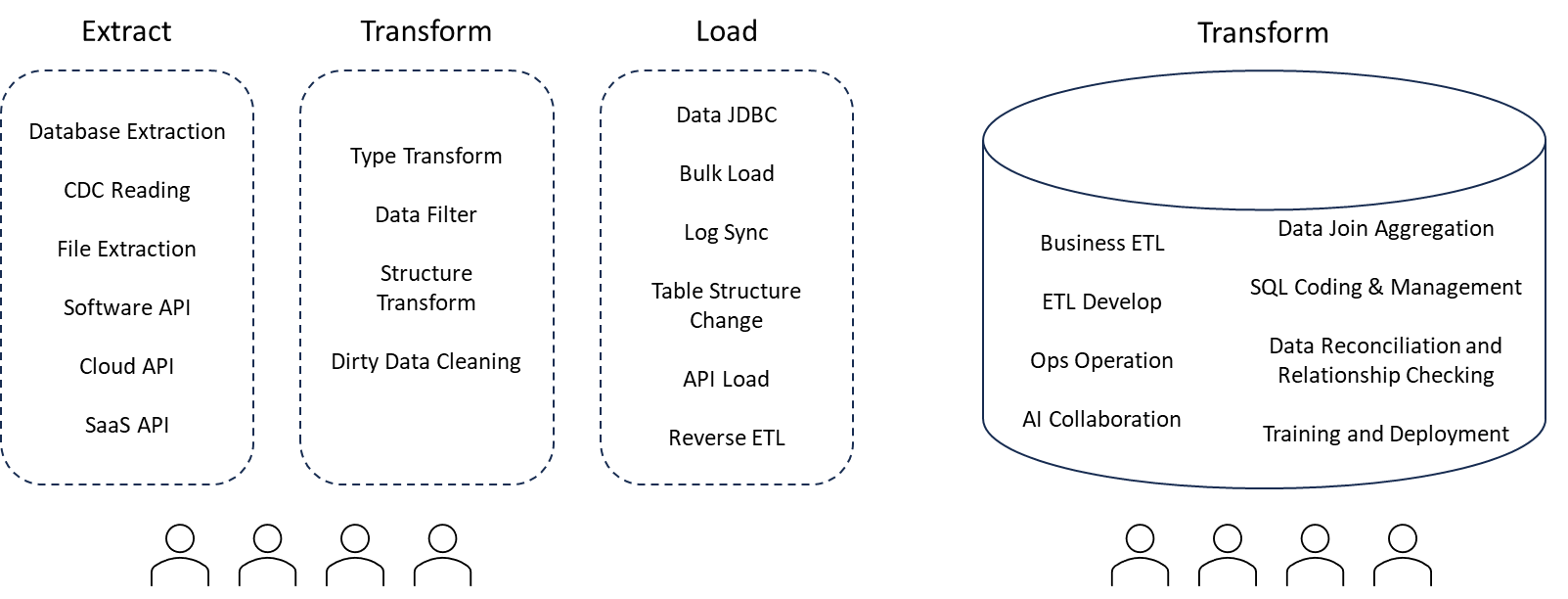
ETLT stands for "Extract, Transform, Load, and Transform" in the context of data integration and processing. Please don’t worry about where this ETLT has come from. ETLT just includes another stage in ETL world to support semantic layers.
Let’s understand each:
- Extract: Involves extracting data from various sources, which could be databases, applications, logs, or other systems.
- Transform (First T): Refers to the process of cleaning, structuring, and enriching the extracted data so that it is suitable for analysis. Transformation may include data cleansing, normalization, aggregation, and other operations.
- Load: Involves loading the transformed data into a target database or data warehouse where it can be used for reporting, analysis, or other purposes.
- Transform (Second T): This additional transformation step might be included in some interpretations of ETLT. It represents further processing or transformation that occurs after the data has been loaded into the target system. This step acknowledges that data transformation can be an ongoing and iterative process.
The idea behind ETLT is to emphasize the importance of not considering data integration and transformation as a one-time event but as an ongoing, iterative process. This is especially relevant in modern data architectures where real-time or near-real-time data processing is becoming increasingly important.
Finished reading? Test yourself with 10 questions on this topic.
Go to the questions →From I Am Datapedia! by Mustafa Qizilbash, published here free by the author. Nothing about your reading is stored.