Learn free · topic 130
Data Security andData Privacy
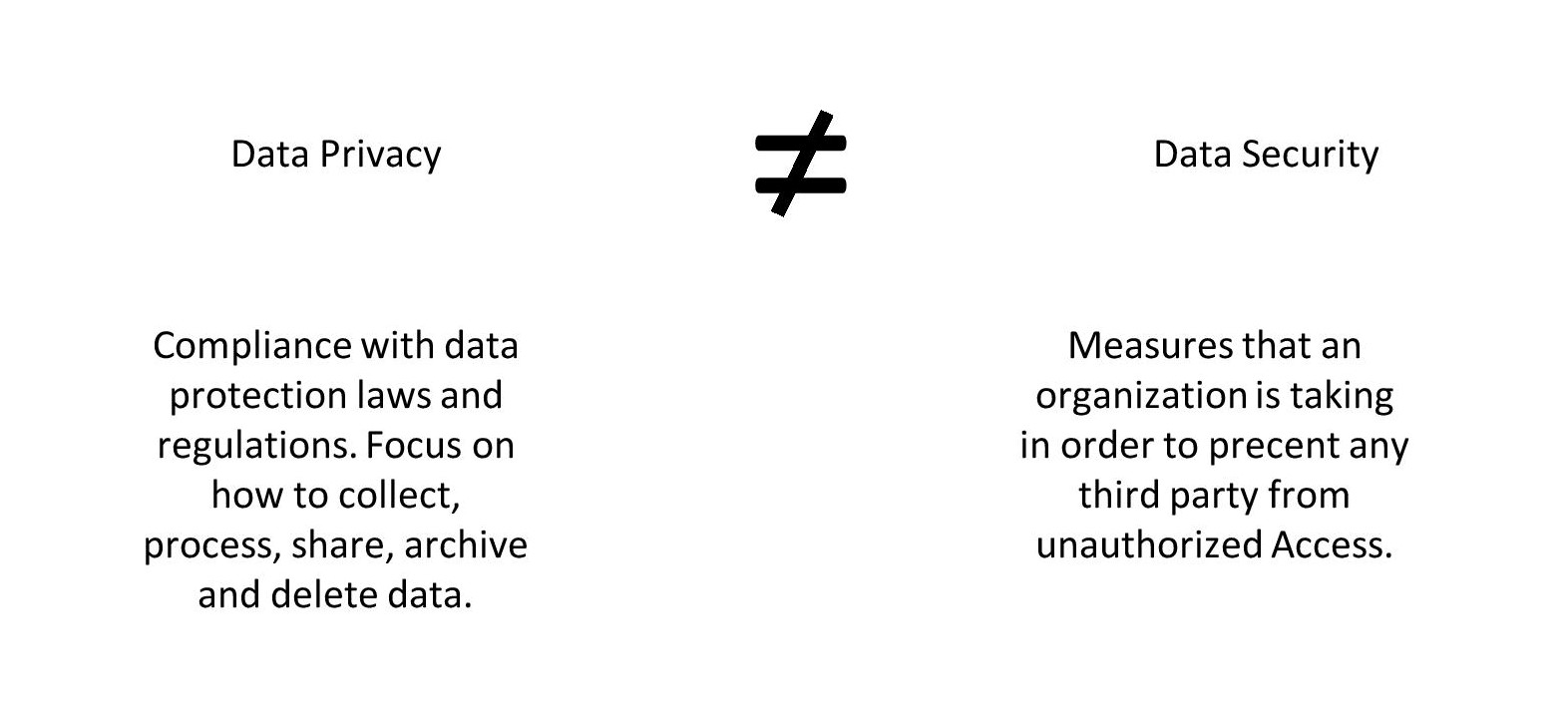
Data Security is about protection. It ensures data remains confidential, accurate, and accessible only to those who are authorized. Security safeguards against unauthorized access, malicious attacks, accidental loss, and corruption of information. Techniques include access management, activity monitoring, encryption, masking, breach detection, and disaster recovery. In short, security preserves the confidentiality, integrity, and availability (CIA) of data.
Data Privacy is about rights and responsible use. It governs who can access what data, for what purpose, and under what conditions. Privacy extends beyond technical controls, covering contracts, policies, consent management, and compliance with laws such as the GDPR in Europe, the PDPA in Singapore and Malaysia, or the CCPA in the United States. Privacy ensures that individuals’ personally identifiable information (PII) is collected minimally, used ethically, and safeguarded throughout its lifecycle.
The relationship between the two is asymmetric:
- Data Security can exist without Privacy. You can technically secure a dataset without considering whether its use respects personal rights.
- Data Privacy cannot exist without Security. If data is not protected, privacy protections collapse.
A practical analogy illustrates the distinction:
- An office access card requires security, you must not lose it, because it controls entry. But displaying your name on it openly is not a privacy concern.
- A password requires both security and privacy, not only must it be protected from theft, but it must also remain unseen, which is why systems mask it with dots or asterisks.
Ultimately, Data Security defends the perimeter, while Data Privacy governs the purpose. One is technical, the other legal and ethical. Together, they build trust.
Enterprises that neglect this dual lens often face consequences far beyond IT: regulatory fines, reputational damage, customer attrition, and even ethical scandals. As data becomes the raw material of AI, cross-border digital trade, and personalization, the convergence of robust security and responsible privacy is no longer optional, it is the foundation of sustainable digital business.
Finished reading? Test yourself with 10 questions on this topic.
Go to the questions →From I Am Datapedia! by Mustafa Qizilbash, published here free by the author. Nothing about your reading is stored.