Learn free · topic 146
Immutable Data Warehouse
Immutable Data Warehouse has come from immutable data. Data folks are aware of it but don’t use it more often.
‘Immutable means not changeable.’
Now, the question is how it’s relevant to us in Data World. We know when we are inserting new data in a database, at the same time we also have the option to change it by using update or delete commands which means data is mutable.
Mutable feature is a MUST TO HAVE in any database at a technology level, means, any databases or data store MUST allow to update or delete. One should or should not update or delete, can be a business requirement but cannot be technology limitation.
‘By default, Data Warehouse is an Immutable datastore.’
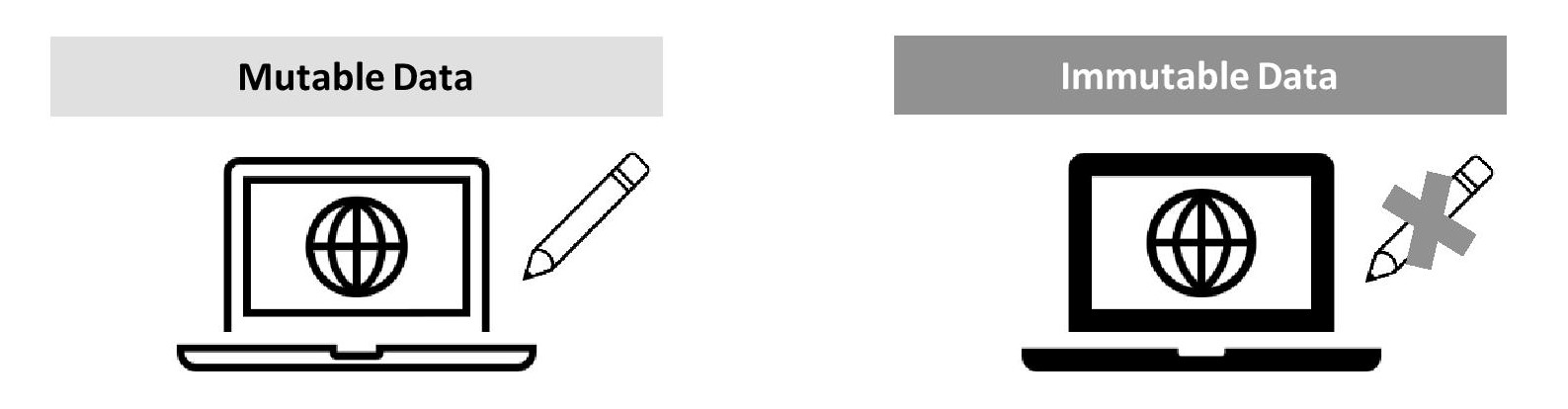
For example, CUSTOMER dataset contains many types of data e.g., name, date of birth, parents, children, address, contact details, jobs, cars etc. In this dataset, you must have judged which information is immutable and which mutable.
In the above example, customer details like name, date of birth, parents, children etc. are immutable details which can’t be and should not be changeable plus should not be delectable. This makes immutable data to be preserved. This behavior must be captured in metadata and should be managed by Data Governance team.
Referring to the same above example, customer details like address, contact details, jobs, cars etc. are mutable information as one customer can change his/ her address or can change contract details etc. This behavior should also be captured in metadata and should be managed by the Data Governance team.
Please note, immutable and mutable behavior in the above example is required in OLTP (explain as a different topic) but when we come to Data Warehouse and Data Lake, immutable behavior is a given thing for Fact tables. But let me assure you, YES we need all kinds of historical data but that’s very much depends on the nature of the business. For example, Insurance business doesn’t care how many times you have changes your address or your contact details, they are more interested to keep your historical data like your health, your family, you’re eating habits etc. which is relevant for them to run their business. So, in other words, in Insurance related Data Warehouse, we might not even store irrelevant data element.
Point here is, the architecture of any Data Warehouse or Data Marts is to keep historical transactional data which is residing in Fact tables whereas data in Dimensions can be mutable based on the type of Dimension.
Finished reading? Test yourself with 10 questions on this topic.
Go to the questions →From I Am Datapedia! by Mustafa Qizilbash, published here free by the author. Nothing about your reading is stored.