Learn free · topic 137
Data Federation
Data Federation works just like Data Virtualization framework but what is the difference between both.
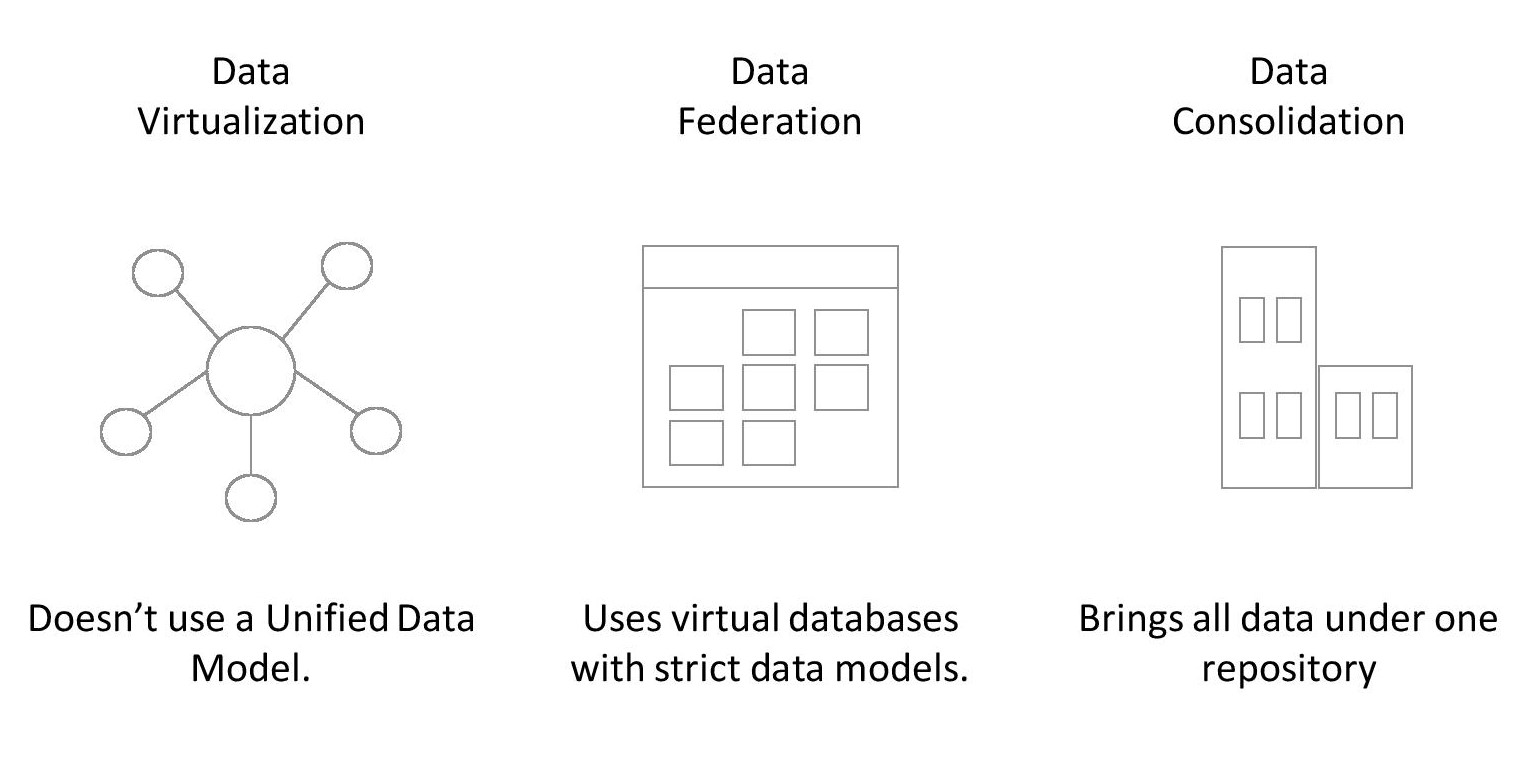
Conceptually, both Data Federation and Data Virtualization works the same way, but Data Federation is restricted to relational database whereas Data Virtualization also includes data appliance, NoSQL, Web Services, SaaS, and enterprise applications etc., as well.
Another major difference i.e., Data Federation doesn’t create a unified data model whereas Data Virtualization does.
Below are a few similar behaviors of both Data Federation and Data Virtualization.
- Single Access Point: Access all data stores from a single environment.
- UAM: Use Access Management at one place.
- Data Quality Management: Data Quality issues can be identified from a single point.
- No Data Movement: No ETL/ ELT is required.
- Ease of use: As users don’t have to write queries in different languages. Users can write in one language, and it will create a wrapper to talk to all the connected systems.
- No Additional Storage: As a virtual copy there is no cost for any separate copy of data, so no additional storage is required.
- Low Risk: As it’s not hosting the data copy as compared to Data Warehouses or Data Lake where data is physically moved, there is no chance of missing any data.
- Better for Analytics: As all the source data models are connected and data is fetched in real like, it makes source data available in real-time for Data Analysts and Data Scientist
- Performance Impact: Some impact on source systems as some queries will run at source.
- Functional Knowledge: Seek dedicated involvement by Data Stewards and Functional consultants.
- No Historical Data: As there is no copy of data hosted so history data is also not maintained. These are best suited along with Data Warehouse in-place.
Finished reading? Test yourself with 10 questions on this topic.
Go to the questions →From I Am Datapedia! by Mustafa Qizilbash, published here free by the author. Nothing about your reading is stored.