Learn free · topic 149
Data Lake
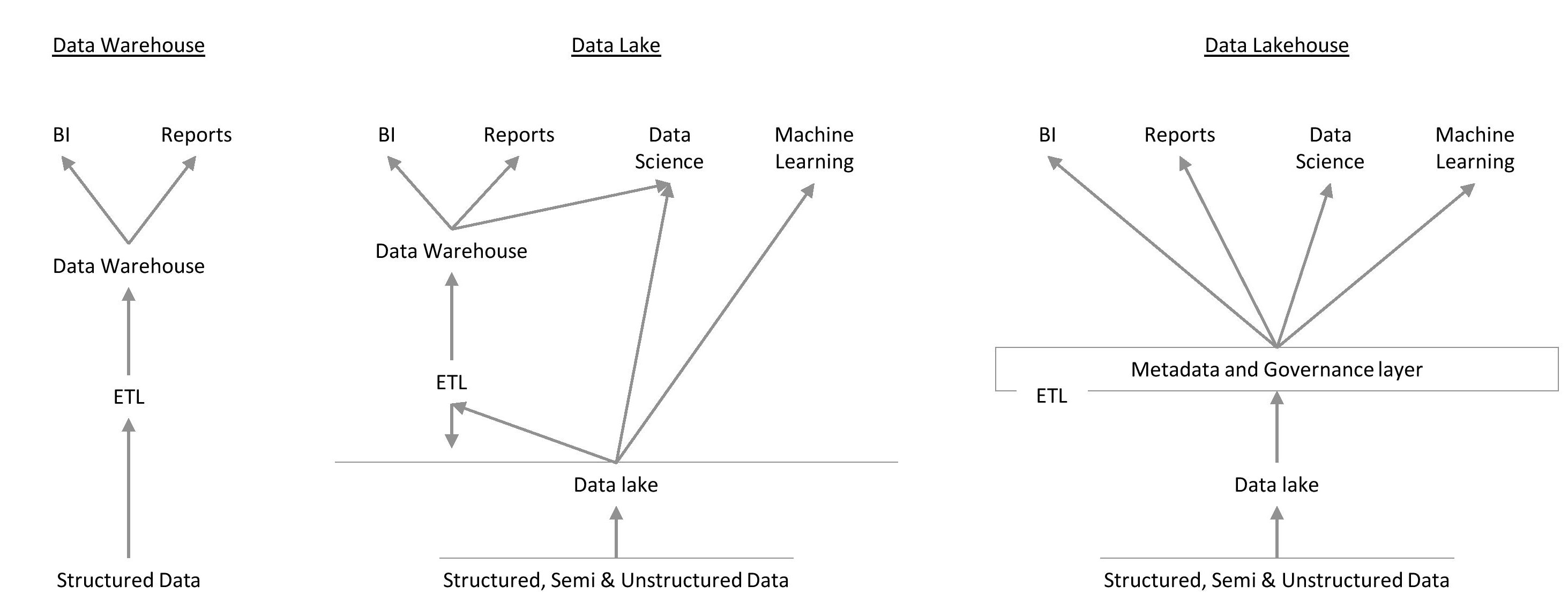
The solution that emerged was the Data Lake. A Data Lake is a centralized repository that stores structured, semi-structured, and unstructured data in its raw form. Unlike a Data Warehouse, which requires data to be modeled and cleansed before it is loaded, a Data Lake follows a schema-on-read philosophy. Data is ingested quickly, without requiring upfront modeling, and structure is applied later when the data is analyzed. This makes the Data Lake highly flexible for exploratory analysis, advanced analytics, and machine learning.
The architecture of a Data Lake typically rests on distributed storage technologies such as Hadoop Distributed File System (HDFS) in its early days, and more recently on cloud object storage platforms such as Amazon S3, Azure Data Lake Storage, or Google Cloud Storage. These systems are designed to hold massive volumes of diverse data at low cost, making it feasible to retain information that was once discarded because it did not fit neatly into a relational schema.
What makes the Data Lake powerful is its ability to serve as the foundation for modern analytics and artificial intelligence. With raw and historical data available in one place, organizations can train machine learning models, analyze streaming data for real-time insights, and combine traditional reporting with new data sources to create richer perspectives.
Consider an example from healthcare. Hospitals generate enormous volumes of structured data (patient records, billing data) alongside semi-structured data (XML-based lab results) and unstructured data (X-rays, MRI images, physician notes). A Data Warehouse may be able to handle the structured portion, but it would struggle with the sheer size and diversity of medical images or free-text notes. A Data Lake, however, can store all of these data types together. Analysts can then apply natural language processing to doctor’s notes, computer vision to radiology images, and statistical analysis to lab data, all within the same environment.
This flexibility, however, comes with challenges. Unlike a Data Warehouse, a Data Lake does not enforce strong governance or data quality by default. Without careful management, a Data Lake can degrade into what many practitioners call a “data swamp”, a repository where data is plentiful but poorly catalogued, inconsistent, and hard to use. For this reason, modern Data Lake implementations emphasize metadata management, data catalogs, access controls, and lifecycle governance to preserve usability.
In summary, the Data Lake expanded the enterprise data landscape by enabling organizations to store and process data in any format and at any scale. It complements the Data Warehouse by addressing new forms of information and by supporting advanced analytics, machine learning, and real-time decision-making. With proper governance, the Data Lake becomes not just a dumping ground for raw data, but a powerful platform for innovation and competitive advantage.
Finished reading? Test yourself with 10 questions on this topic.
Go to the questions →From I Am Datapedia! by Mustafa Qizilbash, published here free by the author. Nothing about your reading is stored.