Learn free · topic 79
Data Dictionary
A Data Dictionary is the next step towards mitigating the Risk of a potential Data Swamp.
‘Data Dictionary comes under Metadata Management.’
In the IT World, we all know that new products and solutions keep coming year by year, so it's very important to capture what has been implemented. A Data Dictionary is one of the most important items for a system's impact analysis as it gives a clear picture of all the elements in the database.
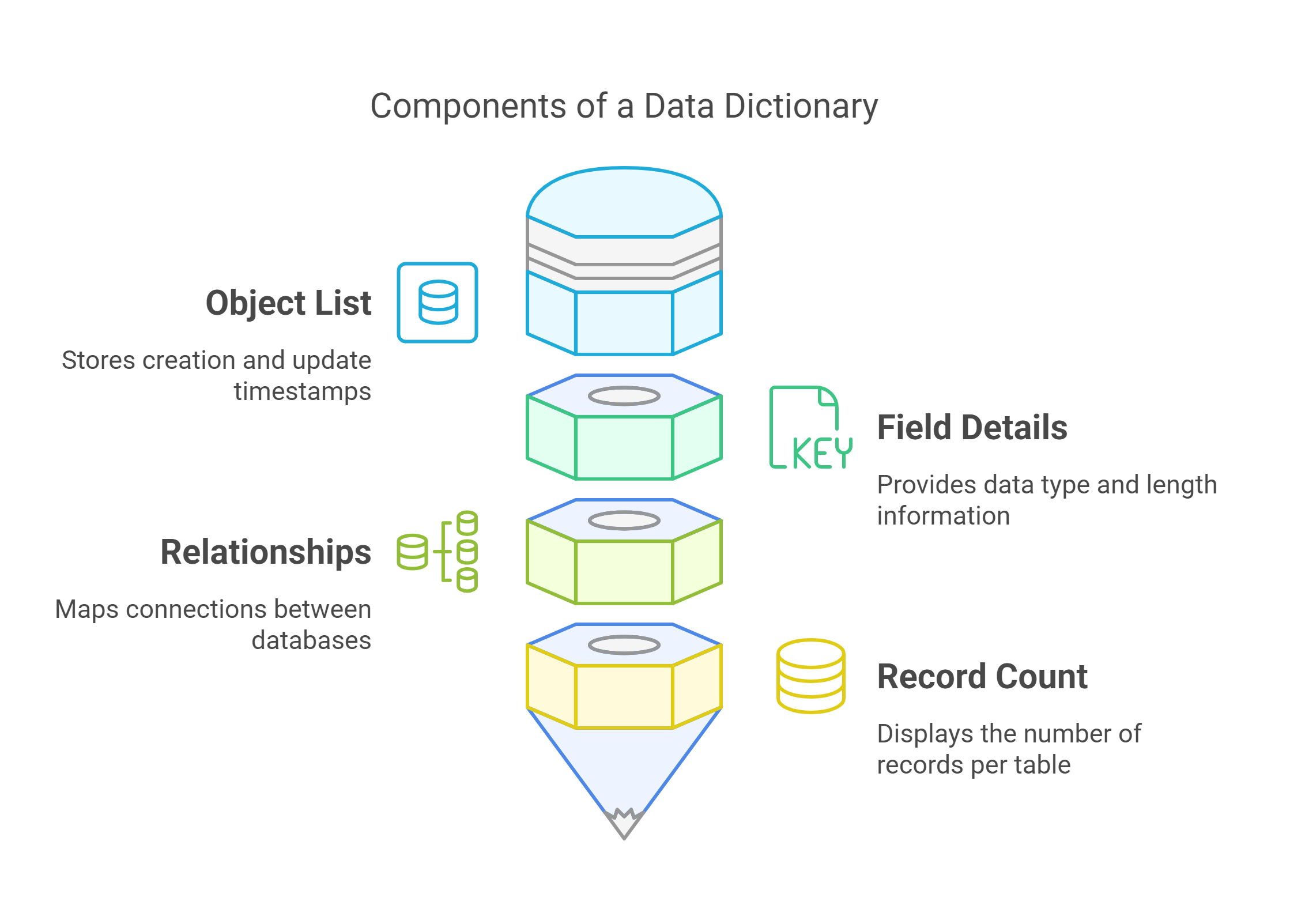
Data Dictionary stores metadata information about databases like.
- List of all the objects and when each was created or updated.
- Details like field name, description, data type, length, indexes, primary & foreign keys etc.
Relationships between tables, schema(s) and databases etc.
- Number of records in each table
There are 2 types of Data Dictionaries.
- Active Data Dictionary: It's managed within the same database itself so whenever there is a change in the database it is captured automatically.
Passive Data Dictionary: It’s maintained in a separate database or is a manually maintained file with all the above-mentioned information.
‘Normally, technical folks interact with Data Dictionaries.’
Finished reading? Test yourself with 10 questions on this topic.
Go to the questions →From I Am Datapedia! by Mustafa Qizilbash, published here free by the author. Nothing about your reading is stored.