Learn free · topic 16
How to SelectYour Metadata
While the objective is to imbue data with context, the crucial question is: what type of context are we seeking? Ideally, we aim for a trustworthy and secure context.
Outlined below are 3 high-level steps to guide you in selecting mandatory metadata effectively.
- Choosing the Right Metadata using the 5W 1H Method: Employ the 5W 1H method (Who, What, When, Where, Why, and How) to meticulously choose metadata that aligns with your specific objectives. This method ensures a comprehensive understanding of the context each metadata element provides.
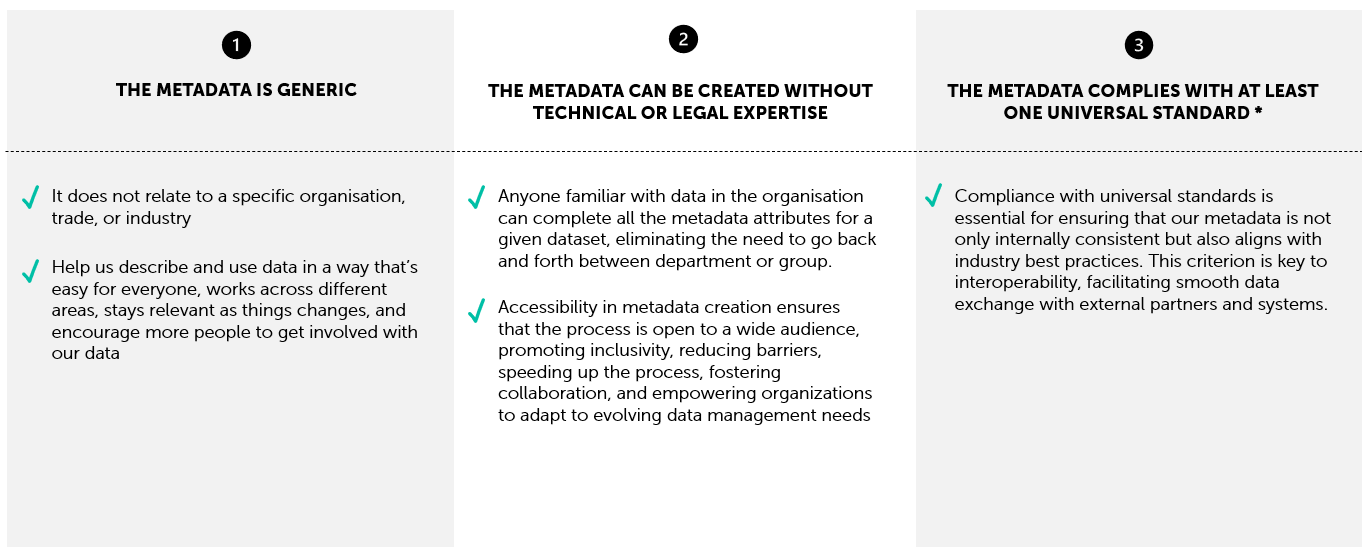
- Filtering the metadata with 3 Selection Criteria: Streamline your selection further by applying three essential criteria to the metadata options:
- For Everyone: Choose metadata that anyone can understand, not tied to specific organizations or industries. This makes data easy to use, keeps it relevant, and encourages more people to get involved.
- Anyone Can Create: Pick metadata that anyone familiar with the organization's data can create. No need for technical or legal expertise. This makes the process open to everyone, speeds things up, and promotes collaboration.
- Follow Standards: Ensure your metadata follows universal standards. This keeps things consistent internally and aligns with best practices in the industry, making it easy to share data with others.
(*) Note: Some of the recognized universal standards are Dublin Core, Metadata Objects Description Schema (MODS), Preservation Metadata: Implementation Strategies (PREMIS) and Multimedia Content Description Interface (MPEG-7)
Concluding the Selected Metadata by using 6 Golden Rules
Let’s quickly go through each rule. The chosen metadata should follow at least one of these rules, fitting with what we have already set.
Contextualization: Metadata should tell us about the data. It needs to give a clear meaning, so users understand why the data matters.
- Governance: Metadata should follow the rules for using data. Following set rules ensures the metadata is consistent and follows organizational guidelines.
- Reliability: Metadata should make us trust the data. By giving accurate and consistent info, metadata helps us trust the data for decision-making.
- Uniqueness: Metadata should make data stand out. Making sure each piece of metadata is unique avoids confusion and keeps data precise.
- Reusability: Metadata should make others want to use the data again. Designing metadata so it can be used in different situations makes data management more efficient.
- Discoverability: Metadata should help find data easily. Making data easy to discover ensures users can quickly find and understand what they need.
Finished reading? Test yourself with 10 questions on this topic.
Go to the questions →From I Am Datapedia! by Mustafa Qizilbash, published here free by the author. Nothing about your reading is stored.