Learn free · topic 352
The Good, The Bad, and The Ugly
In the modern data landscape, few topics spark more debate than the question: “What is a Data Product?”
Across conferences, boardrooms, and industry discussions, the term has taken on a life of its own. Many practitioners argue over definitions, frameworks, and taxonomies, yet the underlying truth is simpler: most of us already know what a data product is.
The real challenge isn’t defining it. It’s understanding its quality.
At its core, a data product is any output, a curated dataset, analytical model, dashboard, that delivers tangible business value, offsets the cost of inaction (COI), and can be reused by multiple stakeholders. By that definition, its importance is undeniable.
But the real question is: Is the data product Good, Bad, or Ugly?
The Juice Analogy
To make this concept tangible, think about juice as an analogy.
When someone makes juice for you at home, is it a product? No. Even if it has the same ingredients, taste, and nutrition as a bottled juice, it’s not a product because:
- It’s made only once, for you.
- It’s not designed for consistent reproduction or sale.
- There’s no brand or owner accountable for its quality.
Now, consider the same juice produced by a brand and sold in a store. Suddenly, it is a product because:
- It has a business case to be sold.
- It can be reproduced consistently at scale.
- It has ownership (a brand) ensuring accountability and trust.
Not all juice products are the same, though. Some display full ingredient lists, nutritional data, and certifications, the equivalent of a well-governed, transparent data product. Others, like certain local juices, lack labels entirely. Are they still products? Yes.
Whether you buy an unlabeled juice depends on:
- Trust in the producer.
- Trust in the seller.
- Your context (if you’re in a desert, any juice will do).
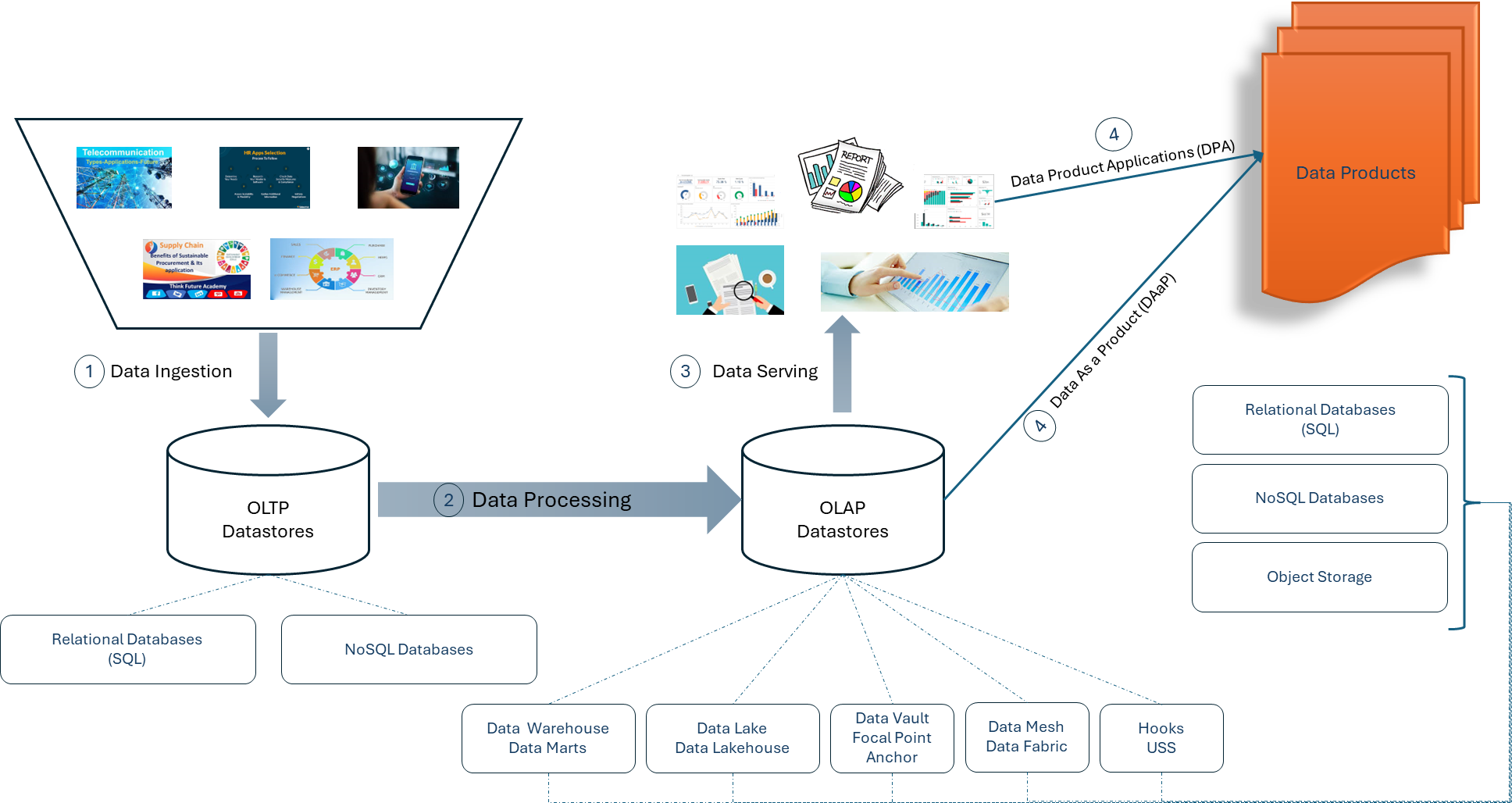
Data products work the same way. A one-off dataset or report is like homemade juice, valuable, but not a product. It becomes a data product when it:
- Serves a broader business purpose.
- Can be reproduced consistently for reuse.
- Has clear ownership and governance to ensure trust.
In short, being a data product is less about the data itself and more about repeatability, trust, and accountability, the traits that turn raw data into something businesses can rely on.
How to Judge a Data Product: The Good, The Bad, and The Ugly
Not all data products are created equal. Some are reliable, trusted, and scalable. Others function but come with risks. Some barely hold together while delivering value.
To evaluate where a data product falls, ask:
- Ownership: Is there clear accountability for its maintenance and evolution?
- Standards: Are interoperability and integration patterns followed?
- Service Levels: Does it meet performance, uptime, and freshness SLAs?
- Quality: Are validation, deduplication, and accuracy checks in place?
- Governance: Is there proper lineage tracking, metadata, and compliance?
Based on these dimensions:
- Good: Trusted, reliable, compliant, scalable.
- Bad: Useful but lacking rigor, may miss standards or controls.
- Ugly: A siloed, fragile, non-compliant solution, still valuable but high-risk.
A product’s classification isn’t a verdict on whether it should exist; it’s a signal of how urgently it needs improvement. If it drives business value, offsets COI, and is reusable, it is a data product, but whether it’s championed or merely tolerated depends on its quality.
Case Studies: Good, Bad, and Ugly in Practice
The Good: Retail Analytics Platform
A global retailer builds a governed, versioned set of sales and inventory datasets. APIs feed downstream systems, while executives use dashboards. It meets SLAs, is certified by data governance teams, and scales seamlessly during seasonal spikes. Stakeholders trust it implicitly.
The Bad: Marketing Campaign Report
A marketing team develops a dashboard that drives decisions but relies on manually refreshed spreadsheets and lacks quality checks. It delivers value but creates rework, confusion, and occasional errors.
The Ugly: Shadow IT Model
A data scientist in a business unit builds a machine learning model using local extracts. It generates millions in incremental revenue but exists outside governance, with no lineage, testing, or integration path. If the creator leaves, the model may die with them.
These examples highlight the spectrum. The value is undeniable in all three cases, but only the first is truly sustainable.
Checklist: Assessing Your Data Products
Use this Data Product Quality Checklist to bring rigor to evaluation, it can change on case-by-case basis:
- Business Alignment: Does it clearly address a defined business goal or decision?
- Reusability: Can multiple teams or systems consume it with minimal friction?
- Ownership: Is there a responsible team or individual for its lifecycle?
- Quality & SLAs: Are data accuracy, latency, and uptime monitored?
- Governance: Is it cataloged, documented, and compliant with internal policies?
- Interoperability: Does it adhere to enterprise standards and data contracts?
- Scalability: Can it handle growing usage without degradation?
- A “Yes” across these seven dimensions signals a Good product.
- Three to five “Yes” answers may point to a Bad product.
- Anything less typically indicates an Ugly product requiring urgent remediation.
Shifting the Conversation
Instead of debating what a data product is, the industry must focus on how to make them better. The critical questions are:
- How do we increase the proportion of Good data products?
- How do we elevate the Bad into reliable, governed assets?
- How do we stabilize or replace the Ugly without disrupting business value?
The path forward isn’t just technical, it involves cultural shifts, governance investments, and a relentless focus on trust and usability.
In the end, businesses don’t just need data products. They need Good data products, the kind that inspire confidence, empower decisions, and withstand the test of time.
Finished reading? Test yourself with 10 questions on this topic.
Go to the questions →From I Am Datapedia! by Mustafa Qizilbash, published here free by the author. Nothing about your reading is stored.