Learn free · topic 333
Loops
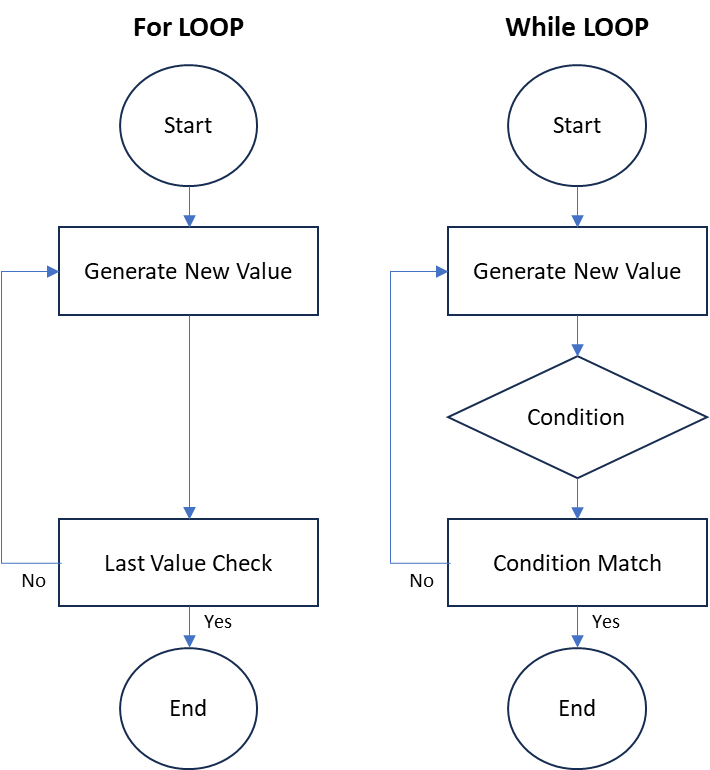
In the context of data and databases, loops typically refer to iterative processes where a set of operations is repeated multiple times based on a specific condition. Loops are fundamental in programming for handling repetitive tasks, and in the data world, they are commonly used for iterating through datasets, processing records, and performing various operations.
There are two types of loops:
- For Loops
- While Loops
For Loops:
A for loop is used to iterate over a sequence (such as a list, array, or range) for a predetermined number of times. In the data world, loops are often used to iterate through rows in a dataset or perform a certain operation a specific number of times.
Example (Python):
for row in dataset:
# Process each row in the dataset
print(row)
While Loops:
A while loop continues iterating as long as a specified condition is true. In the data world, while loops are useful when the number of iterations is not known in advance, and the loop continues until a certain condition is met.
Example (SQL):
DECLARE @counter INT = 0;
BEGIN
-- Process data or perform operations
SET @counter = @counter + 1;
END;
These loop structures can be applied in various data-related scenarios, such as data cleaning, transformation, or aggregation. For example, when you need to apply a certain operation to each row in a dataset or when you want to aggregate data until a specific condition is met.
It's important to note that the specific implementation of loops may vary depending on the programming or query language used (Python, SQL, etc.), and the application context in data analysis, data manipulation, or database operations.
Finished reading? Test yourself with 10 questions on this topic.
Go to the questions →From I Am Datapedia! by Mustafa Qizilbash, published here free by the author. Nothing about your reading is stored.