Learn free · topic 1
What is Data?
Data has become one of the most powerful words in our modern vocabulary. It drives our world, impacting decisions in industries, governments, and our daily lives. But what exactly is data? How do we define it in a way that captures its full impact and utility?
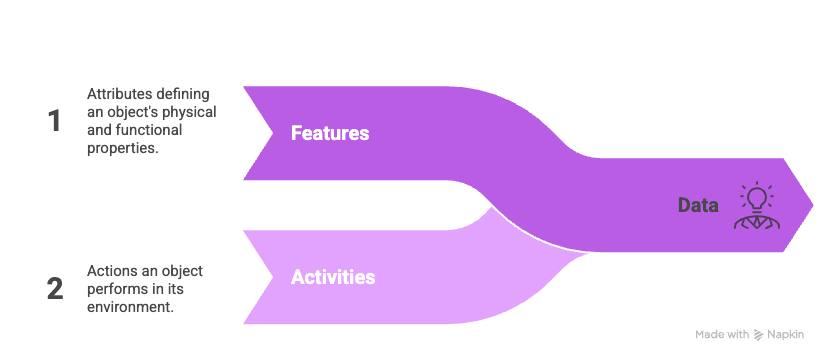
“Features and Activities of an Object is Data.”
This phrase encapsulates data’s essence. But let’s break down what it really means.
Origins and Traditional Definitions
The word "data" originates from the Latin word datum, which means "something given". This concept persists in how we perceive data today: it’s a foundational input, a starting point. In French, for example, data is referred to as données, highlighting its roots as something "given" or granted for analysis.
If you look up data in Wikipedia, you might find it defined as "individual facts, statistics, or items of information, often numeric." More formally, data is a set of values related to qualitative or quantitative variables about one or more entities or objects. In this sense, each "datum" represents one specific value or measurement.
My Perspective: Data is Object’s Features and Activities
One of my students once asked me, "What is data?" Instead of quoting the textbook definition, I provided my interpretation: “Data is the features and activities of an object.”
To really grasp this, let’s unpack the concepts of object, properties, and behaviour:
- Object: An object is simply something that has visible properties. It could be anything, a person, an organization, or even an event.
Note: In data world we call Object as Entity (explained in next topic).
- Features: These are the descriptive aspects of an entity/object. For example, a car has properties like a model name, engine type, number of seats, and tires. These characteristics give us a stable picture of what the car is.
Note: In data world we call Features or Properties or Characteristics as Attribute (explained in next topic).
- Activities: Activities represent actions associated with an object, categorized into two types: internal and external.
- Internal Activities: These are actions or changes that occur within the object itself, driven by its properties and conditions. Examples include a car's mileage decreasing over time due to engine wear, or a device’s battery life shortening after repeated charge cycles. Monitoring internal behaviours helps in making decisions about maintenance and usage etc.
- External Activities: These are actions performed on the object by external agents or factors. Examples include buying, selling, or leasing a car, modifications made by owners, or external conditions like insurance policies affecting its value. External behaviours reflect the object's interaction with its environment, informing decisions on ownership, market value, and regulatory compliance.
Understanding both types of activities enables more informed, data-driven decision-making. Internal activities focus on the object's basic changes, while external behaviours are influenced by external interactions. Together, they provide a comprehensive view of the object's lifecycle, value, and usability.
When we talk about data, we’re referring to these features and activities, which provide measurable and actionable information. This kind of data is integral to any organization because it generates insights and supports decision-making.
The Business Value of Data
In the corporate world, data must tie to Return on Investment (ROI) to be valuable. Nobel laureate Robert M. Solow once remarked on the disconnect between productivity and software investments. Likewise, management expert Peter Drucker observed that treating systems and accounting as separate disciplines was ineffective. In line with this, HT Johnson and R. Kaplan's "Relevance Lost" emphasizes the need to integrate data-driven insights with business outcomes.
Companies operate in one or more lines of business, each with its own ROI model. Data, for any organization, should align with these business goals, driving value across these lines. Data that doesn’t contribute to decisions or isn’t actively supporting organizational objectives might be better off excluded from storage and analysis.
For Corporate, ‘Data MUST tag with ROI.’
Robert M. Solow's (Nobel Economics 1987)
"Software productivity doesn't show up in the numbers."
Peter Drucker at one point observed
“To treat systems & accounting/finance as two separate academic & professional disciplines is unacceptable.”
HT Johnson (a student of AD Chandler) & R Kaplan's
"Relevance Lost."
Alan S. Michael
"MUST tag with ROI of at least one line of business". "What is a line of business?" the answer is "an industry in which the company competes". "What is an industry" the answer (unfortunately) has many answers today. Some industry classification systems suggest the global economy has about 150 industries, some say a few hundred, the U.S. government suggests just over 1,000 - and my firm (based on Michael Porter's five forces model) believe there are more than 23,000 industries. In short, a company = one or more lines of business; and each line of business has data + an ROI model. Industry classification systems with different "industry" definitions - https://en.wikipedia.org/wiki/Industry_classification
David
That (allegedly) laudable objective has so far proved elusive to the closed (Newtonian) world view of finance.
From Data to Wisdom: Beyond the DIKW Model
The traditional DIKW (Data → Information → Knowledge → Wisdom) model is widely used to conceptualize data's journey from raw facts to actionable insight. Although helpful, this model doesn’t fully capture the continuous nature of the data cycle. In reality, data processing is iterative, one cycle’s output serves as another’s input. This perpetual cycle fuels Machine Learning, Deep Learning, and Data Science applications, where data continually refines itself and informs subsequent processes.
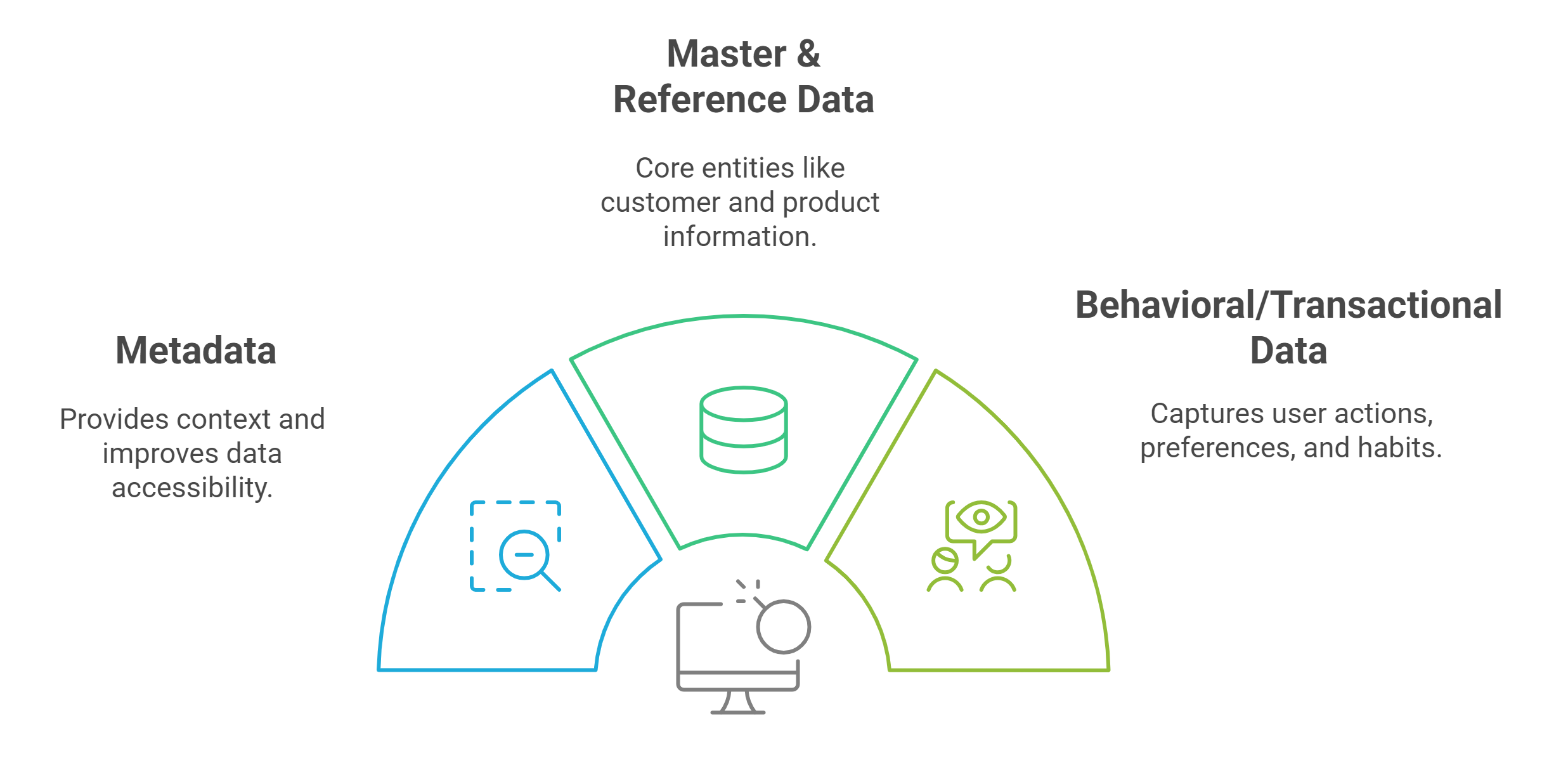
Data in its Many Forms
Data exists in various forms, including:
- Metadata: Data about data, which offers context and improves data accessibility.
- Master & Reference Data: Core data entities such as customer or product information.
- Transactional Data: Information that captures actions, preferences, and habits of users.
Note: In data world, we call Activities as Transactions.
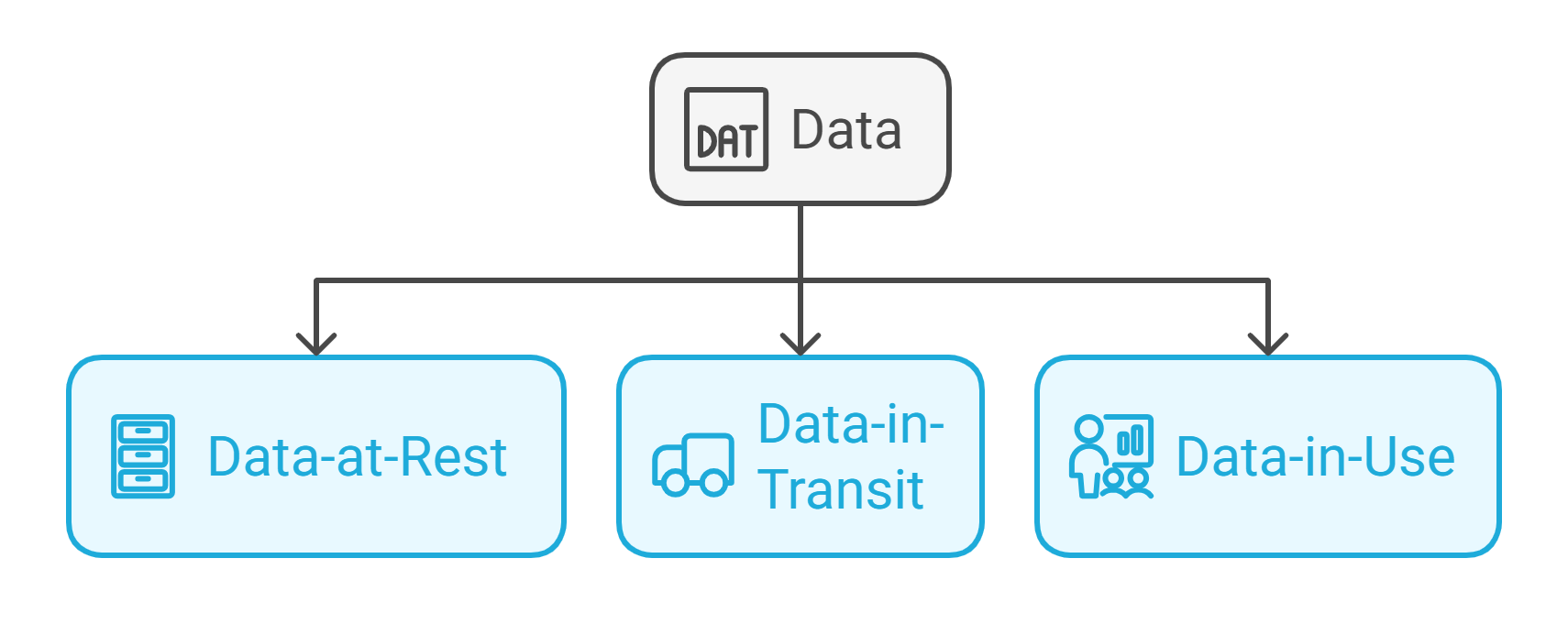
- Data-at-Rest: Stored data not actively in use, such as archived transaction records.
- Data-in-Transit: Data being transferred between systems.
- Data-in-Use: Actively processed data supporting immediate operations, like real-time analytics.
These forms serve various functions within an organization, catering to management, operational teams, auditors, compliance, and regulatory bodies.
The Consequences of Ignoring Data
Organizations that fail to harness data effectively risk failure. In our current era, data is one of the most powerful assets a company possesses. Without a robust data strategy, organizations cannot expect to stay competitive. CEOs and other executives today are more reliant than ever on real-time data to make informed decisions. In fact, Decision Support Systems (DSS) have become so data-dependent that executives want access to near-instantaneous updates, enabling them to gauge customer behaviour down to recent interactions.
Unique Properties of Data
Unlike traditional assets, data behaves differently when utilized. Assets like machinery or physical resources are depleted or depreciate with use, whereas data gains value through usage. Here are some of the distinctive qualities of data:
- Generates More Data: Every interaction with data produces metadata, such as who accessed it, when, and for what purpose. This meta-information, in turn, becomes useful data for tracking, analysis, and optimization.
- Increases in Value: Data’s utility increases with each use. For example, a customer behaviour dataset grows more valuable as it gets referenced repeatedly to inform decisions, revealing patterns and trends.
- No Expiration Date: Data doesn’t wear out, though it may become less immediately relevant. Over time, data might be classified as "warm" or "cold," yet it always retains potential value. The decision to purge or archive data requires careful consideration, especially given regulatory constraints and potential future applications.
In summary, data is much more than just “information” in the traditional sense. It’s a dynamic, living asset that evolves and continues to add value over time, fuelling the processes that drive organizational growth and strategy.
Data is at the heart of today’s decision-making and innovation. When understood as the properties and behaviours of entities, it reveals a new perspective, data is a resource that, when properly managed, yields insights and shapes the path forward. For any business or individual to remain relevant, they must not only gather data but also continually evolve in how they interpret and apply it.
Finished reading? Test yourself with 10 questions on this topic.
Go to the questions →From I Am Datapedia! by Mustafa Qizilbash, published here free by the author. Nothing about your reading is stored.