Learn free · topic 15
Can Data be therewithout Metadata
Question: Can there be Data with Metadata?
As discussed in a different context, specifically in the comparison between Data and Metadata, my friend Daniel Lundin aptly pointed out that 'One person's Metadata is another person's Data.' This statement underscores the necessity for a profound grasp of the fundamental principles of Data.
Let's delve into the interpretation...
In the discussion on 'Data vs Metadata,' as illustrated in the accompanying image, our attempt was to delineate the distinction between Data and Metadata. To simplify comprehension, we labeled Column Names as Metadata and the actual content as Data.
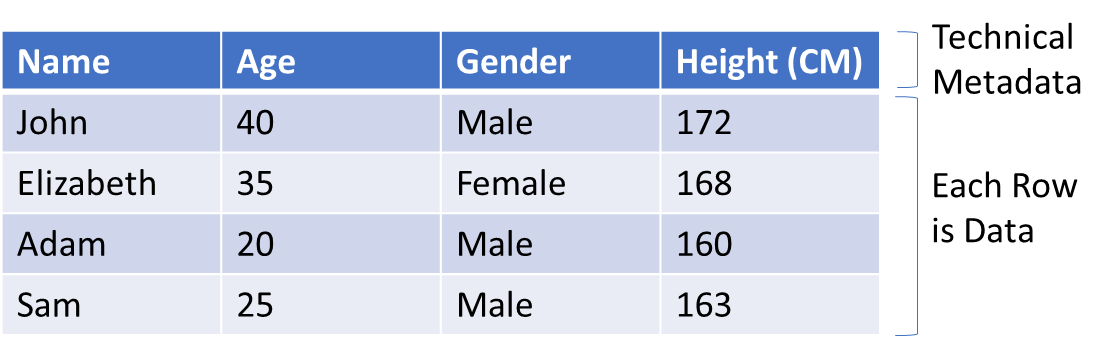
Let's delve deeper and explore the question: Can there be Data without Metadata? Disclaimer: In my understanding, the answer is NO; it's not possible. Before we delve into further details, let me quickly remind you that traditionally, there are three types of Metadata: Business, Technical, and Operational. The initial image in this discussion illustrates Technical Metadata in the form of Column Names.
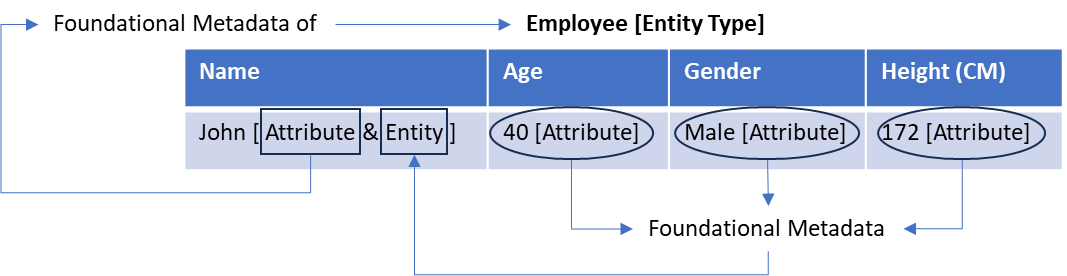
Foundational Metadata:
Foundational Metadata can be categorized into two types: Key Columns and Non-Key Columns.
Key Columns consist of data that represents the attributes of the Entity Type. The information stored in Key Columns directly relates to and defines the characteristics or properties of the specific Entity Type.
Non-Key Columns consist of data representing the attributes of Key Columns within the same row. In this context, the data found in Non-Key Columns provides additional details about the attributes present in the Key Columns of the corresponding row. It complements and extends the information provided by the Key Columns, offering a more comprehensive view of the data in a specific record or entity.
In summary, the Key Columns hold essential attributes defining the Entity Type, while the Non-Key Columns contain supplementary details about the attributes found in the Key Columns of the same row, enriching the overall understanding of the data.
Finished reading? Test yourself with 10 questions on this topic.
Go to the questions →From I Am Datapedia! by Mustafa Qizilbash, published here free by the author. Nothing about your reading is stored.