Learn free · topic 82
Data Architecture
One must first understand the existing Enterprise Data Architecture Landscape as every new project’s data architecture must follow existing Landscape rather introducing new components with every new project. I have personally seen organizations creating Data Components/ Tools Swamp, as in current era of Big Data there are hundreds of tools offering the same functionalities so one must know whether a tool is already there in existing Landscape or not for a particular requirement. I would consider this as, one the biggest Risk in current era.
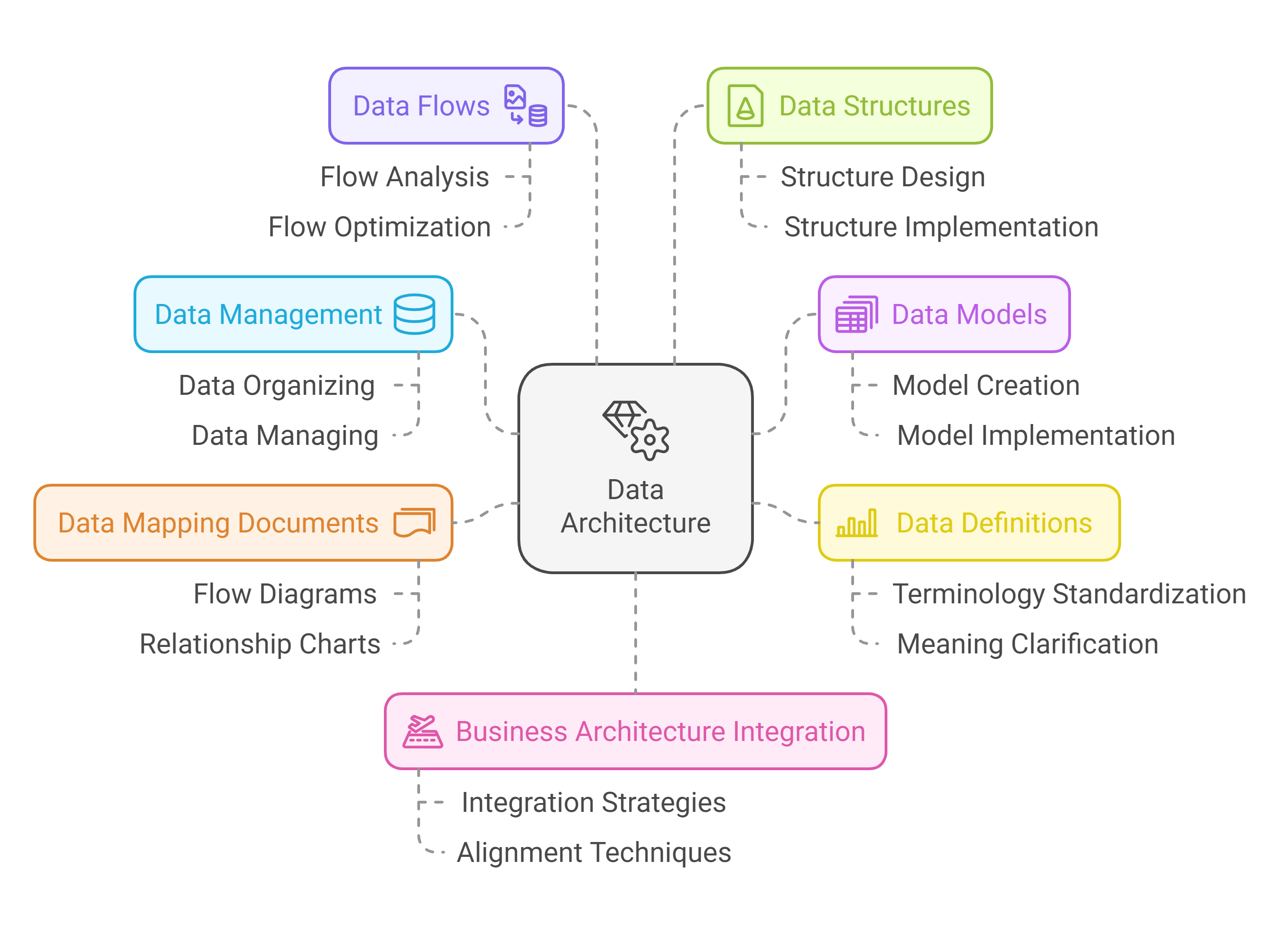
Data Architecture is driven by Data Architects and work towards achieving business value, compliance and implementation process aligned with Enterprise Data Architecture.
Enterprise Data Architecture consists of many components but two of these are very critical i.e., 1) Enterprise Data Model and 2) Data Flows.
- Enterprise Data Model includes conceptual, logical, and physical data models with all the possible data-points across the organization including entities, attributes, relationships, and rules. It must be agreed by all the stakeholders, before all upcoming projects.
- Data Flows represent the data movement across the organizations either via databases, applications, networks etc. Data Flows define the relationship between entities and business processes e.g., a Product is created by Product Development Process, produced by Manufacturing Process, sold by Order Management Process etc.
Steps for PROJECT/ PRODUCT Data Architecture
Below are steps to start working on Data Architecture with respect to a particular project or solution or product. Please note, the data architecture of every project must align with Enterprise Data Architecture.
- Outline Architectural Scope
- Business Requirement Scope
- Design and Plan
- Implement
Implementation Methodologies
We all know there are two famous implementation methodologies. In the implementation step, one must decide which methodology project is going to follow.
- Waterfall follows sequential implementation approach where each phase or module is dependent on previous one.
- Agile follows an object-oriented approach where multiple activities can be started in parallel using Sprints. DevOps, DataOps, MLOps all are inherited from Agile methodology.
Finished reading? Test yourself with 10 questions on this topic.
Go to the questions →From I Am Datapedia! by Mustafa Qizilbash, published here free by the author. Nothing about your reading is stored.