Learn free · topic 373
Data Storytelling
Turning Insights into Impact
Data storytelling is the art of translating complex data into a compelling narrative that drives action. Just like a well-structured story, data storytelling involves characters, context, risks, and resolution.
- Engage Key Stakeholders (Characters)
Every good story has characters, and in data storytelling, these characters are your key stakeholders. They include business leaders, data teams, regulators, and end-users. Each stakeholder has different interests and priorities, so engaging them effectively ensures that data initiatives align with real needs.
Example (Banking Sector):
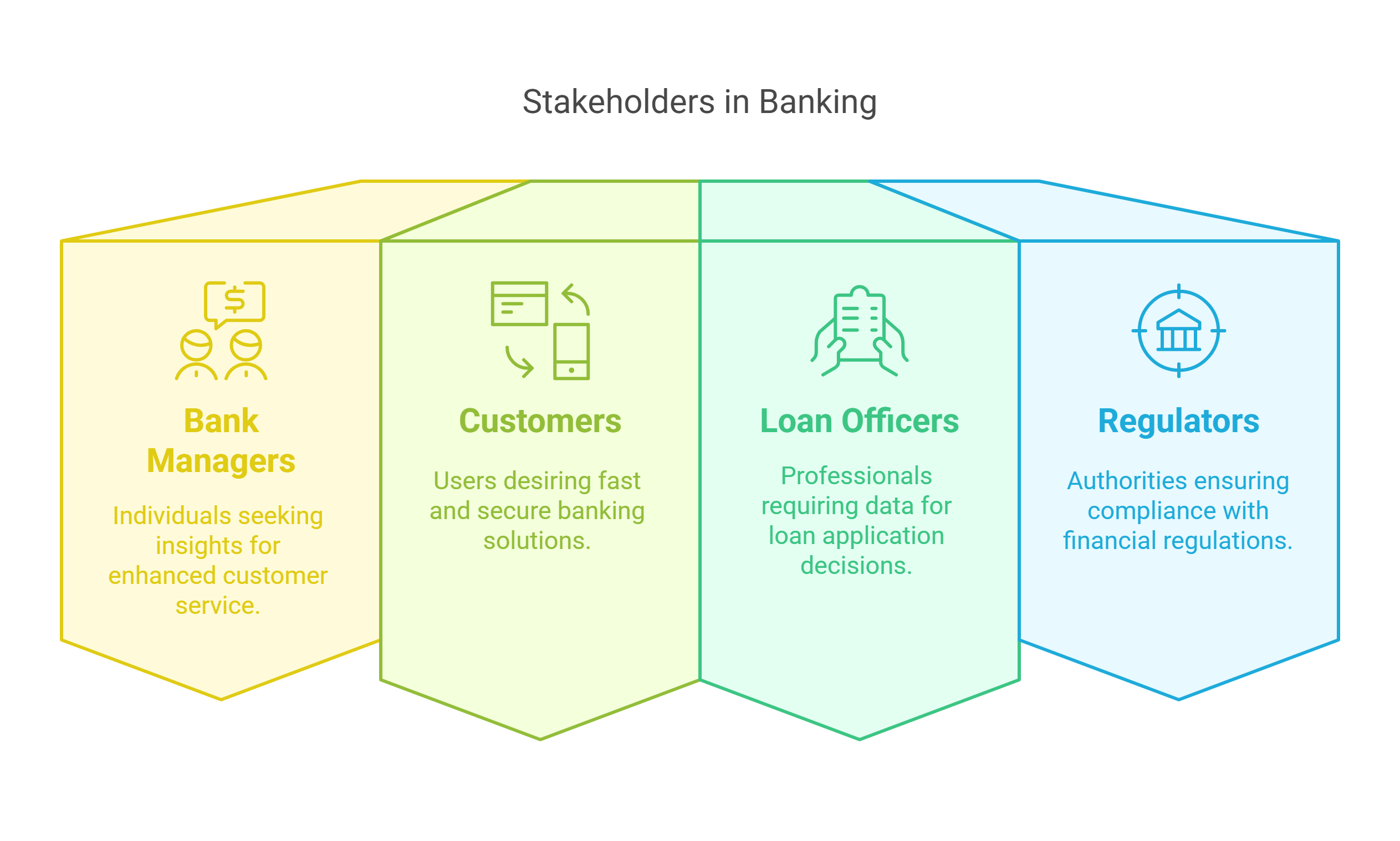
Imagine a bank wants to improve customer satisfaction. The key stakeholders might include:
- Bank Managers (who need insights to improve customer service),
- Customers (who want quick and secure banking services),
- Loan Officers (who need better data to approve or reject loan applications),
- Regulators (who ensure the bank follows financial laws).
By engaging all these stakeholders, the bank can implement data-driven solutions (such as faster loan approvals and better fraud detection) to improve customer experience.
- Understand Business Drivers & KPIs (Context)
Example (Banking Sector):
Consider a bank that wants to reduce customer complaints. Some key performance indicators (KPIs) they track are:
- Average wait time (how long customers wait for service),
- Loan approval speed (how quickly a customer gets loan approval),
- Customer retention rate (how many customers continue using the bank’s services).
If data shows that customers are frustrated due to long wait times, the bank might decide to introduce online appointment booking or AI chatbots for quick queries. Understanding these KPIs ensures that data insights lead to real improvements in customer experience.
- Assess the Cost of Inaction (COI)
A strong story includes conflict, and in data storytelling, the conflict is often the risks of not acting on data insights. By highlighting inefficiencies and missed opportunities, data professionals can demonstrate why decisions need to be made.
Example (Banking Sector):
A bank collects customer transaction data but does not analyze it properly. The risks of inaction include:
- Increased Fraud Cases (if suspicious transactions are not detected early),
- Losing Customers (if customers feel the bank does not offer modern digital services),
- Regulatory Fines (if the bank fails to comply with anti-money laundering regulations).
If data analysis reveals that fraudulent transactions can be detected early using AI models, the bank needs to act. Otherwise, it risks losing money and customer trust.
Define a Strategic Resolution Path (Road to Resolution)
Every great story has a resolution. In data storytelling, this means establishing a clear vision, milestones, and execution plan to drive meaningful outcomes.
Example (Banking Sector):
A bank wants to reduce loan approval time to improve customer satisfaction. The resolution path might include:
- Step 1: Identify the Delay Points 📌 – Analyze past loan applications to find out where delays occur.
- Step 2: Automate Verification Processes – Use AI to quickly check credit scores and financial history.
- Step 3: Monitor and Improve – Track how much loan approval time has reduced and make further adjustments.
- Step 4: Continuous Improvement – Gather customer feedback and refine the loan approval process.
By defining a clear roadmap, data-driven changes can be implemented successfully and measured for impact.
Final Thoughts
Data storytelling isn't just about numbers, it’s about communicating insights in a way that drives action. By engaging stakeholders, understanding business context, assessing risks, and defining a resolution path, we can use data to create real-world impact.
Finished reading? Test yourself with 10 questions on this topic.
Go to the questions →From I Am Datapedia! by Mustafa Qizilbash, published here free by the author. Nothing about your reading is stored.