Learn free · topic 374
Data Contract
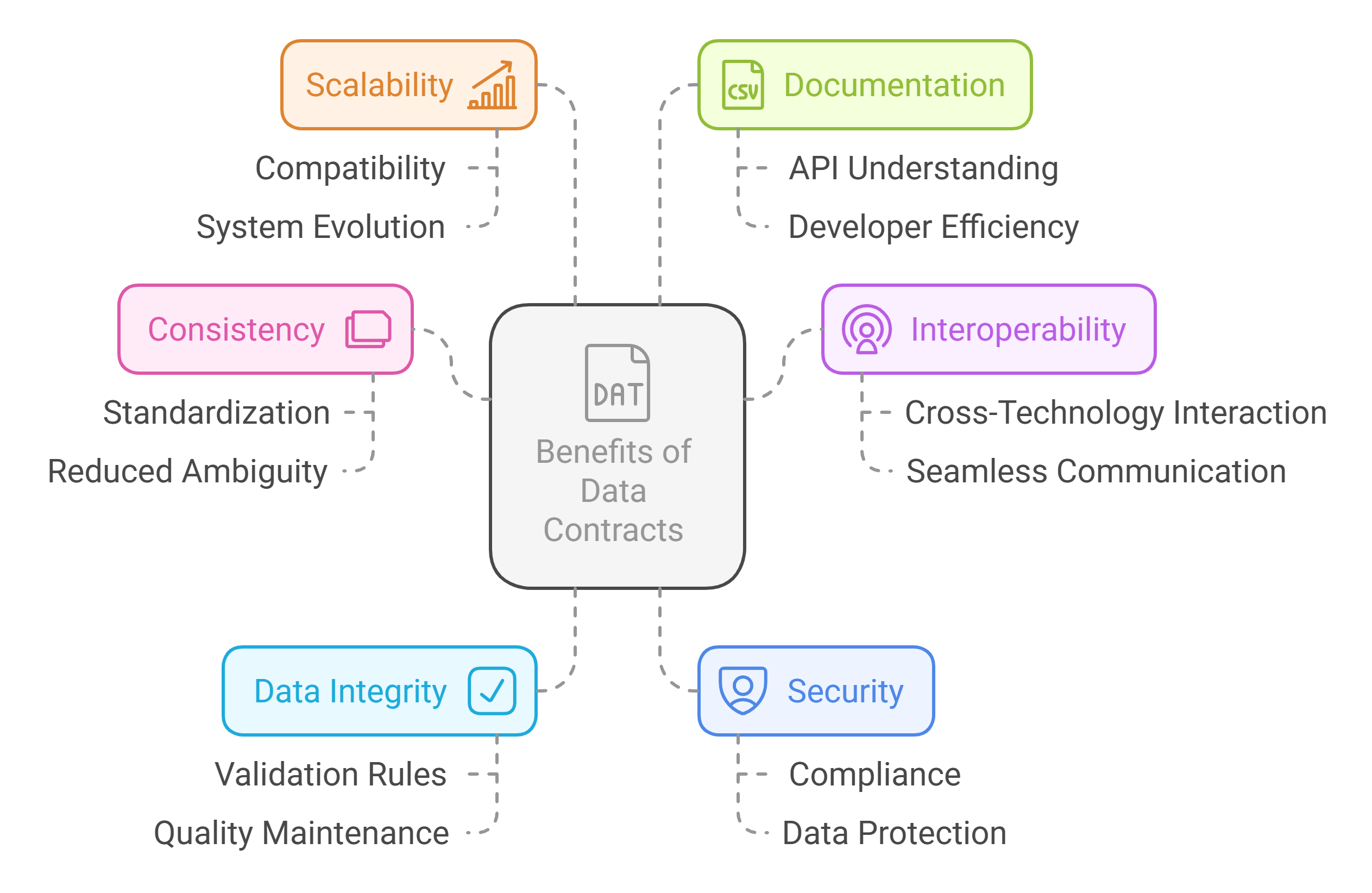
A data contract is a formal agreement between systems that defines the structure, format, and rules of data exchanged between them. It outlines the expected data fields, data types, constraints, and validation rules that govern the interaction, ensuring that all parties adhere to a consistent standard.
Importance of Data Contracts
Data contracts play a crucial role in software development for several reasons:
- Consistency: They provide a standardized way to define and communicate data structures across systems, reducing ambiguity.
- Interoperability: By adhering to a common contract, different systems, even those built with different technologies, can seamlessly interact.
- Data Integrity: Contracts enforce validation rules that help maintain the integrity and quality of data.
- Security: Clearly defined structures help prevent unintended data exposure and ensure compliance with security standards.
- Scalability: Well-defined contracts enable systems to evolve independently while maintaining compatibility.
- Documentation: They serve as a living document that helps developers understand and integrate with APIs efficiently.
Components of a Data Contract
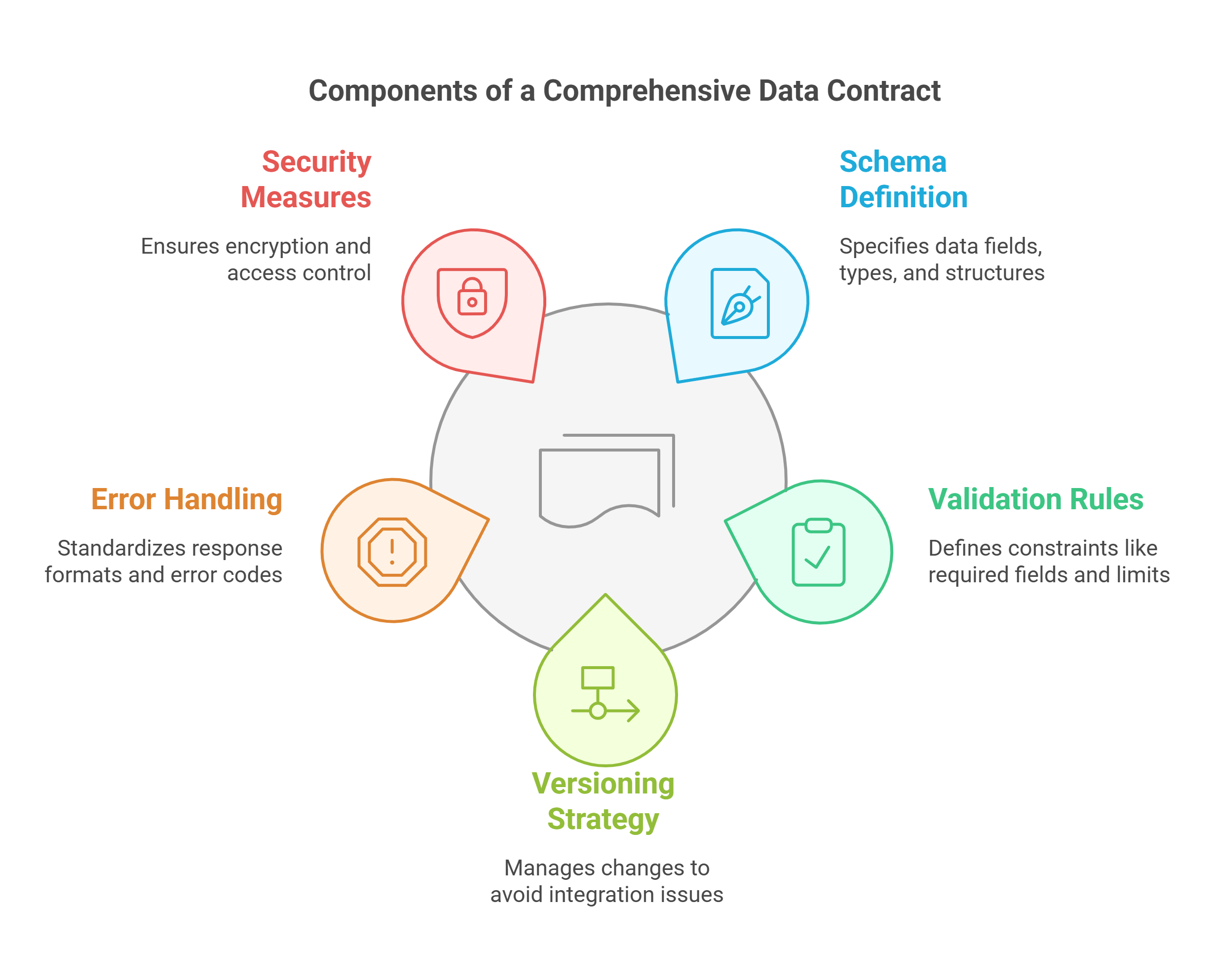
- Schema Definition: Specifies data fields, types (e.g., string, integer, Boolean), and structures (e.g., objects, arrays).
- Validation Rules: Defines constraints such as required fields, length limits, and regex patterns.
- Versioning Strategy: Establishes how changes to the contract are managed over time to avoid breaking integrations.
- Error Handling and Responses: Defines standard response formats and error codes for invalid data.
- Security and Compliance Measures: Includes encryption requirements, access control rules, and privacy policies.
Implementing Data Contracts
Organizations can implement data contracts using various technologies and standards, including:
- JSON Schema: Defines structured JSON data using a schema specification.
- Protocol Buffers (Protobuf): A compact and efficient format used for serializing structured data.
- OpenAPI Specification (OAS): Defines RESTful API structures, including request and response formats.
- GraphQL Schema Definition Language (SDL): Defines data structures and relationships for GraphQL APIs.
- Avro: A schema-based serialization framework commonly used in big data applications.
Versioning and Evolution
One of the biggest challenges in managing data contracts is evolving them without breaking existing integrations. Best practices for versioning include:
- Backward Compatibility: Ensure that newer versions of the contract do not break existing consumers.
- Deprecation Strategies: Clearly document and provide a timeline for phasing out older contract versions.
- Feature Flags: Introduce changes gradually and allow consumers to adopt new features at their own pace.
- Automated Testing: Implement contract testing to validate that changes do not introduce breaking issues.
A well-defined data contract is the backbone of robust system communication, enabling businesses to build scalable and secure applications. By adopting best practices in defining, implementing, and evolving data contracts, organizations can ensure smoother integrations, improved data consistency, and long-term maintainability in their software ecosystems.
Finished reading? Test yourself with 10 questions on this topic.
Go to the questions →From I Am Datapedia! by Mustafa Qizilbash, published here free by the author. Nothing about your reading is stored.