Learn free · topic 343
Attribution Data Models
Over the years, our approach to measuring marketing performance has drastically evolved and continues to change with advancing technology and evolving data policies. The days of rigidly assigning budgets to different marketing channels and relying solely on P&L statements to gauge the success of our efforts are behind us.
Assessing the performance of our ads involves understanding the correlation between our marketing spend and revenue generated. With data sources and clear models, especially when running campaigns across various channels simultaneously (e.g., Facebook, Google, Out Of Home, TV), the key question remains:
Which channels and touchpoints contribute significantly to the final sale?
To evaluate that, we employ distinct data models in marketing, each carrying its own set of advantages and limitations. These models must be tailored to fit each use case and align with how people interact with our business:
- Single-Touch Attribution Models
Single-touch attribution models give us a clear look at how a single touchpoint impacts the final sale, making analysis simpler. However, this simplicity overlooks the cumulative effect of multiple interactions, giving us a limited view of our overall marketing strategy's effectiveness.
These models suit businesses like E-Commerce Stores with short sales cycles and straightforward paths to purchase, where a single interaction has a big influence.
Last Click
This model credits all sales to the last marketing touchpoint before a purchase. Whether it's a click on an ad, a specific email, or a referral link, the final interaction receives full credit for the sale. It's great for immediate action-oriented channels and straightforward analysis.
- First Click

- Multi-Touch Attribution Models
Multi-touch attribution models offer a broader view of the customer journey by considering multiple touchpoints. However, their complexity can make it tricky to weigh the impact of various interactions and channels accurately.
These models can be beneficial for businesses operating in industries with longer buying cycles, complex customer journeys, or those relying on multiple channels to drive sales conversions. Industries such as service-oriented businesses and B2B enterprises benefit from multi-touch attribution as it captures the influence of various touchpoints across the extended customer journey, offering a nuanced understanding beyond singular interactions.
- Linear

- Time Decay

Position Based (U-Shaped / W-Shaped)
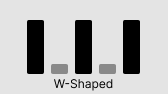
In the U-shaped model, credit is given to the first interaction, last interaction, and some interactions in the middle. The W-shaped model further emphasizes intermediate touchpoints between the first and last interactions.
Data Driven Attribution Models
Data-driven attribution models offer a nuanced understanding of various touchpoints’ contributions to sales, allowing for comprehensive analysis. However, they can be complex to implement and interpret and potentially require substantial resources and expertise.
These models are invaluable for businesses operating in industries with complex customer journeys, longer sales cycles, or those relying on diverse channels touchpoints for conversions.
Two of the frequently employed data-driven attribution models are as follows:
- Algorithmic/Machine Learning Models:
These models utilize machine learning algorithms (such as decision trees, neural networks, or ensemble methods) to analyze vast datasets and attribute credit to different touchpoints based on various factors like sequence, timing, channel type, and user behavior. They adapt and learn from data patterns to provide more accurate and customized attribution insights.
Those models are particularly beneficial for businesses seeking a comprehensive understanding of how different factors influence conversions in complex marketing landscapes.
- Marketing Mix Modelling (MMM)
MMM is a data-driven attribution model that employs statistical analysis on historical data to measure the impact of various marketing channels and factors on overall sales or conversions. It quantifies the contribution of multiple marketing channels and factors by analyzing a combination of internal and external data, including sales data, marketing spends, economic indicators, seasonality, and competitive activities.
The MMM model is mainly used for businesses aiming to understand the holistic impact of marketing efforts in correlation with external factors.
Finished reading? Test yourself with 10 questions on this topic.
Go to the questions →From I Am Datapedia! by Mustafa Qizilbash, published here free by the author. Nothing about your reading is stored.