Data Supply Chain
From the book I Am Datapedia!, published here free by the author.
Data Supply Chain is not a data capability rather a process.
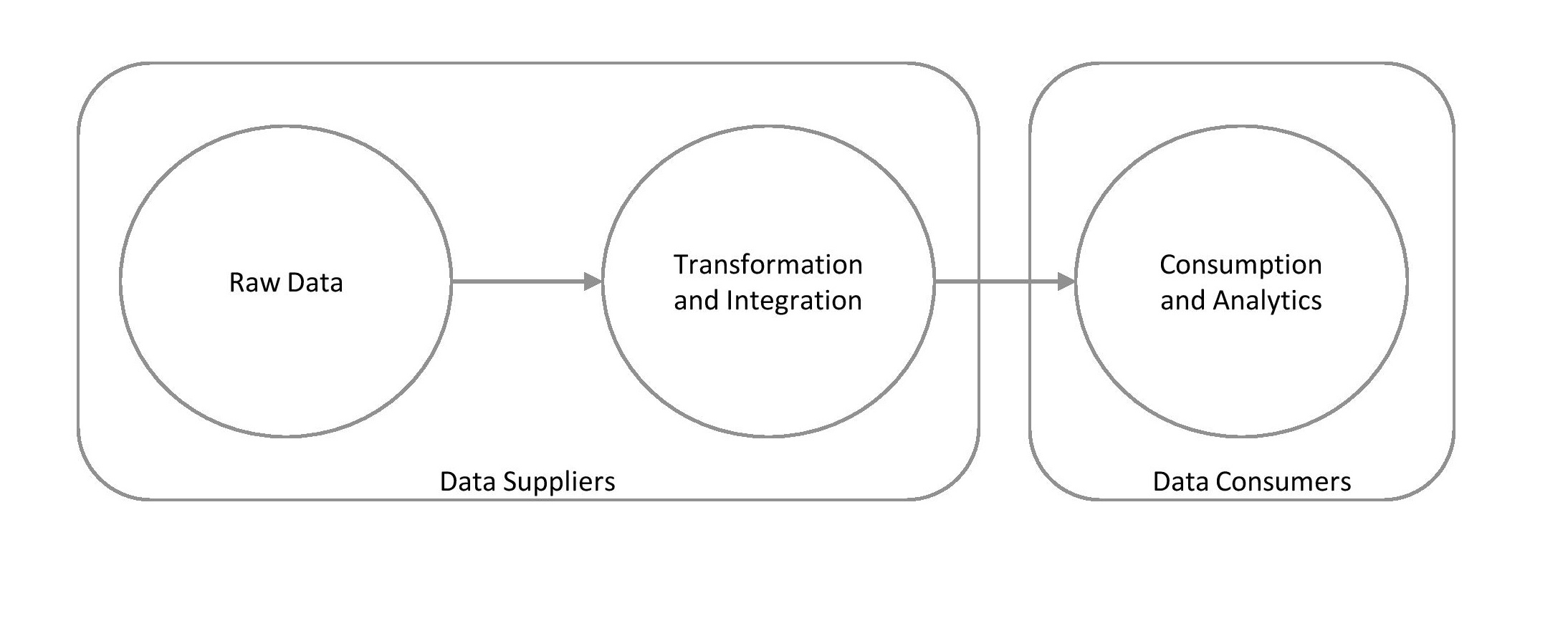
- Source Data Stage is the first stage where raw data is planned and identified i.e., OLTP systems.
- Transformation and Integration Stage is where data is converted based on business requirement in-shape of Data Lake Systems or Data Warehouses
- Consumption Stage is where data is store for business use in-shape of Data Lake Systems or Data Warehouses (OLAP systems) or Semantic Layer etc.
Data Supply Chain is a very critical operational process to manage Data Asset and Liabilities. In the absence of visibility on Data Supply Chain, organization cannot plan ROI as well as TTM which is critical for the Data Monetization.
Note: Data Assets, Data Liabilities and Data Monetization all are explained in separate topics.
Benefits of Data Supply Chain
Below are but not limited to, few key benefits of having a Data Supply Chain.
- Improves operational productivity.
- Progresses business suppleness.
- Decreases data latency.
- Easy to host upcoming data sources.
- Adaptable to manage huge data in the future.
- Enhance Data Quality
- Match customer KPI(s)
- Find new monetization opportunities.
- Estimate Data Asset
- Pipe the data faster.
- Rises company profit by providing data for better decision making.
- Improve customer affiliation
Express your reaction
Your Take on This Insight?
Share how this content resonates with you.
0 reactionsSign in to react or comment
Comments (0)
No comments yet.
Free account
You can read every topic without one. A free account lets you react to this topic, comment under it and search the Knowledge Hub. Reacting and commenting need a confirmed e-mail address.