Once you sign in, your details will show here.
Knowledge Hub
+ New Topic
Filter (2)
Sort
29 topics · Data Security · I Am Datapedia! · 10 shown
Show allEvery topic is free to read. A free account also lets you search the topics, react to a topic and comment under it.
- I Am Datapedia!
Data Security
Data Security andData Privacy
Security and privacy are often mentioned in the same breath, but they serve distinct, and complementary, purposes. Both are essential pillars of responsible data management in the digital era.
Data Security is about protection. It ensures data remains confidential, accurate, and accessible only to those who are authorized. Security safeguards against unauthorized access, malicious attacks, accidental loss, and corruption of information. Techniques include access management, activity monitoring, encryption, masking, breach detection, and disaster recovery. In short, security preserves the confidentiality, integrity, and availability (CIA) of data.
Data Privacy is about rights and responsible use. It governs who can access what data, for what purpose, and under what conditions. Privacy extends beyond technical controls, covering contracts, policies, consent management, and compliance with laws such as the GDPR in Europe, the PDPA in Singapore and Malaysia, or the CCPA in the United States. Privacy ensures that individuals’ personally identifiable information (PII) is collected minimally, used ethically, and safeguarded throughout its lifecycle.
2 min readMore
- I Am Datapedia!
Data Security
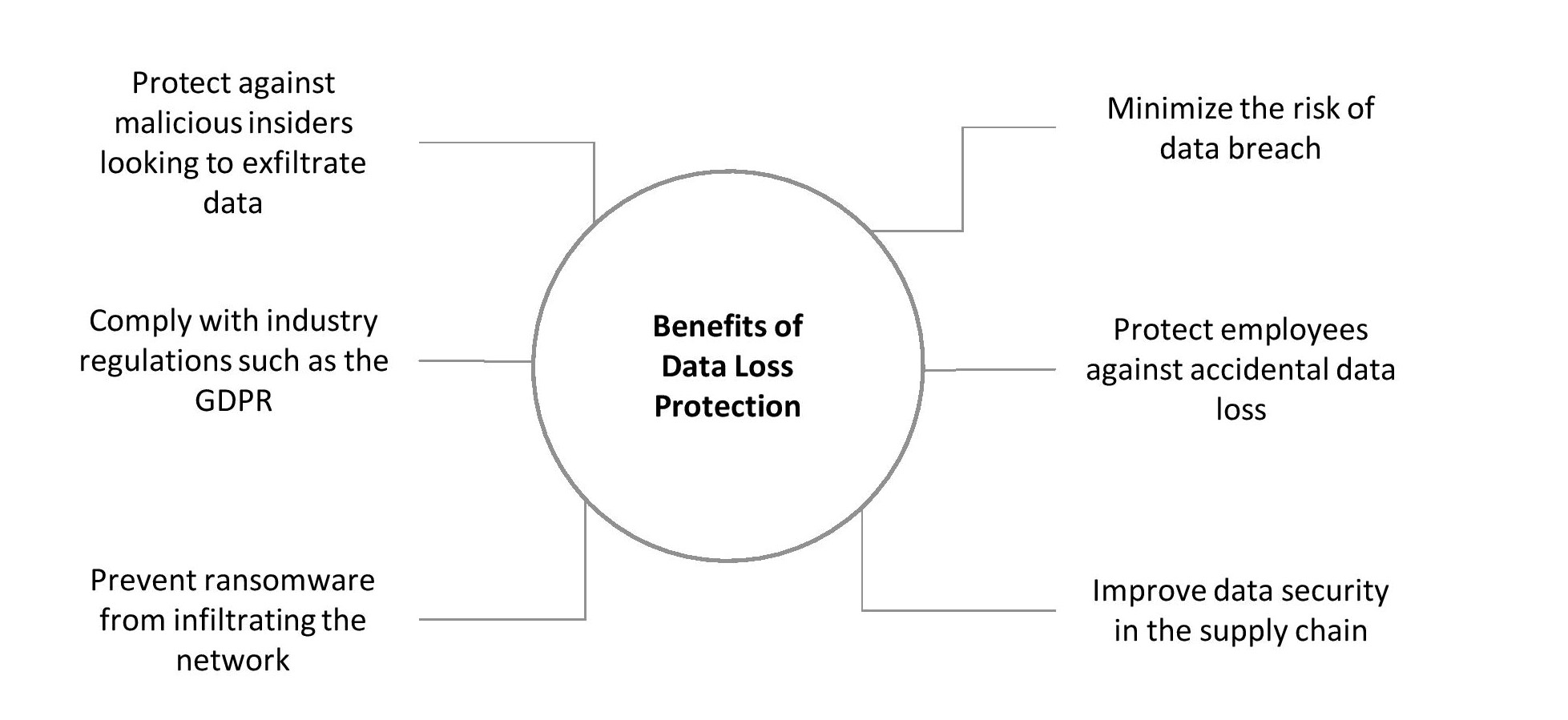
DLP(Data Loss Protection/ Prevention)
DLP stands for Data Loss Protection/ Prevention which is part of the organizational level security strategy.
‘DLP is to protect or prevent data from getting in wrong hands.’
DLP is normally handled and maintained by the Risk department in an organization where standards and policies are followed to protect data from intruders. We know, the starting point of all the standards and policies start from Regulatory bodies.
The moment you expose your data to outsider via Internet, the DLP comes into action. One must take care of their own data from intruders and hackers. In previous era we had the choices to connect to external world or not, but now NO, we don’t have a choice, we must connect to social media to pull data, we must connect to cloud etc.
1 min readMore
- I Am Datapedia!
Data Quality
Data Integrity
Most people confuse Quality and Data Integrity with each other.
The term Data Integrity came from a security point of view, but it came from sharing data in a more effective and easier way, so in a way, it is more than just security. It has multiple components and Data Quality is one of those. In other words, these are not two different terms, nor both compete, rather Data Quality supplements Data Integrity along with other components.
Achieving a higher % age of Data Integrity gives confidence to the business users and management to trust data for daily decision making. Losing Data Integrity means a higher possibility of wrong data, wrong data means wrong decisions, and wrong decisions mean business lose margin or go into loss. Security’s point of view is to make sure the results shared with Public Stakeholders or Regulatory Bodies are correct and not fake. That's the reason there are internal and external audit teams evaluating the Data Integrity of organizations. Based on audit results, more investors invest, more buyers buy, and the company flourishes.
2 min readMore
- I Am Datapedia!
Data Governance
Data Compliance
Data Compliance is mostly confused with Data Quality and Data Integrity, which is somehow true, as all these terms do share some common features for ONE GOAL i.e., Data Protection.
Data Compliance is to follow certain regulations and standards of Data Security, Data Privacy and Data Integrity, set by different Regulatory Bodies around the World to protect sensitive data and to make data available in certain ways.
Regulatory Bodies set, if not all but, CERTAIN Data Security, Data Privacy and Data Integrity standards. So, having only Data Compliance measures will not protect data 100%, there are many other standards covered under Data Security, Data Privacy and Data Integrity which are required to be in-place for any organization.
Common Regulatory Bodies Frameworks
We won’t be going into details of regulatory bodies like what is required by each but for the audience, let me mention the most famous ones here.
2 min readMore
- I Am Datapedia!
Data Governance
Data Sovereignty
A term very near to Data Security and Data Privacy. Data Sovereignty is about keeping the data secure within the defined boundaries, especially e.g., certain sets of data should not go cross border for certain sectors.
In Data Security and Data Privacy, we make sure data is only accessed by those who need it or who own it. Within the organization, we maintain an ACL (Access Control List) to record the list of all the users with their level of access they can have on certain data sets. For example, which level of access developers can have, which level of access database administrators can have, which level of access department’s manager can have, which level of access a Business User can have, which of access Cost Centre person can have etc. So, in a way what we are trying to elaborate here is, there can be different levels of access granted to different level of roles in an organization to access data.
4 min readMore
- I Am Datapedia!
Data Security
Data Encryption andDecryption
Encryption is a technique to convert the normal text in the email, text message, databases, data lakes etc. into scrambling format to make it unreadable which is also called 'CipherText'.
‘Encryption and Decryption use to convert and revert data from another format to target confidentiality requirement and use Key to read data.’
This is one of the most known terms in the Data World concerning Security and there is hardly any organization in the World that doesn't use Data Encryption to protect its data from black hawks.
Let's take this opportunity to go one level down.
Which Data to Encrypt
- Data-at-Rest means data sitting in your database, data warehouse, data lake, in-memory in solutions like delta lake, Databricks, snowflake etc. all must be encrypted.
- Data-at-Transit means when data is moving between devices, such as within private networks, through the Internet, or from laptop to thumb drive etc. all must be in encryption mode.
Data-in-Use means, when data is exposed to end-users which can be in a BI tool or on a website or web portals like Facebook, LinkedIn etc.
3 min readMore
- I Am Datapedia!
Data Integration and Interoperability
Data Encoding and Decoding
Data Encoding and Decoding is a known term but is always confused with Encryption and Decryption.
Just like Encryption and Decryption, Encoding and Decoding convert and revert data from another format using Key.
Importance of Keys
- Encryption and decryption conversion KEYS are used by known entities or individuals.
- Encoding and decoding KEYS are used by unknown entities or individuals i.e., publicly.
Data Encoding and Decoding is normally used by programs or systems internally whereas Encryption and Decryption are used by proprietary expensive software(s).
There are many encoding techniques but major four types are.
- Analog data to Analog Signals: This technique is used when sender and receiver both are Analog compatible like mic to speakers directly.
- Analog data to Digital Signals: This technique is used sender is Analog, and receiver is Digital compatible like mic to computer for recording purpose.
- Digital data to Analog Signals: This technique is used when the sender is Digital, and receiver is Analog compatible like from computer to speakers.
- Digital data to Digital Signals: This technique is used when sender and receiver both are Digital compatible like data transfer from computer to computer.
2 min readMore
- I Am Datapedia!
Data Storage and Operations
Data Subsetting
Data Subsetting is as simple as taking a small piece of data, with referential integrity in place, for some activity. For example, there is a requirement to build a data science model and it requires data for users aged between 25-35 from X Location having certain buying/ spending patterns. For this requirement, a particular dataset will be extracted for the data science development team to build and train their data models.
Don't confuse Data Subsetting with Data Masking. Data Masking is still required on this smaller piece of the dataset from a security point of view. Having said that, conducting a Data Subsetting exercise is not as simple. One first must understand the functional requirements of the use case, then one must also understand what data is there in the database as whole. Wrongs or partial Data Subsetting will end up producing wrong data model results and will damage trust in data by decision-makers.
1 min readMore
- I Am Datapedia!
Data Storage and Operations
Data Room
Data Rooms or Datastore are both the same entity. Data Rooms are normally used for due diligence of confidential documents like handling Business Mergers or Acquisitions by bidders & advisers, compliance & audit teams.
Traditionally, there are Physical Data Rooms with Physical Documents. These Physical Data Rooms are for restricted people only, secured by guards with a maximum of one or two parties to go in at any given point-in-time which delays the process if multiple parties are using the same Physical Data Room.
With the growing businesses globally, it was a very expensive affair for multiple teams to fly over to be near these Physical Data Rooms. As an alternate and more viable solution, VDRs (Virtual Data Room) came into the picture which are available Online, behind Firewalls and with proper Access Control. VDRs have changed the game, now sellers can invite a bigger audience and teams sitting in one part of the world to participate in a bid process happening in the other part of the world. VDRs have cut down the cost and expedited the process.
2 min readMore
- I Am Datapedia!
Data Storage and Operations
DevSecOps(Development Security Operations)
DevSecOps is nothing less DevOps but with addition step of security.
Due to the quick and fast deployment cycles, security has become an alarming factor in DevOps, so security has been included right before the creation process and therefore DevSecOps (development, security, and operations) came onto the surface.
1 min readMore
Build a strong foundation in Data & AI
Follow the Data Foundations learning path (Beginner to Advanced).