Once you sign in, your details will show here.
Knowledge Hub
+ New Topic
Filter (1)
Sort
61 topics · Data Integration and Interoperability · 10 shown
Show allEvery topic is free to read. A free account also lets you search the topics, react to a topic and comment under it.
- I Am Datapedia!
Data Integration and Interoperability
ETLT
ETLT is a way of talking about how we handle information. Think of it like this: first, we take out the data we need. Then, we change it to make sure it's clean and ready to use. After that, we put it where we want it to be. Lastly, we might make some more changes to the data to make it even better for understanding. ETLT is like a helpful addition to the usual process (ETL) that makes our data even more useful and organized.
ETLT stands for "Extract, Transform, Load, and Transform" in the context of data integration and processing. Please don’t worry about where this ETLT has come from. ETLT just includes another stage in ETL world to support semantic layers.
Let’s understand each:
- Extract: Involves extracting data from various sources, which could be databases, applications, logs, or other systems.
- Transform (First T): Refers to the process of cleaning, structuring, and enriching the extracted data so that it is suitable for analysis. Transformation may include data cleansing, normalization, aggregation, and other operations.
- Load: Involves loading the transformed data into a target database or data warehouse where it can be used for reporting, analysis, or other purposes.
- Transform (Second T): This additional transformation step might be included in some interpretations of ETLT. It represents further processing or transformation that occurs after the data has been loaded into the target system. This step acknowledges that data transformation can be an ongoing and iterative process.
2 min readMore
- I Am Datapedia!
Data Integration and Interoperability
Synchronization andPropagation
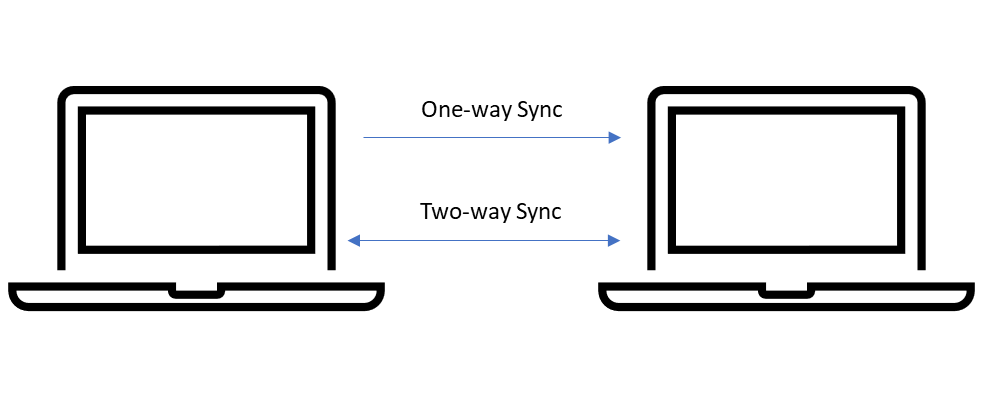
In the world of data, synchronization and propagation are like superheroes that make sure our information stays accurate and consistent, even when it's spread out in different places.
Let's understand these ideas:
Synchronization:
- Synchronization is about keeping data the same and up to date in many different spots or systems.
- The goal is to ensure that if we change something in one place, like updating the inventory in an online store, those changes quickly show up everywhere else, such as on the website and in the physical store's system. This way, everyone using the data gets the latest and correct info.
- For example, imagine you run an online store, and you add new items to your inventory on your computer. Synchronization is like magic that makes sure those new items appear on your website and in your store's computer, so customers and the store both know what's available.
Propagation:
- Propagation is like the spreading of news, but for changes in data. It's about making sure updates in one part of a system travel to other connected parts.
- When something changes, like depositing money at an ATM in a bank, propagation helps that change reach all the places that need to know, such as your online bank account and the main bank database. It's like making sure the news of the deposit goes to all the right places.
- For example, if you put money into an ATM, propagation ensures that the information about your deposit reaches all the important places, like your online bank app and the bank's main computer. It's like making sure everyone in the banking system knows about the deposit.
2 min readMore
- I Am Datapedia!
Data Integration and Interoperability
Watermark
A Watermark is a recognizable image or pattern embedded into a digital or physical document to identify its authenticity or to protect the document from unauthorized use. Watermarks are commonly used in various contexts, including photography, art, documents, and currency.
In the context of digital media, such as images or videos, a watermark is often a semi-transparent logo or text that is overlaid onto the content. This watermark serves several purposes:
- Copyright Protection: Content creators often use watermarks to assert their ownership of the material. This discourages unauthorized use and helps in identifying the original creator.
- Branding: Watermarks can also be used for branding purposes. Companies may add their logos or brand names as watermarks to promote brand recognition even when the content is shared online.
- Security: Watermarks can be used to secure confidential or sensitive documents. For example, companies might add watermarks to internal documents to discourage leaks or unauthorized distribution.
- Authentication: In the case of physical documents, such as banknotes or certificates, watermarks can be embedded during the papermaking process. These watermarks serve as a form of authentication to verify the document's legitimacy.
2 min readMore
- I Am Datapedia!
Data Storage and Operations
External Tables
In the data world, when we work with databases, we often encounter scenarios where the data we want to query and analyze resides outside the database itself. This could be in the form of files, such as CSV (Comma-Separated Values), Parquet, or JSON files, stored in external storage systems like Hadoop Distributed File System (HDFS) or cloud storage platforms such as Amazon S3 or Azure Blob Storage.
Now, imagine a situation where we have large datasets stored in external files, and we want to treat them like database tables for analytical purposes. Here comes the concept of external tables.
External Tables are a database feature that allows you to define a table structure within the database, but the actual data is stored externally, typically in files. To create an external table, you specify the table structure (columns, data types) in the database, and you also provide a location that points to the external storage where the data files are stored.
3 min readMore
- I Am Datapedia!
Data Integration and Interoperability
Importance ofStaging Layer
Yes, you are right, in Data World, Staging Layer is one of the most important zones then why to write about it. Trust me it's been underutilized in most implementations.
Let's decode it.....
The Staging Layer in data architecture plays a crucial role in the data processing pipeline, providing a temporary and structured area for incoming data before it is integrated into the data warehouse or other storage systems.
Many a times Staging Layer is confused with Landing Layer. Yeah trust me, I have seen people doing nothing in Staging Layer except minor things. Please note, especially in the era of cloud, if one doesn’t properly utilize Staging Layer, the consumption cost from Staging Layer to Transformed Layer will be significantly higher.
The importance of the staging layer lies in several key aspects:
- Data Quality and Validation: The staging layer acts as a checkpoint for data quality and validation. Before data is moved to the main storage or processing area, it undergoes validation checks to ensure it meets quality standards. This helps identify and address issues such as missing values, formatting errors, or inconsistencies early in the data pipeline.
Data Enrichment: Staging allows for data enrichment processes to take place before the data reaches its final destination. This step involves cleaning, enhancing the data, making it more suitable for analysis and reporting. It ensures that the data conforms to the desired format and structure.
- Incremental Loading: The staging layer facilitates incremental loading of data, allowing for efficient updates and additions. Instead of reloading the entire dataset, only new or modified data needs to be processed, reducing the computational load and improving overall system performance.
- Data Auditing and Lineage: Staging provides a historical record of the ingested data, enabling auditing and tracing of changes over time. This is essential for tracking the lineage of data, understanding its origin, and ensuring compliance with data governance and regulatory requirements.
- Fault Tolerance and Recovery: Staging serves as a buffer against data processing failures. If an error occurs during data integration or transformation, the staging layer allows for easier recovery without affecting the main data storage. It provides a level of fault tolerance and helps maintain the integrity of the overall data processing pipeline.
- Isolation of Source and Destination Systems: Staging separates the source systems (where data originates) from the destination systems (where data is stored for analysis). This isolation ensures that any changes or issues in the source systems do not immediately impact the data warehouse or analytics environment, providing a layer of protection.
- Performance Optimization: By pre-processing and validating data in the staging layer, the main data storage systems are relieved of some of the computational overhead. This optimization contributes to improved performance and responsiveness in data processing.
3 min readMore
- I Am Datapedia!
Data Integration and Interoperability
Web Service
Web Service is a service offered by an application to enable communication and data exchange at an application-level.
There are mainly two types of webservices used when integrating applications: REST and SOAP.
Web services are widely used in Data Integration. They allow real-time (or near-real-time) integrations and are suitable for use over the internet and in hybrid architectures (Cloud, SaaS, or on-premises).
In terms of architecture, web services enable the implementation of SOA (Service-oriented Architecture) and WOA (Web-oriented Architecture).
REST Web Services
REST, or Representational State Transfer, is a software architecture style for designing and communicating web applications.
A web service (or API) that follows REST principles is referred to as RESTful API. In the following sections, the terms REST web service and RESTful API will be used interchangeably.
A REST web service allows you to access a resource (data object, entity, etc.) via a URL (Uniform Resource Locator) [or web address].
3 min readMore
- I Am Datapedia!
Data Integration and Interoperability
ElectronicData Interchange (EDI)
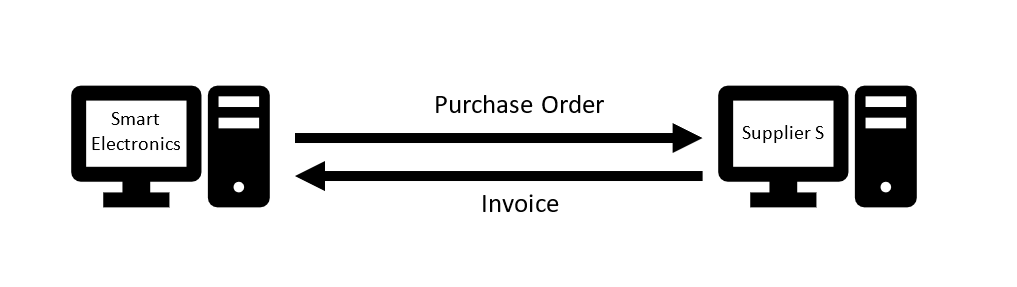
EDI, or Electronic Data Interchange has been introduced since the seventies. The main use case addressed by EDI is to automate data exchange between trading partners (Customers and Suppliers) for business documents, such as purchase orders and invoices as well as for payments and shipment information.
Here is a simple EDI use case in which Smart Electronics (a fictitious Manufacturing company) uses EDI to send Purchase Orders to Supplier S, and Supplier S sends corresponding invoices to Smart Electronics.
EDI follows specific message standards and formats like EDIFACT or X12 which are the main EDI message standards.
Other EDI standards have been developed for specific purposes or industries, such as:
- ODETTE: used in automotive industry in European countries
- HL7: used for healthcare data.
- IATA PATIS: used to exchange passenger and airport data, and is maintained by the IATA (the International Air Transport Association)
- SWIFT: used for transaction and message exchanges in the financial and banking sectors.
6 min readMore
- I Am Datapedia!
Data Integration and Interoperability
Ontology-DrivenData Integration andHarmonization
The role of ontology in data integration and harmonization is to describe structure and relations. Ontologies enable a coherent structure for data across systems, functions, and domains. As the cost of maintaining and point-to-point integrations is growing along with the cost for running specific data pipelines there is a need for a new approach. By having an ontological approach to an organization’s data-driven strategy cost control will be easier to achieve.
The Concept of Ontology in Data Management
Ontologies in data management involve the use of a shared vocabulary and a set of relationships and rules to model a domain. They provide a common language for data and thus enable different systems and stakeholders to 'speak' the same language.
Data Integration Challenges
- Disparate Data Sources: Organizations often deal with data from various sources each with their unique format and structure.
- Semantic Discrepancies: Different interpretations of data across systems can lead to inconsistencies and misunderstandings.
2 min readMore
- I Am Datapedia!
Document and Content Management
Textual orContextual ETL
The worlds of structured data and textual data are as far apart as the ocean is from the desert. These worlds are extremely different. But there is great value in being able to bring them together.
To that end there is textual ETL. Textual ETL reads text and disambiguates the text. As data is placed into a structured format from a textual format, the word that has been found and the context of the word that has been found are captured. That is the mechanics of how textual ETL operates.
How does textual ETL know what words to pluck out from text? Textual ETL knows by fiat of one or more taxonomies. The taxonomies alert textual ETL as to what words are important and need to be placed into a database for the purpose of analysis. In addition, the taxonomies provide the context for the word that has been selected.
Another feature of textual is inline contextualization. While many words can be contextualized by the usage of taxonomies, not all words can be treated this way. In addition to taxonomies, inline contextualization allows the word and its context to be selected by means of the positioning of the word in raw text and the proximity of the word or phrase to other words and phrases.
11 min readMore
- I Am Datapedia!
Data Integration and Interoperability
DAGs (Directed Acyclic Graphs) orExecuton Graph
An Execution Graph is a visual and logical representation of how tasks, operations, or computations are executed in a system. It shows the order in which activities run and how they depend on one another.
In data engineering and distributed computing, an execution graph is often represented as a Directed Acyclic Graph (DAG). “Directed” means tasks move in one direction. “Acyclic” means the graph does not loop back on itself. Once a task finishes, the flow moves forward.
In simple terms, an execution graph answers one important question:
What runs first, what runs next, and what depends on what?
Why Execution Graphs Matter
Modern data systems rarely execute tasks in a straight line. Instead, they perform multiple steps such as reading data, filtering, transforming, aggregating, and storing results. Some steps can run in parallel, while others must wait for previous tasks to complete.
An execution graph helps systems:
3 min readMore
Build a strong foundation in Data & AI
Follow the Data Foundations learning path (Beginner to Advanced).