Once you sign in, your details will show here.
Knowledge Hub
+ New Topic
Filter (1)
Sort
383 topics · I Am Datapedia! · 10 shown
Show allEvery topic is free to read. A free account also lets you search the topics, react to a topic and comment under it.
- I Am Datapedia!
AI and Machine Learning
Generative AI
Generative Artificial Intelligence (AI) has become a prominent trend in recent times, particularly emphasized by our enthusiastic Sales folks 😊. But let's pause for a moment, are you familiar with the concept of Synthetic Data? Surely, it's not new to you 😊. And for those with a tech-savvy mindset, the term "Generative AI" likely triggers thoughts of Generative Models or Statistical Models, perhaps with a knowing smile.
Indeed, the application of generative and statistical models has been around for decades. In fact, the idea of Generative AI isn’t new at all, it dates back to as early as 1950, when Alan Turing proposed machines that could exhibit intelligent behavior.
Today, however, we're witnessing a resurgence of interest, largely due to the accessibility and power of tools like OpenAI’s ChatGPT, Google Gemini, Anthropic’s Claude, Meta's LLaMA, and Stability AI's Stable Diffusion. These tools represent a leap forward in putting generative capabilities into the hands of everyday users, generating text, images, audio, and even code with natural ease.
3 min readMore
- I Am Datapedia!
Data Integration and Interoperability
ETLT
ETLT is a way of talking about how we handle information. Think of it like this: first, we take out the data we need. Then, we change it to make sure it's clean and ready to use. After that, we put it where we want it to be. Lastly, we might make some more changes to the data to make it even better for understanding. ETLT is like a helpful addition to the usual process (ETL) that makes our data even more useful and organized.
ETLT stands for "Extract, Transform, Load, and Transform" in the context of data integration and processing. Please don’t worry about where this ETLT has come from. ETLT just includes another stage in ETL world to support semantic layers.
Let’s understand each:
- Extract: Involves extracting data from various sources, which could be databases, applications, logs, or other systems.
- Transform (First T): Refers to the process of cleaning, structuring, and enriching the extracted data so that it is suitable for analysis. Transformation may include data cleansing, normalization, aggregation, and other operations.
- Load: Involves loading the transformed data into a target database or data warehouse where it can be used for reporting, analysis, or other purposes.
- Transform (Second T): This additional transformation step might be included in some interpretations of ETLT. It represents further processing or transformation that occurs after the data has been loaded into the target system. This step acknowledges that data transformation can be an ongoing and iterative process.
2 min readMore
- I Am Datapedia!
Data Integration and Interoperability
Synchronization andPropagation
In the world of data, synchronization and propagation are like superheroes that make sure our information stays accurate and consistent, even when it's spread out in different places.
Let's understand these ideas:
Synchronization:
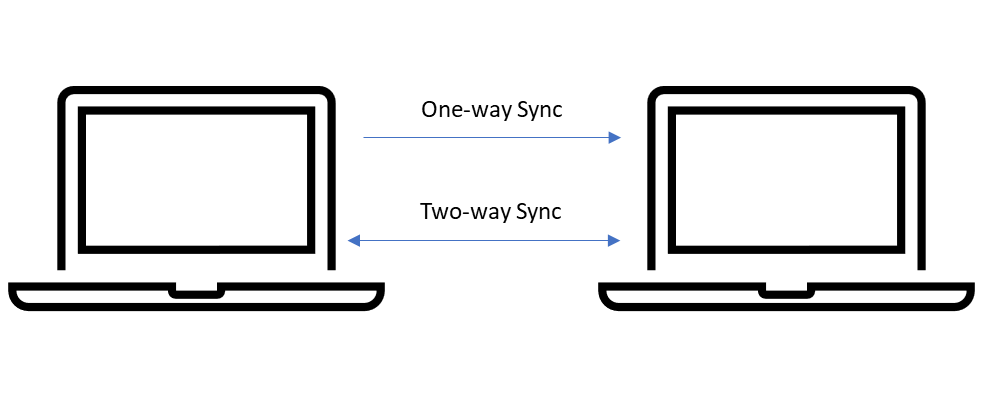
- Synchronization is about keeping data the same and up to date in many different spots or systems.
- The goal is to ensure that if we change something in one place, like updating the inventory in an online store, those changes quickly show up everywhere else, such as on the website and in the physical store's system. This way, everyone using the data gets the latest and correct info.
- For example, imagine you run an online store, and you add new items to your inventory on your computer. Synchronization is like magic that makes sure those new items appear on your website and in your store's computer, so customers and the store both know what's available.
Propagation:
- Propagation is like the spreading of news, but for changes in data. It's about making sure updates in one part of a system travel to other connected parts.
- When something changes, like depositing money at an ATM in a bank, propagation helps that change reach all the places that need to know, such as your online bank account and the main bank database. It's like making sure the news of the deposit goes to all the right places.
- For example, if you put money into an ATM, propagation ensures that the information about your deposit reaches all the important places, like your online bank app and the bank's main computer. It's like making sure everyone in the banking system knows about the deposit.
2 min readMore
- I Am Datapedia!
Data Modeling and Design
Supertype and Subtype
In data modelling, particularly in the context of relational databases, the terms "supertype" and "subtype" are used to describe the relationships between entities.
Let's explore these concepts:
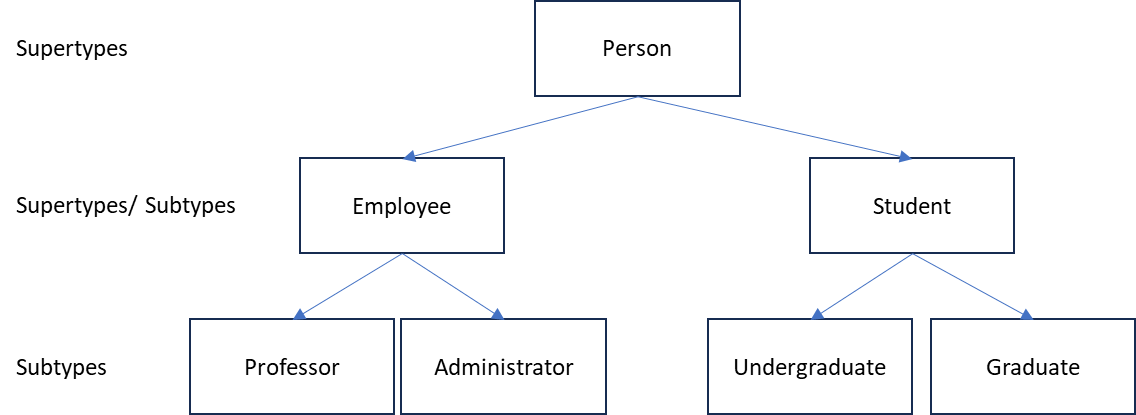
Supertype: A supertype is a generalization that represents a higher-level entity. It encompasses common characteristics shared by multiple lower-level entities.
- It contains attributes common to multiple related entities.
- It represents the generalization of several entities.
- For example, consider a supertype "Vehicle" that includes common attributes like "Manufacturer," "Model," and "Year." Cars, motorcycles, and trucks could be subtypes of this supertype, inheriting these common attributes.
- Subtype: A subtype is a specialization of a supertype, representing a more specific entity with additional attributes or characteristics.
- It inherits attributes from the supertype and may have additional attributes.
- It represents a more specific category within the generalization.
- For example, using the "Vehicle" example, "Car" is a subtype that inherits attributes from the "Vehicle" supertype but may have additional attributes specific to cars, such as "Number of Doors" or "Body Type."
2 min readMore
- I Am Datapedia!
Data Governance
ISO 55000/ 55001/ 550012/ 550013 For Data as Asset
ISO 55000, 55001, 550012 and 550013 are standards that provide guidance and best practices for managing assets effectively within an organization.
Let's break down these standards in simpler terms:
- ISO 55000 – A comprehensive series of international standards, plays a pivotal role in guiding organizations toward effective asset management practices. Within this framework, the concept of treating data as a valuable asset is gaining increasing prominence. ISO 55000 underscores the significance of data in asset management by emphasizing its role in decision-making processes and the overall lifecycle of assets. Organizations are encouraged to recognize data as a strategic asset, acknowledging its potential to enhance decision quality, mitigate risks, and optimize asset performance.
- ISO 55001 – a core component of the ISO 55000 series, provides a comprehensive framework for organizations to establish, implement, and continually improve their asset management systems. Within the context of ISO 55001, the recognition of data as a crucial asset is paramount. This standard encourages organizations to integrate data management practices into their asset management processes, acknowledging the pivotal role that data plays in decision-making and overall asset performance. ISO 55001 emphasizes the need for systematic approaches to managing data throughout the entire asset lifecycle, from acquisition to disposal. It underscores the importance of ensuring data accuracy, reliability, and relevance, as these factors significantly impact the effectiveness of asset management decisions. The standard promotes the establishment of robust data governance and information management processes, ensuring that data is treated with the same level of care and attention as other physical or financial assets. By incorporating data as a strategic asset within the ISO 55001 framework, organizations can harness the power of information to optimize asset performance, minimize risks, and enhance the overall value derived from their assets. This integration of data management principles into the asset management system aligns with contemporary best practices, acknowledging the critical role of data in achieving organizational objectives and sustaining long-term asset value.
- ISO 55012 (New) – The section on "Guidance on People Involvement and Competence" within the ISO 55000/1 standards serves as a comprehensive exploration of the human dimension in the realm of asset management. Recognizing the expanded scope of ISO 55000/1, which encompasses a broader understanding of asset management, this section specifically delves into the integration of data, information, and knowledge management within the human-centric aspects of the discipline. It provides detailed insights into how individuals within an organization, spanning various roles and levels, contribute to the effective implementation of asset management practices. This includes not only their technical competence but also their understanding and management of data, information, and knowledge as integral components supporting the overarching goals of asset management. By acknowledging the human-side dynamics, this guidance emphasizes the need for a skilled and knowledgeable workforce capable of leveraging data and information to make informed decisions, optimize asset performance, and ultimately contribute to the success of the asset management framework outlined in ISO 55000/1. In essence, it underscores the interconnectedness of human capabilities, data management, and achieving excellence in asset management practices.
- ISO 55013 (New)– The section titled "Guidance on the Management of Data Assets" represents a comprehensive and detailed examination of the pivotal role that data plays within the context of asset management. This segment is structured into primary clauses, each focusing on a distinct aspect of managing data as a valuable asset. The clauses include "Managing Asset Data," which outlines strategies for effectively handling data throughout its lifecycle; "Delivering Value from Asset Data," which underscores the importance of extracting meaningful insights and value from the data; "Identifying Data Assets," which guides organizations in recognizing and categorizing their data assets; "Managing Data Assets," providing insights into best practices for the ongoing management and maintenance of data; and "Governance," which emphasizes the need for a robust governance framework to ensure the integrity, security, and compliance of data assets.
5 min readMore
- I Am Datapedia!
Metadata
ISO 11179For Metadata Management
ISO 11179 is an international standard that provides guidelines for the representation and management of metadata for describing data and information resources. In simpler terms, it offers a standardized way to organize and describe data, making it easier to understand, share, and manage.
Let's break down ISO 11179 in more detail:
As we have read in Metadata Management topic, Metadata is Data about Data. It describes the characteristics, properties, and context of data, helping users understand what the data is, how it was collected, and how it can be used.
ISO 11179 focuses on standardizing the way metadata is defined, organized, and managed. It provides a common framework for describing data elements, ensuring consistency and clarity in data descriptions. The standard helps organizations create a common language and structure for describing data, making it easier for different systems and people to understand and use the data.
2 min readMore
- I Am Datapedia!
Reference and Master Data
ISO 3166For Locations
ISO 3166, one type of Reference Data, is an international standard that defines codes for the names of countries, territories, and special areas of geographical interest. In the data world, ISO 3166 codes are widely used for various purposes, such as uniquely identifying countries in databases, international transactions, and data exchange.
Let's break down ISO 3166 in more detail:
Country Codes: ISO 3166 provides three types of codes for each country or territory:
- ISO 3166-1 Alpha-2: Two-letter country codes (e.g., US for the United States, CA for Canada).
- ISO 3166-1 Alpha-3: Three-letter country codes (e.g., USA for the United States, CAN for Canada).
- ISO 3166-1 Numeric: Three-digit numeric codes.
ISO 3166 standardizes the representation of country names to avoid confusion in international communication, commerce, and data exchange. The standard is maintained by the International Organization for Standardization (ISO) and is periodically updated to reflect changes in country names and geopolitical developments.
2 min readMore
- I Am Datapedia!
Data Governance
Basel Standards
In the context of the data world, "BASEL" likely refers to the Basel Committee on Banking Supervision. The Basel Committee is not directly related to data management but plays a significant role in shaping international banking regulations, including requirements related to risk management and data reporting.
Basel Committee on Banking Supervision (BCBS) is an international committee of banking supervisory authorities. It was established by the Bank for International Settlements (BIS) to strengthen the regulation, supervision, and practices of banks worldwide. The committee is known for developing and maintaining global regulatory frameworks, commonly known as the Basel Accords, which set standards for bank capital adequacy, risk management, and prudential supervision.
Basel Accords/ Standards:
- Basel I: Introduced in 1988, Basel I established minimum capital requirements based on credit risk.
- Basel II: Developed in 2004, Basel II expanded the framework to address credit, operational, and market risks. It introduced more risk-sensitive capital requirements.
- Basel III: Implemented in response to the 2008 financial crisis, Basel III further strengthened capital requirements, introduced new liquidity standards, and enhanced risk management practices.
3 min readMore
- I Am Datapedia!
Data Foundations
Digitization andDigitalization
In the data world, "Digitalization" and "Digitization" are related concepts, but they have distinct meanings and implications.
Let's decode the difference between the two.
Digitization: It refers to the process of converting analog information into digital format. It involves taking physical or analog data, such as text, images, or sound, and transforming it into digital form, typically represented as binary code (0s and 1s) that computers can understand. For example, scanning a paper document and converting it into a digital PDF file is an example of digitization. The original document exists in analog (paper) form, and digitization converts it into a digital representation.
Digitalization: It is a broader concept that involves the use of digital technologies to transform business processes, activities, or models. It goes beyond converting analog data to digital format and encompasses the integration of digital technologies into various aspects of an organization or system to enhance efficiency, functionality, or value.
3 min readMore
- I Am Datapedia!
AI and Machine Learning
LLM(Large Language Model)
The term "Large Language Model" (LLM) generally refers to advanced artificial intelligence models designed to understand and generate human-like language. These models are typically trained on massive amounts of diverse text data and leverage deep learning techniques to capture the complexities of language. One of the notable examples of an LLM is GPT (Generative Pre-trained Transformer) like GPT-3 for ChatGPT in current era.
Here are key characteristics and aspects associated with Large Language Models:
- Training on Extensive Datasets: LLMs are trained on large and diverse datasets, which often include a wide range of text sources such as books, articles, websites, and other textual content from the internet.
- Pre-training and Fine-tuning: LLMs go through a pre-training phase where they learn to predict the next word in a sentence or fill in missing words. After pre-training, they can be fine-tuned on specific tasks or domains to enhance their performance in particular areas.
- Transformer Architecture: Many LLMs, including GPT models, use a transformer architecture. Transformers enable the models to capture long-range dependencies and contextual information in the data efficiently.
- Natural Language Understanding: LLMs excel in natural language understanding, allowing them to comprehend the meaning, context, and nuances of human language. This includes tasks such as language translation, summarization, question answering, and more.
- Generative Capabilities: One of the distinctive features of LLMs are their generative ability. They can generate coherent and contextually applicable textual content primarily based totally on a given activate or input.
- Applications: LLMs have found applications in various domains, including chatbots, language translation, content generation, summarization, sentiment analysis, and more.
- GPT Series: The GPT (Generative Pre-trained Transformer) series, developed by OpenAI, is a notable example of LLMs. GPT-3, the third iteration, is one of the largest and most powerful language models to date.
3 min readMore
Build a strong foundation in Data & AI
Follow the Data Foundations learning path (Beginner to Advanced).