Once you sign in, your details will show here.
Knowledge Hub
+ New Topic
Filter (2)
Sort
5 topics · Document and Content Management · Article · 5 shown
Show allEvery topic is free to read. A free account also lets you search the topics, react to a topic and comment under it.
- I Am Datapedia!
Data Modeling and Design
Taxonomy Modelling
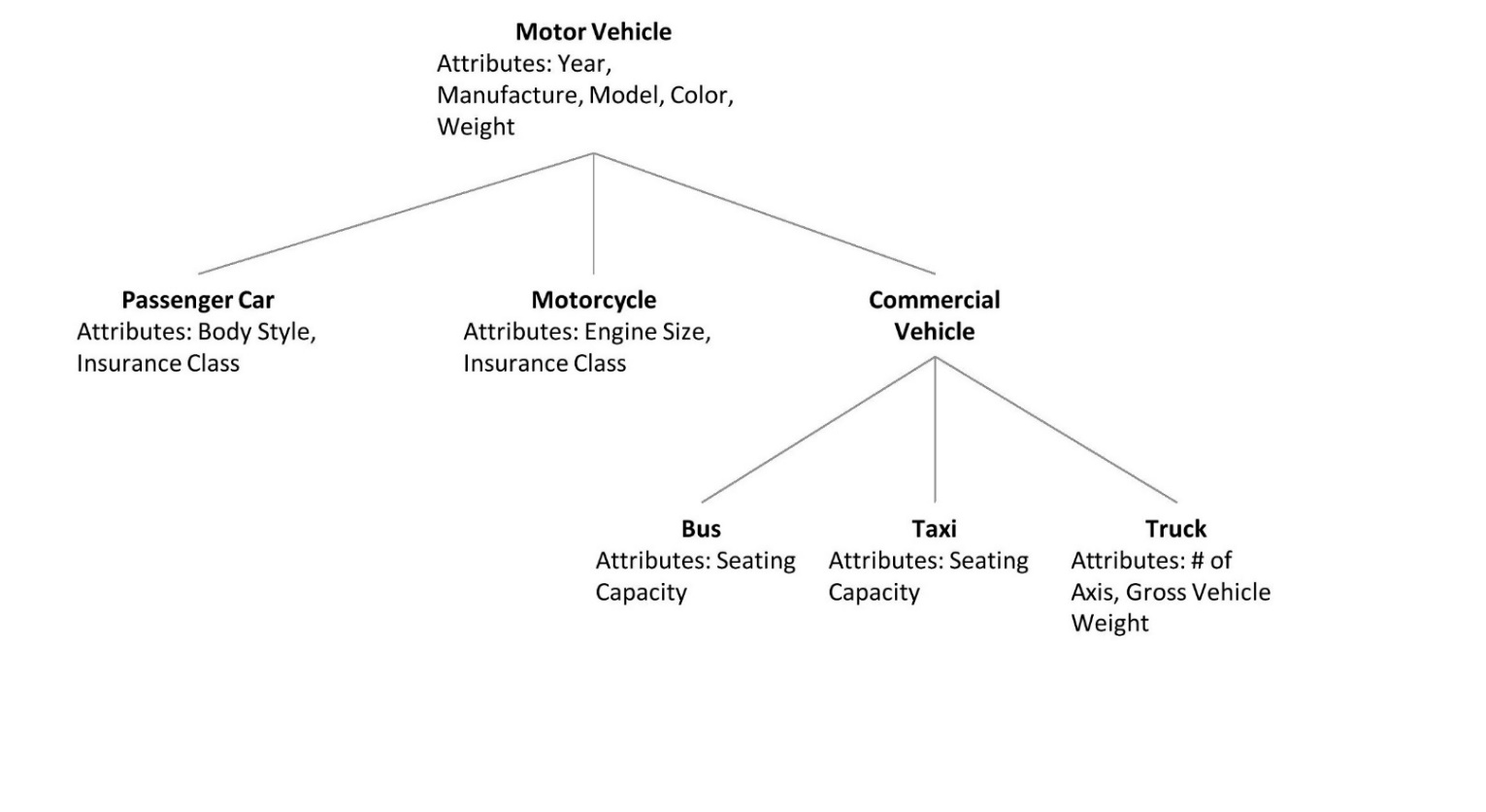
Taxonomy Modelling is the practice of organizing concepts into hierarchical categories, typically arranged in parent–child structures. Its purpose is to classify terms in a structured and consistent way so that they are easier to understand, navigate, and manage.
The main goal of Taxonomy Modelling is to provide a clear and simple classification framework. By grouping related concepts under broader categories, organizations can standardize terminology, improve search and navigation, and ensure that everyone uses the same structure when referring to business terms.
A taxonomy focuses purely on classification. It arranges concepts into levels of abstraction, moving from general to specific. For example, in healthcare, one might classify Diseases at a high level, then Infectious Diseases beneath that, followed by Viral Infections, and then specific conditions such as COVID-19. Each level refines the previous one. The structure is hierarchical and orderly, but it does not attempt to capture complex rules or reasoning.
3 min readMore
- I Am Datapedia!
Data Storage and Operations
Data Preservation
Data Preservation, Data Security, Data Privacy, Data Integrity, Data Compliance all refer to the protection of the data.
Data Preservation is about securing and maintaining the safety and integrity of the data after it’s been processed, for future reference.
‘Data which is preserved cannot be changed and hardly purged or deleted.’
Things to consider for Data Preservation
- What data to be preserved? Not all data is worth preserving.
- What is the retention period to preserve data? Like for how long to keep data.
- Who will be responsible for preserving data? A custodian is required for data repository.
In the current era with big data having huge semi and unstructured datasets, it’s not worth rather not possible to preserve everything. One must decide what to preserve and for how long.
For example, in datastore like Data Warehouse or a Data Mart or in Data Lake etc., there are certain datasets to preserve. One can start from the list of compliance requirements e.g., traditionally in banking sector, the customers who has left the bank or in other words closed their accounts, their history is preserved or saved for 7 years from the day they closed their accounts.
2 min readMore
- I Am Datapedia!
Data Storage and Operations
Data Archiving
Data Archiving involves the long-term storage and preservation of data that is no longer actively used but may still be valuable for future reference or compliance purposes. This process helps organizations manage their data lifecycle efficiently, ensuring that important information is retained for historical, legal, or regulatory reasons.
Here are a few key elements of statistics archiving:
- Retaining Historical Data: It is a fundamental aspect of data archiving. This involves preserving information that may not be actively used but has historical significance or provides a record of past events. This can include anything from academic records and research findings to historical business transactions.
- Compliance and Legal Requirements: It is a critical consideration in data archiving. Organizations must adhere to specific legal requirements that mandate the retention of certain types of data for predefined periods. This ensures that the organization remains in compliance with industry standards and legal frameworks.
- Reducing Active Storage Costs: Data archiving helps in optimizing storage costs by moving less frequently accessed or older data from high-performance storage systems to more cost-effective storage solutions. This practice ensures that valuable storage resources are reserved for active and frequently accessed data.
- Preserving Research Data: It is essential for scientific and academic institutions. Archiving experimental data and research findings allows researchers to revisit and validate their work. It contributes to the integrity of scientific endeavors, enabling the reproduction of experiments and the advancement of knowledge.
- Managing Email Archives: Email archives play a crucial role in managing organizational communication. Archiving old emails helps organizations free up space on active email servers, ensuring efficient email management. Archived emails may also be accessed when needed for legal, compliance, or historical purposes, maintaining a comprehensive record of communications.
3 min readMore
- I Am Datapedia!
Document and Content Management
Textual orContextual ETL
The worlds of structured data and textual data are as far apart as the ocean is from the desert. These worlds are extremely different. But there is great value in being able to bring them together.
To that end there is textual ETL. Textual ETL reads text and disambiguates the text. As data is placed into a structured format from a textual format, the word that has been found and the context of the word that has been found are captured. That is the mechanics of how textual ETL operates.
How does textual ETL know what words to pluck out from text? Textual ETL knows by fiat of one or more taxonomies. The taxonomies alert textual ETL as to what words are important and need to be placed into a database for the purpose of analysis. In addition, the taxonomies provide the context for the word that has been selected.
Another feature of textual is inline contextualization. While many words can be contextualized by the usage of taxonomies, not all words can be treated this way. In addition to taxonomies, inline contextualization allows the word and its context to be selected by means of the positioning of the word in raw text and the proximity of the word or phrase to other words and phrases.
11 min readMore
- I Am Datapedia!
AI and Machine Learning
Multi-Modal Data
Multi-modal data refers to data that comes in multiple formats or modalities. A modality simply means a type or form of data. In traditional systems, most data was structured text or numbers stored in tables. Today, organizations deal with text, images, audio, video, sensor readings, and more. When different types of data are combined and analyzed together, this is called multi-modal data.
For example, a social media post may include written text, an image, location information, and user reactions. Each of these is a different modality. When analyzed together, they provide richer insights than analyzing just one type alone.
Multi-modal data has become especially important in artificial intelligence and machine learning. Modern AI systems are designed to process text, images, speech, and structured data simultaneously. For instance, a customer service system may analyze a voice recording, convert it to text, examine sentiment, and combine it with customer transaction history. This is a multi-modal approach because it uses more than one type of data to understand the situation.
3 min readMore
Build a strong foundation in Data & AI
Follow the Data Foundations learning path (Beginner to Advanced).